Balboa Park and San Diego’s Spanish Colonial skyline
Published on 09/11/2026 at 21:08 | Editorial responsibility: Rafael Müller, Editor-in-Chief AD HOC NEWS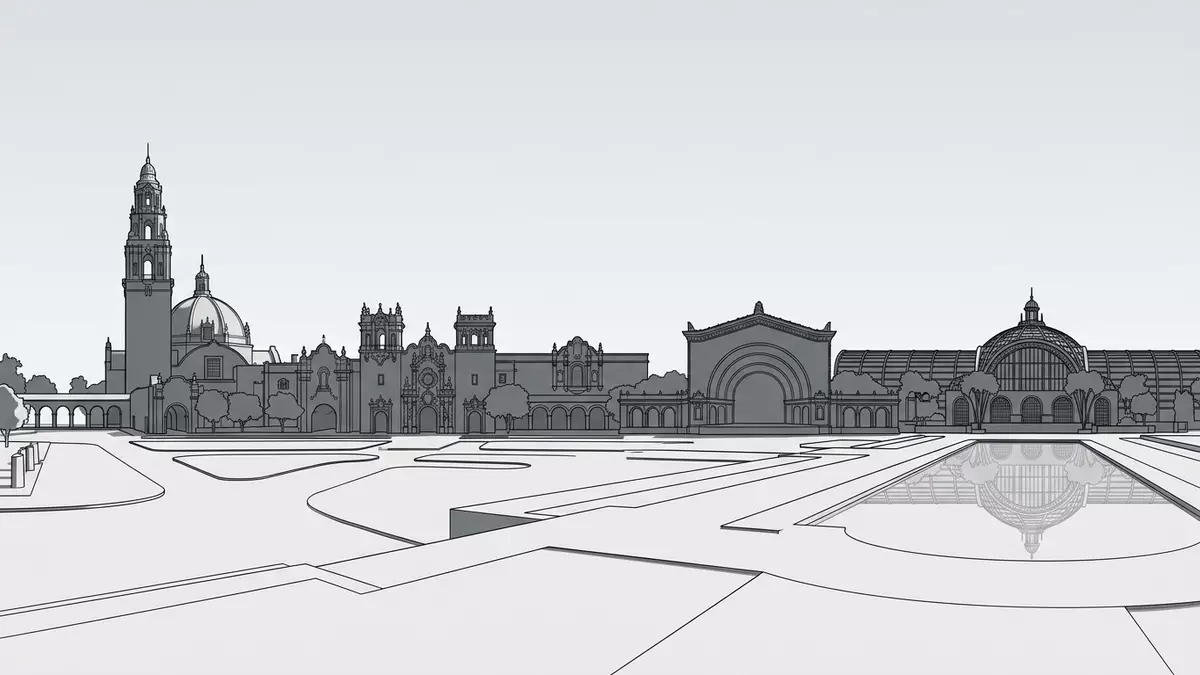
Balboa Park in San Diego spreads across a broad urban landscape of lawns, museums and formal gardens. Its best-known buildings were shaped by Bertram Goodhue and the city’s 1915 exposition programme, then linked to a 1977 National Historic Landmark designation.
Spanish Colonial Revival along El Prado
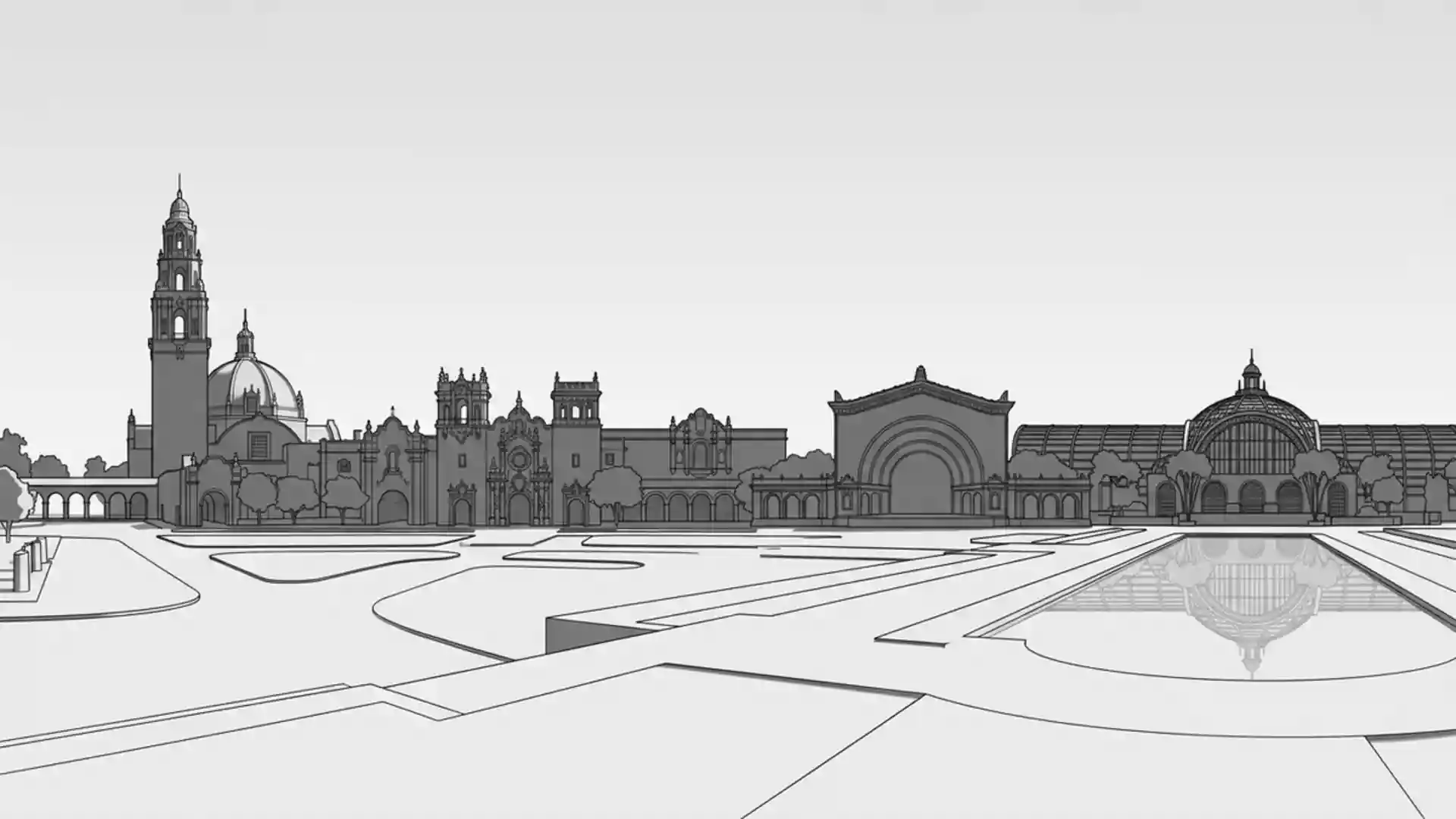
The park’s central avenue is lined with richly ornamented facades that set the tone for much of the site. Spanish Colonial Revival architecture defines the most recognisable ensemble, and the House of Hospitality and California Tower remain among its most familiar landmarksSpanish Colonial Revival architecture.
Bertram Goodhue led the exposition architecture, and his work helped establish the style in Southern CaliforniaBertram Goodhue led. The buildings along El Prado are not isolated monuments; they form a continuous urban stage of arcades, towers and courtyards beside open parklandcontinuous urban stage.
From public reserve to civic landscape
The park’s origins reach back to 1868, when the city set aside the land as a public park. That early reserve was later named for Vasco Núñez de Balboa, the Spanish explorer associated with the Pacific crossing into European knowledgeset aside the land.
By the early twentieth century, landscape planning and exposition building had transformed the site into a cultural park. Samuel Parsons Jr. prepared an early master plan, and the later exposition work added permanent structures that still frame the central mesasSamuel Parsons Jr.. The result is a place where planted grounds and monumental architecture share the same visual field.
Landmarks, museums and remembered fairs
Balboa Park is closely linked with the 1915 Panama-California Exposition and the 1935 California Pacific International Exposition. Those fairs left a built legacy that includes museums, arcades and decorative garden spaces1915 Panama-California Exposition.
The 1977 National Historic Landmark designation recognised the park and its historic exposition buildings as a protected ensembleNational Historic Landmark designation. That status suits a place whose appeal lies in the visible overlap of civic landscape, exhibition architecture and long-set public use.
Visiting Balboa Park: what travellers from Western Europe should know
- The park lies in San Diego, east of the city centre, and is reached by city streets and local transit. El Prado forms the main axis through the museums and gardens.
- The terrain is a broad mesa with long walking routes between major landmarks. Some buildings sit above planted courts and terraces, so the site reads as a sequence of levels.
- English is the main language used on site. The currency is the United States dollar.
- Balboa Park brings together museums, gardens and exposition-era buildings in one district. The California Tower, House of Hospitality and Alcazar Garden sit within the same park landscape.
Searching for Balboa Park on social platforms
These links open searches for Balboa Park on each platform.
Frequently asked questions about Balboa Park
Where is Balboa Park?
It is in San Diego, California, on a mesa east of the city centre. The park extends across a large civic landscape of roads, gardens and museum precincts.
What does a visit involve?
The park combines walking routes, formal gardens and major cultural buildings. El Prado, the exposition façades and the park’s museum cluster form the most concentrated part of the experience.
What makes Balboa Park distinctive?
The park is distinctive for its Spanish Colonial Revival architecture and its role in the 1915 and 1935 expositions. The visible mix of landscape planning and monumental design gives it a layered character.