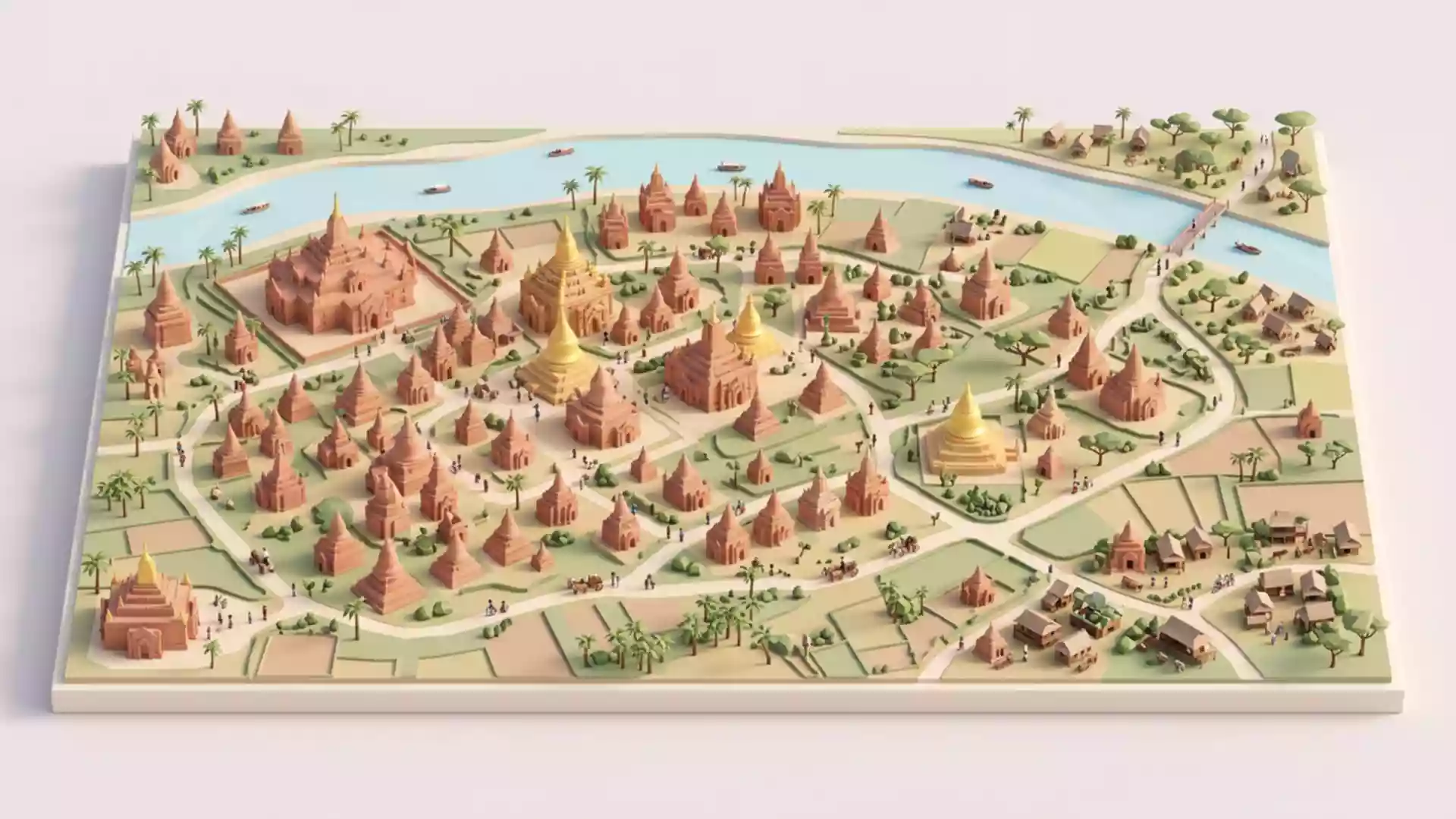
Bagan's temple plain of stupas and monasteries
Published on 09/09/2026 at 14:40 | Editorial responsibility: Rafael Müller, Editor-in-Chief AD HOC NEWS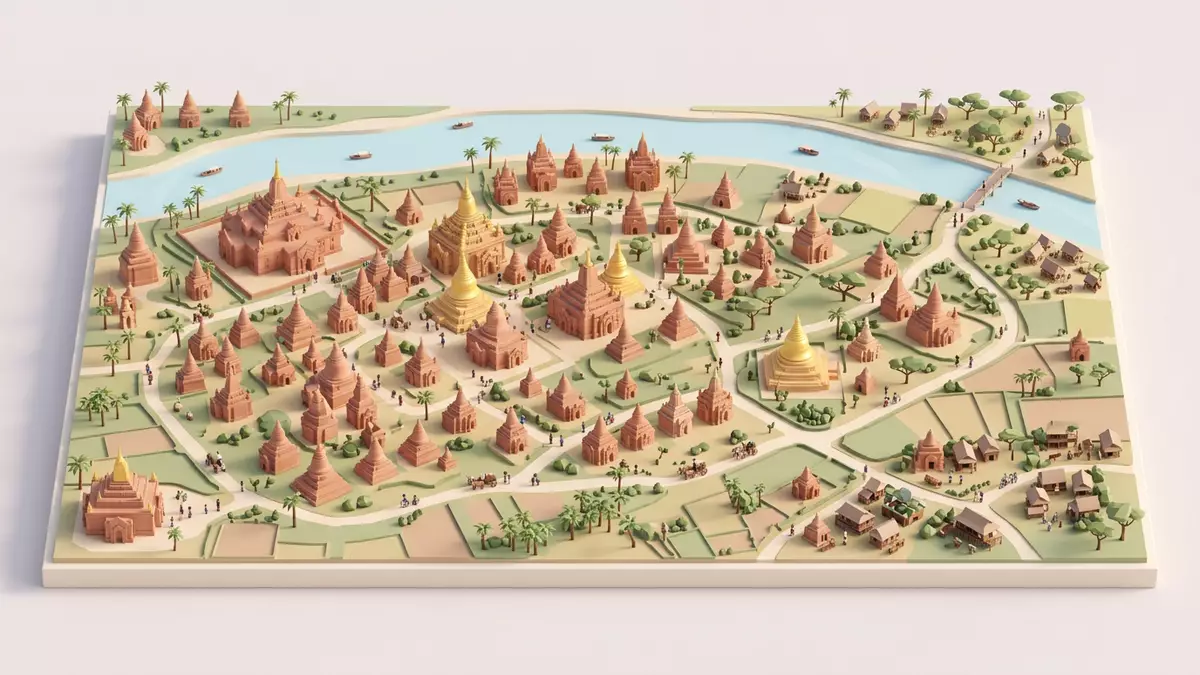
Bagan spreads across a sacred plain in central Myanmar, where stupas, temples and monasteries rise from the dry zone beside the Ayeyarwady River. Its core identity is visual and historical at once: a Buddhist landscape shaped across the Bagan Period and recognised as a World Heritage List site. The name still carries the older form Pagan in some English-language histories.
Bagan and the Bagan Period
The most striking feature is the density of religious monuments across open land. The World Heritage property is a serial site of eight components, and its monuments, murals and sculptures belong to a broad Buddhist world of devotion, patronage and pilgrimage.
The historical frame is the eleventh to thirteenth centuries, the period commonly called the Bagan Period. In that era, Bagan stood as the capital of a powerful kingdom, and royal patronage left behind a landscape of brick structures, stupas and monastic remains. The inscription of the city on the World Heritage List reflects that exceptional concentration of art and architecture, not a single monument.
Bagan is also a place of scale. The protected area extends across the river plain, and the surviving monuments are only part of the wider archaeological setting. Brick, plaster and stone details appear alongside frescoes and sculpture, so the site reads as both built landscape and archive.
Brick towers, stupas and monastic remains
Bagan is easiest to understand by its forms. Temple masses sit beside bell-shaped stupas, low monastic buildings and scattered ruins, all set in open country rather than in a compact urban grid.
The brickwork gives the landscape its colour and texture. Some monuments rise cleanly from the plain, while others appear as partial shells, weathered walls or fragmentary foundations. This mixture makes Bagan a record of architectural ambition across generations, not a single preserved ensemble.
Several major strands of Buddhist practice are visible in the fabric of the site. Theravada Buddhism, merit-making and royal donation are all part of the historical setting preserved in the monuments, inscriptions and imagery. The result is a place where architecture, belief and power remain legible in the same field of view.
One useful comparison is between the large masonry masses and the smaller archaeological traces around them. The monuments dominate the scene, but the site also contains inscriptions, murals and other remains that reward slower looking. The landscape is therefore more than a field of temples; it is a layered historical zone.
Ayeyarwady plain and sacred landscape
Bagan lies on a bend of the Ayeyarwady, in Myanmar’s central dry zone. That setting matters because the river plain opens the view across the site, making the built forms visible over long stretches of land.
The landscape designation is important here. Bagan is not treated as a single isolated temple group, but as a sacred landscape with eight linked components and a broad archaeological context. That framework keeps attention on the relationship between monuments, land and Buddhist history.
The landscape also holds the memory of a capital city. Bagan’s remains speak of a period when rulers acted as chief donors and religious building filled the plain. The result is a place where archaeological fragments and large ceremonial structures share the same horizon.
Visiting Bagan: what travellers from Western Europe should know
- Bagan lies in the Mandalay Region of Myanmar, on the Ayeyarwady River plain. The official language is Burmese and the currency is the Myanmar kyat.
- The site is spread across open ground rather than a single enclosed compound. Walking between monuments means moving through sun-exposed terrain and past low brick remains, stupas and monastery traces.
- The main landmarks belong to a large archaeological landscape with multiple components. A single visit can include standing monuments, ruined structures, inscriptions and mural fragments.
- Conditions on the ground vary across the dry zone and the river plain. The local cable-car operators and alpine clubs provide information.
- Entry requirements depend on your nationality; UK travellers can check the FCDO travel advice at gov.uk/foreign-travel-advice, Irish travellers the Department of Foreign Affairs at ireland.ie.
Searching for Bagan on social platforms
These links open searches for Bagan on each platform.
Frequently asked questions about Bagan
Where is Bagan?
Bagan is in central Myanmar, on the Ayeyarwady River plain in the Mandalay Region. It is a sacred archaeological landscape rather than a single temple.
What does a visit involve?
Expect a wide landscape of monuments, ruins and brick structures spread across open ground. The site rewards slow movement between separate groups of temples, stupas and monasteries.
What makes Bagan distinctive?
Its defining feature is the concentration of Buddhist architecture across a historic river plain. The surviving temples, stupas, inscriptions and murals place the Bagan Period in a single visible landscape.