
Bagan and its plain of brick temples
Published on 09/04/2026 at 06:09 | Editorial responsibility: Rafael Müller, Editor-in-Chief AD HOC NEWS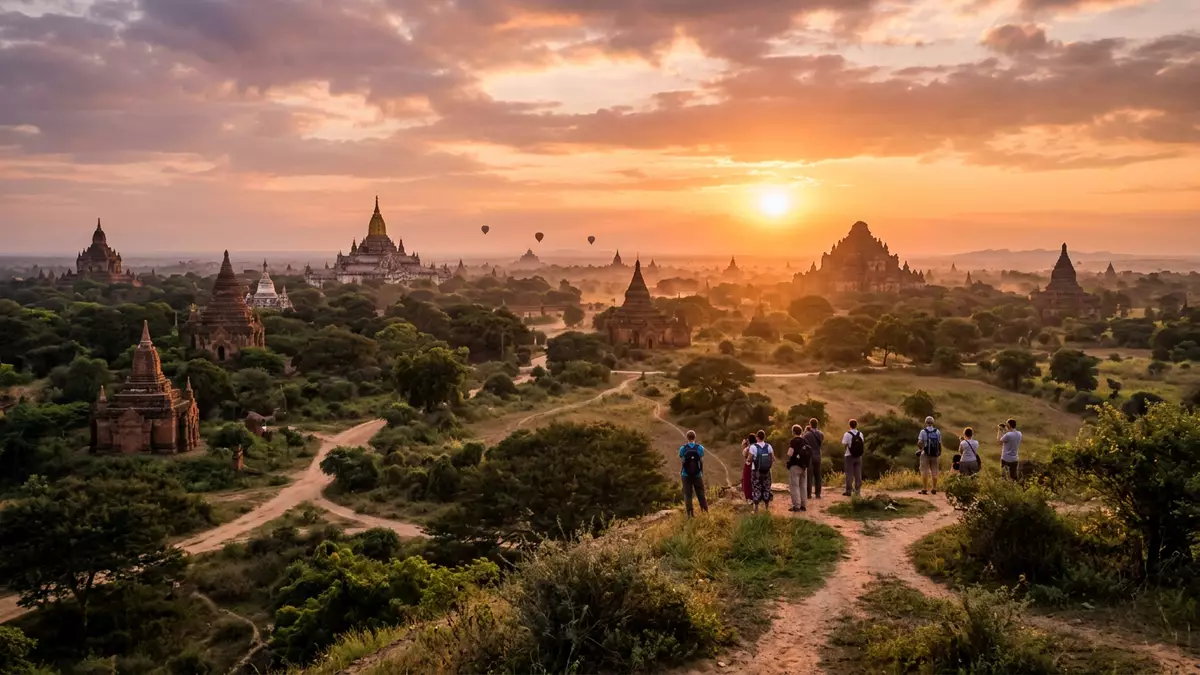
Bagan is a sacred landscape in central Myanmar, spread along a bend in the Ayeyarwady River. Its brick temples, stupas, monasteries and inscriptions make the plain a dense historical landscape, not a single monument. UNESCO World Heritage Site
Brick monuments across the Ayeyarwady plain
The place is best read as a field of monuments rather than a lone landmark. Temples rise from flat ground in brick, with stupas and monastic remains interrupting the open plain. serial property of eight components underlines that spread.
The surviving fabric belongs to a long Buddhist building tradition that took shape during the Bagan Period. The site also preserves frescoes and sculptures, so the monuments are not only shells of brick but carriers of painted and carved detail.
The Bagan kings and their age
Bagan’s historical core is tied to the period when the city was capital of a major empire. The UNESCO record places that flourishing between the eleventh and thirteenth centuries, a span that gives the site its strongest historical frame.
The same record links the landscape to Theravada Buddhist practice and to kingly patronage, with the ruler acting as chief donor. That combination of religion, power and building produced the temple plain that remains visible across Bagan’s open ground.
Archaeology, murals and carved stone
Beyond the skyline of temple mass and stupa domes, Bagan includes archaeological remains, murals and inscriptions. The monument field keeps several kinds of evidence together: brick structure, painted interior surfaces, carved sculpture and written record.
The site’s status as a World Heritage property rests on that mixture of Buddhist art, architecture and surviving archaeological material. The result is a landscape where the buildings and their decoration can still be read as part of the same historic setting.
Visiting Bagan: what travellers from Western Europe should know
- Bagan lies in Myanmar’s central dry zone on the Ayeyarwady River, and the main approach is through the roads and transport links serving Nyaung-U and nearby villages.
- The ground is flat, but the monuments are spread across a broad area, so the place is explored as a scattered landscape rather than a compact quarter.
- The official language is Burmese and the currency is the kyat.
- Entry requirements depend on your nationality; UK travellers can check the FCDO travel advice at gov.uk/foreign-travel-advice, Irish travellers the Department of Foreign Affairs at ireland.ie.
Searching for Bagan on social platforms
These links open searches for Bagan on each platform.
Frequently asked questions about Bagan
Where is Bagan?
Bagan lies in central Myanmar on the Ayeyarwady River, within the country’s dry zone. It is a historic landscape rather than a single building.
What should a visit there expect?
The visitor sees temples, stupas, monasteries, inscriptions and archaeological remains spread across open ground. The place works as a broad historic plain, not a compact city centre.
What makes Bagan distinctive?
Its distinction lies in the concentration of Buddhist architecture, brick construction and surviving art from the Bagan Period. The landscape preserves the scale of a former capital and its religious building culture.


