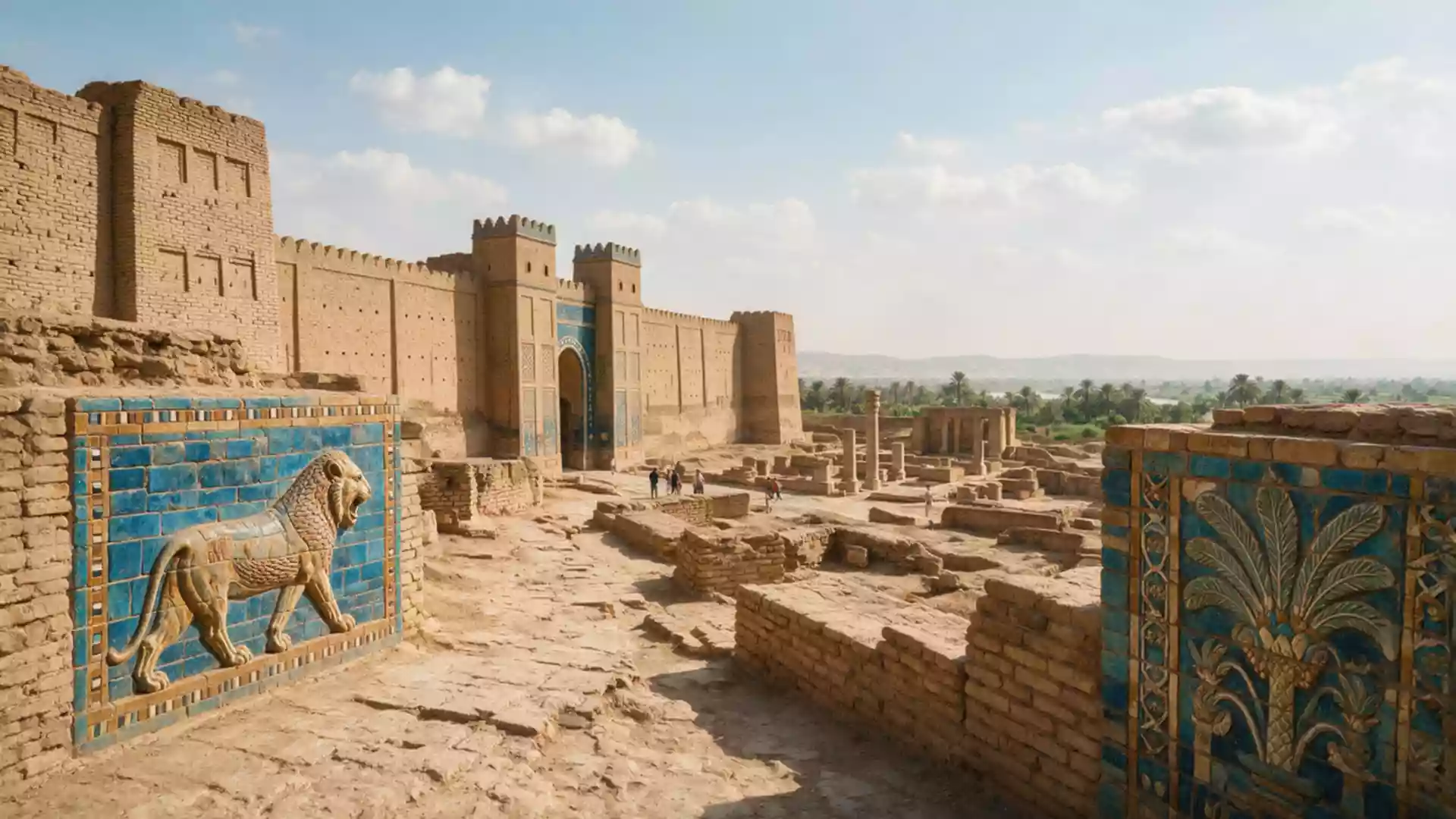
Babylon’s brick ruins along the Euphrates at Hillah
Published on 09/10/2026 at 20:48 | Editorial responsibility: Rafael Müller, Editor-in-Chief AD HOC NEWS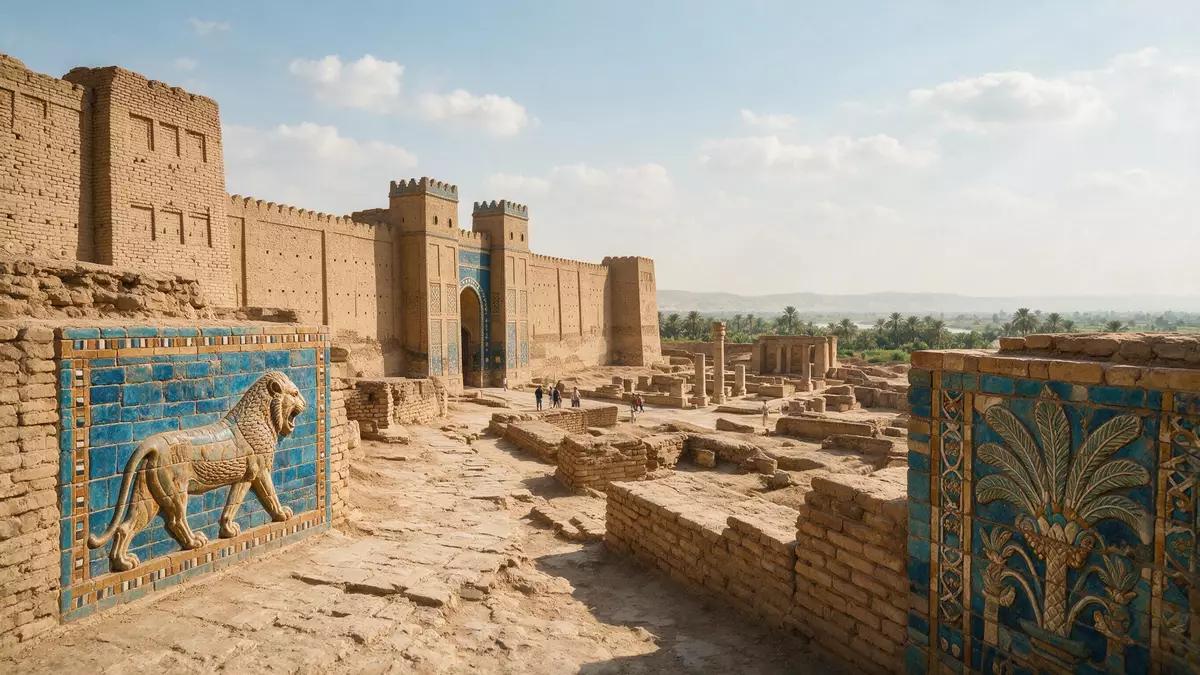
South of Hillah in central Iraq, Babylon stretches across low ground beside the Euphrates, a wide archaeological site where mud-brick walls, gateways and temple platforms mark the footprint of an ancient capital of Mesopotamia.located on the lower Euphrates river Visitors walk through reconstructed sections and exposed foundations that recall Babylon’s role as the centre of the Neo-Babylonian Empire in the sixth century BC.
The ancient city in the Neo-Babylonian period
Babylon took shape as a major city in southern Mesopotamia long before the Neo-Babylonian kings, but its most powerful phase came when it served as the capital between 626 and 539 BC.capital between 626 and 539 BCE The site lies within the Babil Governorate, on land administered around Shatt Al-Hillah, linking the ruins directly to the modern region and its administrative centre at Hillah.within the territory of the Shatt Al-Hillah Municipality
Today the visible remains include inner and outer city walls, palace complexes and temple areas that correspond to the Neo-Babylonian city described in historical sources.outer and inner city walls, gates, palaces and temples These ruins occupy a large area of low ground and adjacent agricultural plots, giving a sense of the scale of the city at its height while leaving most of the wider landscape under cultivation.archaeological remains contained in both the inner and the outer city wall
Walls, gates and the processional way
The defining experience of Babylon is moving along its broad processional route and past the surviving fortifications that once enclosed the royal and religious core of the city.Babylon is an ancient city Sections of the inner city wall rise above the surrounding plain in thick mud-brick lines, forming angular corners and corridors that outline former streets and compounds.
Gateways and palace platforms break the continuity of the walls, indicating points where ceremonial traffic moved between districts or entered the royal compound.the ruins of the city The long processional way through the site can be traced by its paving and flank walls, guiding visitors between major structures and connecting the core of Babylon to the wider area along the riverbank.
Babylon as a World Heritage archaeological landscape
Babylon holds formal recognition as a cultural World Heritage Site, inscribed in 2019 for its archaeological importance and its association with the Neo-Babylonian Empire.inscribed on the World Heritage List The listing covers the excavated ruins within the city walls and selected agricultural areas around them, capturing both the monumental core and the wider setting beside the Euphrates.includes archaeological remains and agricultural areas
The World Heritage designation emphasises Babylon’s value as a surviving record of an empire that influenced law, religion and urban culture across Mesopotamia and beyond.one of the most influential empires of the ancient world On the ground, the site reads as an extensive archaeological landscape rather than a single monument, and walking from the monumental ruins to the fringes of the property shows how the ancient city related to its surrounding fields and waterways.
Visiting Babylon: what travellers from Western Europe should know
- Babylon lies south of Baghdad near Hillah in the Babil Governorate, reached by road from the Iraqi capital and by local routes from surrounding cities in central Iraq.
- The archaeological site spreads across flat ground beside the Euphrates, with long, sometimes uneven walking surfaces among ruins, earth embankments and low walls.
- The wider area around Babylon includes the city of Hillah, nearby archaeological sites such as Borsippa and Kish, and cultivated land along the river.
- The official language is Arabic and the currency is the Iraqi dinar.
- Entry requirements depend on your nationality; UK travellers can check the FCDO travel advice at gov.uk/foreign-travel-advice, Irish travellers the Department of Foreign Affairs at ireland.ie.
Searching for Babylon on social platforms
These links open searches for Babylon on each platform.Frequently asked questions about Babylon
Where is Babylon in relation to Hillah and Baghdad?
Babylon stands within the Babil Governorate on the lower Euphrates, near Hillah and around 85 km south of Baghdad.about 85 kilometres south of Baghdad
What can visitors expect when exploring the site?
Visitors encounter stretches of mud-brick city walls, palace and temple platforms, and a processional route through the archaeological landscape beside the river.
What makes Babylon distinctive among ancient cities?
Babylon combines extensive urban ruins from the Neo-Babylonian period with formal recognition as a World Heritage Site for its role in one of antiquity’s major empires.Babylon, Iraq, on the World Heritage List