Ayutthaya Historical Park and the river island of a lost Siamese capital
Published on 09/14/2026 at 17:49 | Editorial responsibility: Rafael Müller, Editor-in-Chief AD HOC NEWS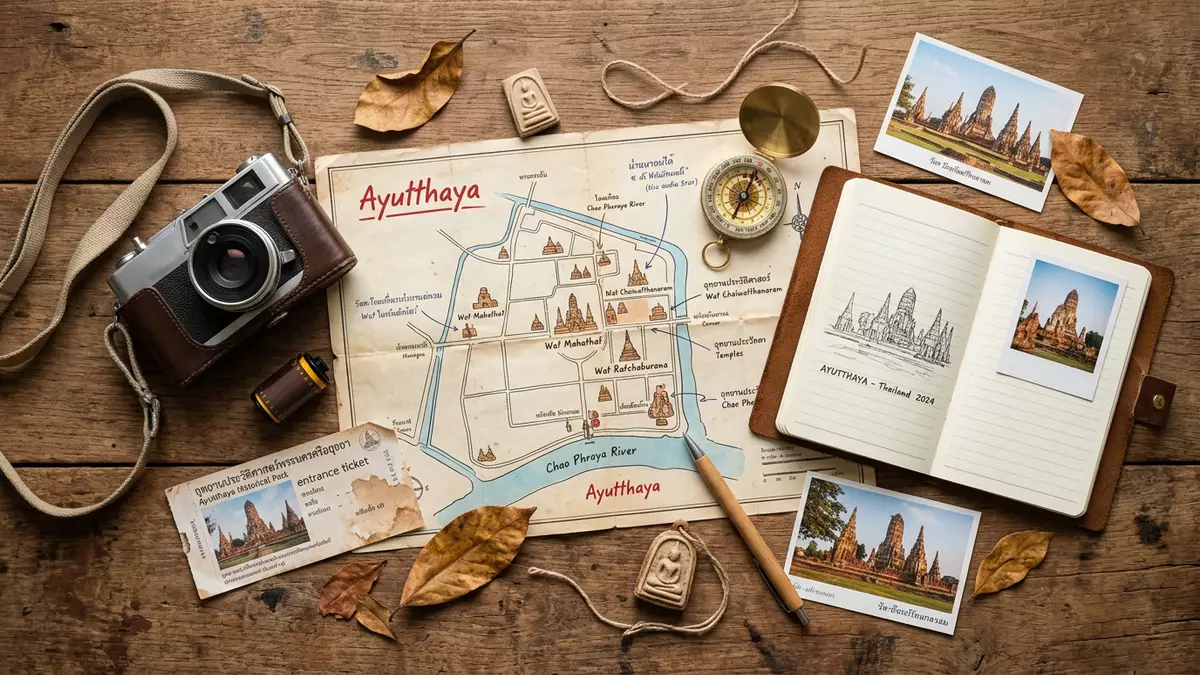
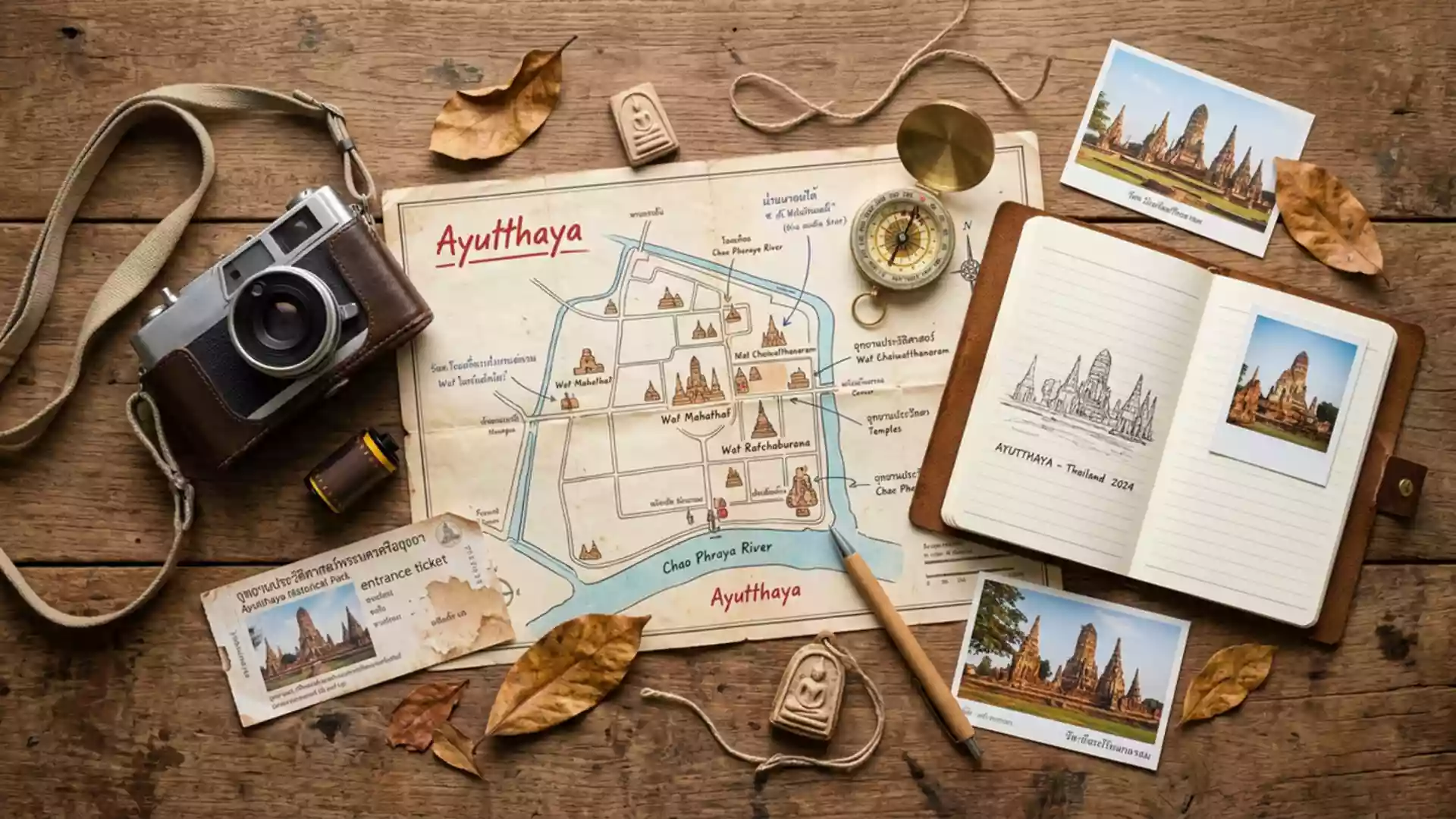
Ayutthaya Historical Park in Ayutthaya, Thailand, preserves the ruins of a former Siamese royal capital on a low river island outlined by three rivers, where brick stupas and prang towers still rise over ponds and grassy plots.Ayutthaya Historical Park grew out of a state-backed conservation project in the late twentieth century and forms the core of the UNESCO World Heritage property known as the Historic City of Ayutthaya, inscribed in 1991 as evidence of a long-lived Siamese civilisation.Historic City of Ayutthaya
River island capital of the Ayutthaya Kingdom
Ayutthaya Historical Park occupies the area of the old royal city, laid out on an island formed where the Chao Phraya, Pa Sak and Lopburi rivers meet, a site that remained the centre of Siamese power for centuries.Ayutthaya Historical Park sits on an island The royal capital, founded in 1351 by King Ramathibodi I, also known as U Thong, became the seat of the Ayutthaya Kingdom until its destruction by a Burmese invasion in 1767, leaving brick foundations and temple platforms where palace compounds once stood.founded in 1351 by King U ThongAyutthaya was the capital until 1767
Within the park the pattern of the old court city remains legible: clusters of temple precincts, former palace grounds and monastery compounds arranged around straight processional streets and ponds, with brick stupas and stone Buddha images marking the religious zones.Ayutthaya Historical Park encompasses 289 hectares containing 95 historical sites Many of the most recognisable monuments lie within a central core zone on the island, including Wat Mahathat and Wat Ratchaburana, where temple bases and prang towers stand among lawns and trees, giving the archaeological landscape a park-like character.the inscribed core zone includes Wat Mahathat and Wat Ratchaburana
Ruined temples, prang towers and royal precincts
The park’s most striking structures are temple complexes whose brick and stone fabric has survived in varying states of ruin, from near-complete prang towers to low lines of foundations and scattered Buddha images.temple ruins, royal palaces and Buddhist monasteries Wat Mahathat, close to the centre of the island, combines a central prang with surrounding stupas and cloister walls, its collapsed structures exposing layers of brickwork and stone reliefs that recall the blend of Khmer-inspired tower forms and local Ayutthaya styles.Wat Mahathat
Nearby Wat Ratchaburana preserves a tall central prang over a multi-tiered base, with steep exterior stairways and traces of stucco decoration, while Wat Phra Si Sanphet, once part of the royal palace compound, is marked by a line of large chedi structures that rise from a raised platform above the surrounding parkland.Wat Ratchaburana, Ayutthaya In several temple precincts headless Buddha images and broken boundary markers line terraces and walkways, and decapitated statues stand on laterite bases, bearing the marks of destruction and later excavation while still framing vistas across ponds and grassy courtyards.decapitated Buddha images, crumbling chedis and broken temple walls
UNESCO World Heritage protection and modern Ayutthaya
Ayutthaya Historical Park forms the heart of the Historic City of Ayutthaya World Heritage property, which covers around 289 ha of the former royal island and was inscribed on the UNESCO list in 1991 under criterion (iii) for bearing exceptional testimony to a historic civilisation.the total area of the World Heritage property is 289 hainscription under cultural criterion (iii) The Fine Arts Department in Thailand began systematic restoration of the ruins in the 1950s, and the area was formally declared a historical park in 1976, so that conservation work and controlled public access could be organised across the island and surrounding sites.restoration from 1956 and park declaration in 1976
Modern Ayutthaya has grown around and between these protected zones, with streets, houses and markets woven through an archaeological landscape that still shows the outlines of moats and canals, and the park acts as an open museum where the royal city’s layout can be traced in brick and earthworks.Ayutthaya Historical Park Project The surviving prang towers and chedi clusters, together with monastic compounds that remain active outside the core zone, show the long continuity of Buddhist practice in the region and the way later temple building has echoed the forms of the ruined royal foundations.active temples continue to serve Buddhist communities
Visiting Ayutthaya Historical Park: what travellers from Western Europe should know
- Ayutthaya Historical Park lies on an island within Ayutthaya, north of Bangkok, reached by rail from Bangkok’s main stations and by road along the route commonly signed as Asian Highway 1.
- Temple precincts and palace platforms within the park involve walking over uneven brick foundations, packed earth and grass, with some steep stairways climbing prang bases and chedi terraces.
- The island is surrounded by the Chao Phraya, Pa Sak and Lopburi rivers, so several viewpoints include embankments and riverside parks where the ruined towers can be seen against the water.
- The official language is Thai and the currency is the baht.
- Entry requirements depend on your nationality; UK travellers can check the FCDO travel advice at gov.uk/foreign-travel-advice, Irish travellers the Department of Foreign Affairs at ireland.ie.
Searching for Ayutthaya Historical Park on social platforms
These links open searches for Ayutthaya Historical Park on each platform.Frequently asked questions about Ayutthaya Historical Park
Where is Ayutthaya Historical Park?
Ayutthaya Historical Park occupies the area of the former royal city on a river island in Ayutthaya, in central Thailand, north of Bangkok.
What can visitors expect to see inside the park?
Visitors encounter ruined temple complexes, prang towers, chedi clusters, palace platforms and Buddha images arranged among ponds, lawns and tree-lined paths.
What makes Ayutthaya Historical Park distinctive among Southeast Asian sites?
The park combines a large-scale river island city plan with dense temple ruins and royal precincts, preserved as a UNESCO-listed archaeological landscape of a long-lived Siamese capital.