

Ayasofya in Istanbul: a vast dome over layered faiths
Published on 09/15/2026 at 19:58 | Editorial responsibility: Rafael Müller, Editor-in-Chief AD HOC NEWS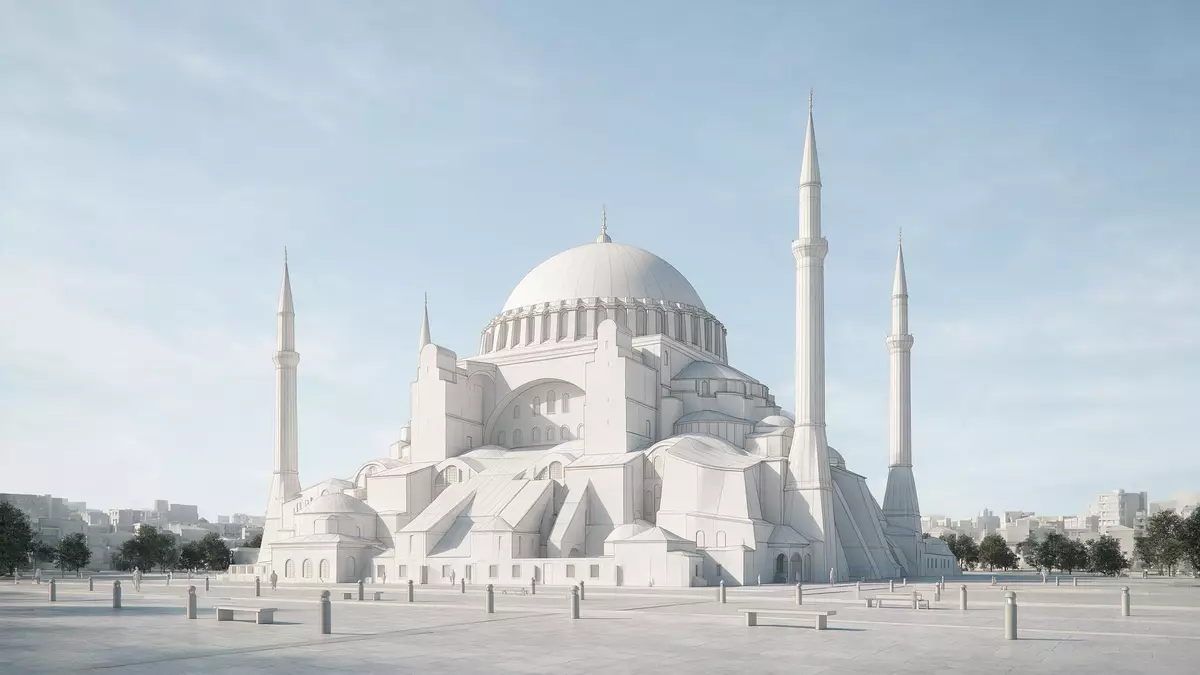
Ayasofya in Istanbul, known in English as Hagia Sophia, gathers centuries of faith and power beneath a single vast dome. Built as the principal church of Constantinople and later transformed into a mosque and then a museum, it now stands again as a functioning mosque within the historic district of Fatih. The structure in its present form was completed in the sixth century under Emperor Justinian I, and its scale and engineering make it a central monument of Byzantine architecture.
Ayasofya’s sixth-century basilica and its great dome
The Ayasofya visitors encounter in Sultanahmet is the third major church raised on this site, constructed between 532 and 537 under the direction of the Byzantine emperor Justinian I as the Church of Holy Wisdom.constructed between 532 and 537 The designers Anthemius of Tralles and Isidore of Miletus combined a longitudinal basilica plan with a more centralised volume, creating an interior that reads both as a processional hall and as a focus around the dome.Anthemius of Tralles and Isidore of Miletus The main canopy rises on pendentives above a square core of massive piers, with half-domes extending along the principal axis and smaller semi-domes and arches stepping down to the outer walls.main dome supported on pendentives
From the floor of the prayer hall or the upper galleries, the transition from the heavy masonry supports to the curving dome is marked by tiers of windows at the base of the canopy and by arcades that open above the aisles. The dome itself has been rebuilt in the sixth century after earthquake damage, but it retains the essential proportions that made Ayasofya one of the largest covered interiors of its time.principally the third monument Marble revetments, columns brought from earlier sites and richly worked capitals form vertical bands along the walls, while broad expanses of plaster carry traces of Christian imagery beneath Ottoman inscriptions.
From imperial church to Ottoman mosque and museum
Ayasofya’s story is written in its successive functions. The first church on this site was dedicated in 360 during the reign of Constantius II, son of Constantine, and served as the cathedral of Constantinople.dedicated in 360 That early building, and its fifth-century successor, did not survive riots and fires, and Justinian’s sixth-century project replaced them with the masonry mass seen today.sixth-century project For nearly a millennium after 537, Ayasofya functioned as the principal church of the Byzantine capital, with a brief period under Latin rulers in the thirteenth century when a Western hierarchy occupied the building.Latin rulers in the thirteenth century
Following the Ottoman capture of Constantinople in 1453 under Mehmed II, the church was converted into a mosque, and elements associated with Islamic worship were introduced.converted into a mosque Minarets rise from the outer corners of the structure, and large roundels bearing calligraphic names of important figures in Islam now hang in the interior. In the twentieth century, Ayasofya was redesignated as a museum, beginning in 1935, which opened more of its Christian mosaics and architectural details to non-ritual public viewing.museum from 1935 Since 2020, the building again holds mosque status under its official title as the Hagia Sophia Grand Mosque, while continuing to draw visitors interested in its layered religious heritage.Hagia Sophia Grand Mosque
Setting in Sultanahmet and what visitors encounter
Ayasofya stands in the Sultanahmet district of Istanbul’s Fatih municipality, on the historic peninsula that faces the Bosphorus and the Sea of Marmara.Fatih district of Istanbul It occupies Ayasofya Square between Topkap? Palace and the Sultan Ahmed Mosque, forming a group of imperial-era monuments around the former Byzantine and Ottoman centres of power.Ayasofya Meydan? in Sultanahmet Approaches lead through paved squares and gardens, and the building’s mass and domes are visible from surrounding streets and tram routes crossing the historic quarter.Ayasofya Meydan? address
Inside, the ground-level hall functions as the main prayer area of the mosque, with carpets covering the floor and chandeliers suspended from long chains below the dome.active mosque Above, an upper gallery runs around substantial parts of the volume, reached by ramps built of stone, which historically allowed ceremonial processions and now form part of the visitor route. Remaining mosaics depicting figures from Christian tradition, geometric and vegetal ornament from the Byzantine period and painted inscriptions from the Ottoman era share the same walls, illustrating the succession of cultures that have used this space.historic layers
Visiting Ayasofya: what travellers from Western Europe should know
- Ayasofya stands in Sultanahmet in the Fatih district of Istanbul, near the Sultan Ahmed Mosque and Topkap? Palace, and is reached by city streets and public transport.
- The building is a large masonry structure with extensive interior space; visiting involves walking across carpeted floors and ascending stone ramps to reach the upper galleries.
- Ayasofya is on Turkey’s historic peninsula; the official language is Turkish and the currency is the Turkish lira.
- Entry requirements depend on your nationality; UK travellers can check the FCDO travel advice at gov.uk/foreign-travel-advice, Irish travellers the Department of Foreign Affairs at ireland.ie.
Searching for Ayasofya on social platforms
These links open searches for Ayasofya on each platform.
Frequently asked questions about Ayasofya
Where is Ayasofya located in Istanbul?
Ayasofya stands in the Sultanahmet quarter of the Fatih district on Istanbul’s historic peninsula, close to the Sultan Ahmed Mosque and Topkap? Palace.
What can visitors expect inside Ayasofya?
Visitors encounter a vast domed interior with marble-lined walls, carpets covering the mosque’s prayer area, upper galleries reached by stone ramps and both Christian and Islamic decoration.
What makes Ayasofya distinctive among historic religious buildings?
Ayasofya combines an early Byzantine basilica plan with a monumental dome, and it carries visible layers from its periods as an imperial church, Ottoman mosque, museum and mosque again.


