

Ayasofya as a vast stone canopy over Istanbul
Published on 08/29/2026 at 11:11 | Editorial responsibility: Rafael Müller, Editor-in-Chief AD HOC NEWS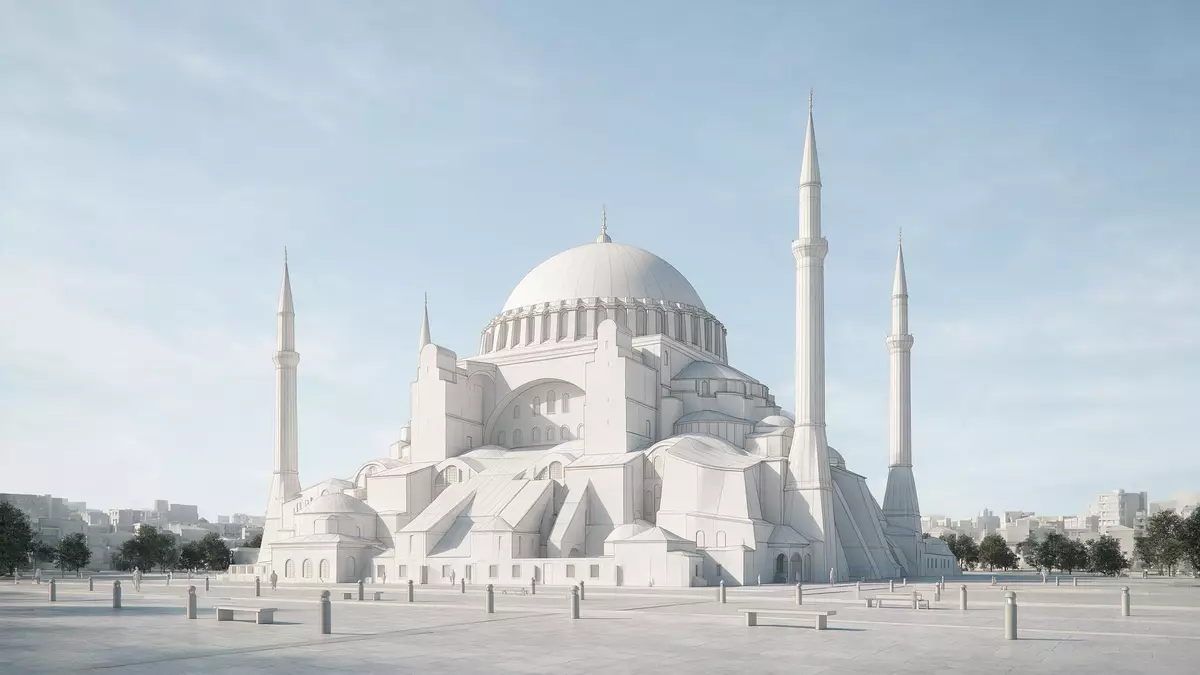
Ayasofya, also known in English as Hagia Sophia, rises over the historic peninsula of Istanbul with a vast central dome that has dominated the skyline since the sixth century. Completed in 537 under the Byzantine emperor Justinian I as the cathedral of Constantinople, it later became an imperial Ottoman mosque and now functions again as a mosque while remaining a major historic monument.
A sixth-century dome over a marble hall
The core of Ayasofya is the sixth-century church commissioned by Emperor Justinian I and inaugurated in 537 as the principal cathedral of the Eastern Roman Empire.completed in 537 This building stands in the Fatih district of Istanbul, close to the former imperial palace and the Hippodrome, on ground that formed the ceremonial heart of the old city.Fatih district of Istanbul Its plan combines a longitudinal basilica with a centralised space, anchored by a dome that was a major engineering achievement of its time.
The main interior is a high hall paved with marble slabs, framed by colonnades and upper galleries and carried by massive piers that rise to support the dome and its semi-domes.Byzantine cathedral in 537 Light reaches the hall through multiple tiers of windows cut into the drum and the walls, picking out the veining of the marble and the gilded backgrounds of surviving mosaics. The mixture of stone structure, plastered surfaces and mosaic decoration gives the space a layered appearance, with Christian iconography from the Byzantine period sharing the same volume as later Ottoman elements such as painted calligraphy panels.
From Byzantine cathedral to Ottoman mosque
Ayasofya’s current form reflects a succession of religious uses that can be traced in the fabric of the building. It served as the cathedral of Constantinople for centuries, with its dedication as a Byzantine church in 537 and its status as an Eastern Orthodox cathedral maintained until the Ottoman conquest in 1453.Eastern Roman Church in Istanbul After the capture of the city by Sultan Mehmed II in 1453, Ayasofya was converted into an imperial mosque and remained a major Ottoman place of worship.mosque in 1453
In the twentieth century Ayasofya experienced another change of status when it was designated a museum in 1934 during the Turkish Republic under Mustafa Kemal Atatürk, and it was reopened for Muslim worship in 2020 as the Hagia Sophia Grand Mosque.museum in 1935 and mosque in 2020 These transitions left visible traces: Ottoman minarets rise at the corners of the structure, a mihrab and minbar stand within the former church, and large calligraphic roundels hang below the dome, while Byzantine mosaics depicting emperors, empresses and religious figures survive on walls and in galleries.
Ayasofya in the Sultanahmet skyline
Ayasofya stands in the Sultanahmet quarter of the Fatih district, on the first of Istanbul’s historic hills, facing the Blue Mosque across an open square.Sultanahmet semtinde From outside, the broad mass of the main hall supports the central dome, flanked by semi-domes and buttressed by later additions, with slender minarets marking the corners. The exterior surfaces show layers of masonry and plaster in differing tones, revealing phases of repair and alteration over many centuries.
Within the wider historic district, Ayasofya sits close to other major monuments of Istanbul’s past, including the former Hippodrome and the precincts of Topkap? Palace, which lie within walking distance on the same peninsula.Ayasofya Meydan?, Sultanahmet The building’s dome and minarets can be seen from the waters of the Bosphorus and the Sea of Marmara, where they form part of a skyline that also includes other Ottoman mosques.
Visiting Ayasofya: what travellers from Western Europe should know
- Ayasofya stands in the Sultanahmet area of the Fatih district on Istanbul’s historic peninsula, near the former Hippodrome and the precincts of Topkap? Palace.
- The interior includes a large hall with stone paving and galleries above, and reaching different levels involves long flights of ramps and steps.
- The official language is Turkish and the currency is the Turkish lira.
- Entry requirements depend on your nationality; UK travellers can check the FCDO travel advice at gov.uk/foreign-travel-advice, Irish travellers the Department of Foreign Affairs at ireland.ie.
Searching for Ayasofya on social platforms
These links open searches for Ayasofya on each platform.
Frequently asked questions about Ayasofya
Where is Ayasofya located in Istanbul?
Ayasofya stands in the Fatih district on Istanbul’s historic peninsula, in the Sultanahmet area between the former Hippodrome and the Blue Mosque.
What can visitors expect inside Ayasofya?
Visitors encounter a large stone-paved hall under a central dome, with upper galleries, Ottoman calligraphy panels and surviving Byzantine mosaics visible in the same interior.
What makes Ayasofya distinctive among Istanbul’s monuments?
Ayasofya combines a sixth-century Byzantine church built under Emperor Justinian I with later Ottoman mosque elements, expressed most visibly in its central dome and minarets.


