

Ayasofya and its vast dome over Istanbul
Published on 08/31/2026 at 11:06 | Editorial responsibility: Rafael Müller, Editor-in-Chief AD HOC NEWS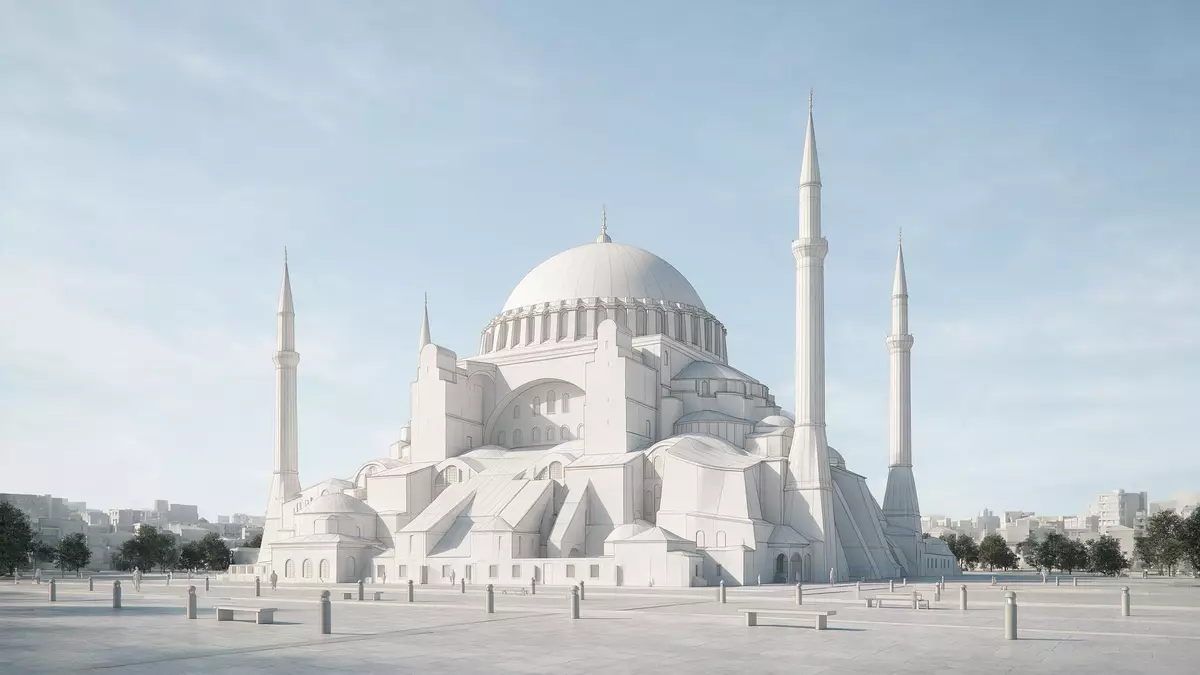
Ayasofya in Istanbul, known in English as Hagia Sophia, is defined by a vast central dome that hangs above its interior like a stone canopy over the historic peninsula. Completed in the sixth century as the principal church of Constantinople under Emperor Justinian I, it later became an imperial Ottoman mosque and today functions as a mosque with museum areas inside the same monumental shell.
A stone dome at the centre of an empire
Ayasofya stands in the Fatih district of Istanbul on the former ceremonial heart of the city, close to the old imperial palace and the Hippodrome of Constantinople.Fatih district of Istanbul The building that travellers recognise today was commissioned by the Byzantine emperor Justinian I and constructed between 532 and 537 as a cathedral for the Eastern Roman Empire.constructed between 532 and 537 Its name, “Holy Wisdom”, expresses the theological concept it embodied in the Christian capital of the empire.
The completed church was inaugurated in 537 and served for centuries as the main cathedral of Constantinople and the seat of the patriarch.cathedral of Constantinople In plan it combines a longitudinal basilica with a centralised space dominated by the dome, a layout that made the interior read as both hall and vault at once.largest Eastern Roman Church in Istanbul The dome itself, carried on pendentives above massive piers, was one of the great engineering achievements of late antique architecture and became a defining image of the city’s silhouette.
From Byzantine basilica to Ottoman mosque and museum
When Sultan Mehmed II captured Constantinople in 1453, Ayasofya was converted into an imperial mosque and integrated into the religious fabric of the Ottoman capital.converted to a mosque in 1453 Minarets rose around the structure, and Islamic elements such as calligraphic roundels were added inside, so that Byzantine mosaics and Ottoman inscriptions occupied the same vast interior. For Western European visitors, the coexistence of these layers is one of the clearest ways to see the city’s passage from Eastern Roman to Ottoman rule embodied in stone and plaster.
In 1934 the Turkish Republic under Mustafa Kemal Atatürk issued a decree that secularised Ayasofya and prepared it for use as a museum, and in 1935 it opened in that form.served as a museum between 1935 and 2020 The change revealed more of the Christian-era mosaics, which had been covered during the centuries of use as a mosque.Byzantine mosaics and Ottoman elements In 2020 Ayasofya was redesignated as the Hagia Sophia Grand Mosque, restoring its status as a mosque while keeping it accessible to visitors, and museum functions continue in the upper galleries.
Architecture, light and surfaces inside Ayasofya
Ayasofya’s architecture mixes structural mass with surfaces of marble, mosaic and plaster that catch the light under the dome. The main interior volume reads as a vast nave flanked by side aisles and galleries, with arcades and semi-domes stepping out under the main vault. The dome itself appears to float because its windows sit at its base, admitting daylight that spreads across the upper parts of the building.
Inside, large medallions carry Arabic calligraphy naming early Islamic figures, while on walls and vaults fragments of Byzantine mosaics depict Christ, the Virgin and imperial patrons.Byzantine mosaics and imperial patrons Floors and lower walls are faced with coloured marble panels, some arranged in mirrored patterns that give a sense of ordered stone veining. For visitors walking through the space, the juxtaposition of Christian imagery, Islamic inscriptions and imperial architecture is immediate and does not require prior knowledge of the building’s history to feel the layered past.
Visiting Ayasofya: what travellers from Western Europe should know
- Ayasofya stands in the historic Sultanahmet area of Istanbul, within the Fatih district on the former Byzantine and Ottoman ceremonial core of the city. It lies near the Hippodrome and the former Topkap? Palace complex.
- The interior involves walking across large stone floors and climbing stairways in the galleries, some of which are long ramps with worn surfaces; footwear with good grip helps on these inclines.
- The surrounding area contains other major monuments of the Historic Areas of Istanbul World Heritage Site, including the former Byzantine Hippodrome, the Blue Mosque and the palace precincts overlooking the Bosphorus.
- The official language is Turkish and the currency is the Turkish lira.
- Entry requirements depend on your nationality; UK travellers can check the FCDO travel advice at gov.uk/foreign-travel-advice, Irish travellers the Department of Foreign Affairs at ireland.ie.
Searching for Ayasofya on social platforms
These links open searches for Ayasofya on each platform.
Frequently asked questions about Ayasofya
Where is Ayasofya in Istanbul?
Ayasofya stands in the Fatih district on Istanbul’s historic peninsula, close to the former imperial palace and the old Hippodrome at Sultanahmet.
What can visitors expect inside Ayasofya?
Visitors encounter a vast domed interior with marble floors, arcades and galleries, where Byzantine mosaics, Ottoman calligraphy and monumental stone structure share the same space.
What makes Ayasofya distinctive among Istanbul’s monuments?
Its sixth-century dome, long use as both cathedral and mosque, and visible combination of Christian and Islamic art give Ayasofya a layered character that few other buildings in the city display.


