
Axum Stelae: granite towers of the Aksumite kingdom
Published on 08/27/2026 at 17:52 | Editorial responsibility: Rafael Müller, Editor-in-Chief AD HOC NEWS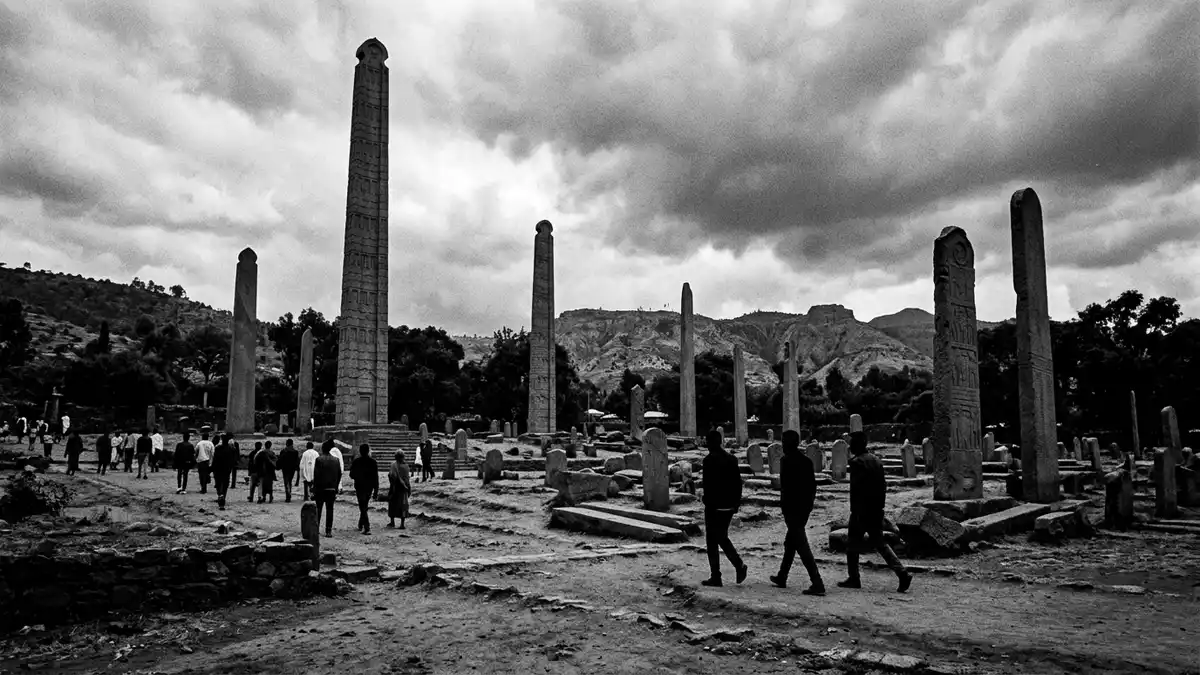
Axum Stelae are monumental stone towers rising over an ancient burial landscape on the northern edge of Aksum in Ethiopia’s Tigray region. Carved from single blocks of local rock and set above tombs, they form one of the most striking surviving ensembles of the Aksumite kingdom of late antiquity, with several examples dating to the third and fourth centuries AD.
Granite towers over a royal necropolis
The main concentration of Axum Stelae lies in the Northern Stelae Park, an archaeological field close to the centre of Aksum. Here, dozens of granite monoliths stand or lie in rows, marking tombs beneath the surface and creating a dense forest of vertical stone in front of the town’s low buildings.Northern Stelae Park The site forms part of the Aksum archaeological complex inscribed on the UNESCO World Heritage List, recognising the city’s role as a major centre of the Aksumite civilisation and long-distance trade across the Red Sea and Indian Ocean.Aksum World Heritage inscription
Many of the stelae are shaped to resemble slender multi-storey buildings, with carved bands, shallow recesses and false door and window motifs stacked one above another. These details echo Aksumite palace architecture and lend the stone shafts a recognisable façade-like appearance even where the monoliths have partly broken and now lie along the ground.monumental stelae of Aksum
The Great Stele and its companions
Among the Axum Stelae, three monuments have become particularly well known: the Great Stele, the so-called Rome Stele and the King Ezana Stele. The Great Stele, also known as Stele 1, is a single block of stone about 33 m (108 ft) long and weighing in the region of 520 tonnes; it lies in several pieces where it collapsed, having never stood securely for long, if at all.Great Stele dimensions Nearby, the King Ezana Stele rises to around 21 m (69 ft), with its surface divided into storeys and decorated with carved false doors and windows that suggest a tower of several floors.King Ezana Stele description
The Rome Stele, formally the Obelisk of Axum, stands approximately 24 m (79 ft) high and is cut from a single block of phonolite, a dense volcanic rock. It was taken from Aksum to Rome in the twentieth century and later returned and re-erected in the stelae field, where its carved façade once again lines up with its neighbours.Obelisk of Axum Taken together, the tallest stelae demonstrate the ambition of Aksumite stone working, pushing monolithic architecture to scales normally associated with cut-stone construction.
Aksumite craftsmanship and funerary tradition
The Axum Stelae belong to funerary traditions of the Aksumite kingdom, erected above elite and royal tombs and forming the visible markers of burial complexes cut into the earth below. Archaeological work has revealed tomb chambers beneath several of the largest monoliths, supporting the interpretation of the field as a royal necropolis used over successive dynasties before the widespread adoption of Christianity in the region.royal necropolis at Aksum
Quarries supplying stone to the stelae fields lie a few kilometres west of Aksum, with blocks cut from nepheline syenite and granite and hauled to the site for carving and erection. The largest monoliths reach heights of over 20 m (65 ft), and several were raised during the third and fourth centuries AD, a period of significant change in Aksumite society as its court embraced Christianity and expanded its trading networks.third and fourth century stelae At the site today, fallen shafts, standing towers and the outlines of tombs together convey the scale of the undertaking and the organisational skills of the builders.
Visiting Axum Stelae: what travellers from Western Europe should know
- Axum Stelae stand in the Northern Stelae Park on the northern side of Aksum in Ethiopia’s Tigray region, reached by road links from other towns in northern Ethiopia.
- The stelae field is laid out on a gently sloping open area with stone surfaces, uneven ground and burial pits; moving among the monoliths involves walking on rough terrain.
- Further stelae fields, including the Gudit Stelae Field and other burial zones, lie near the main park, offering additional perspectives on the Aksumite landscape for those exploring the wider area.
- The official language is Amharic and the currency is the Ethiopian birr.
- Entry requirements depend on your nationality; UK travellers can check the FCDO travel advice at gov.uk/foreign-travel-advice, Irish travellers the Department of Foreign Affairs at ireland.ie.
Searching for Axum Stelae on social platforms
These links open searches for Axum Stelae on each platform.
Frequently asked questions about Axum Stelae
Where are Axum Stelae located?
Axum Stelae stand in and around the Northern Stelae Park on the northern side of Aksum, a historic town in Ethiopia’s Tigray region.
What can visitors expect when walking among the stelae?
Visitors encounter standing and fallen granite monoliths arranged above tombs, with carved façades suggesting multi-storey buildings and uneven stone ground underfoot.
What makes Axum Stelae distinctive among ancient monuments?
The Axum Stelae combine extreme monolithic scale, carved architectural detail and a clear link to royal burial practices of the Aksumite kingdom in the third and fourth centuries AD.


