
Axum Stelae and the stone towers of Aksum
Published on 09/23/2026 at 14:43 | Editorial responsibility: Rafael Müller, Editor-in-Chief AD HOC NEWS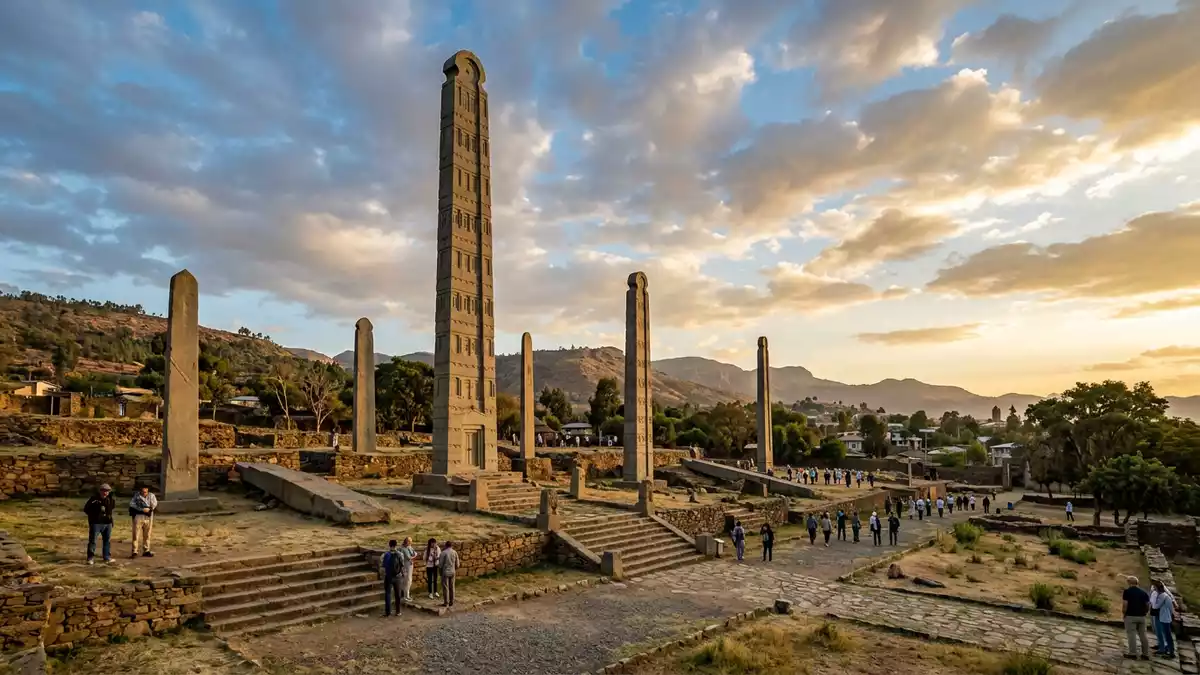
Axum Stelae form a field of carved stone towers beside the ancient city of Aksum in northern Ethiopia. Standing shafts, fallen monoliths and underground tombs share the same archaeological landscape, with the tallest surviving decorated stele reaching about 24 m (79 ft).
Axum Stelae: towers carved from single blocks
The monuments are monolithic stelae, each shaped from a single block of stone. Their surfaces imitate multi-storey buildings, with recessed panels, narrow bands and a carved representation of a doorway near the base. The upper sections end in rounded forms that recall roof structures.
Phonolite and related volcanic stone give the monuments their dark, weathered appearance. The best-preserved standing example, commonly called the Obelisk of Axum, is about 24 m (79 ft) high and weighs roughly 160 tonnes. Its carved face presents the appearance of a tall building in solid stone, while the sides carry repeated architectural details. the decorated stele belongs to the fourth-century phase of Aksumite monument building.
The Aksumite kingdom in stone
Most of the major stelae date from the third and fourth centuries AD, when the Kingdom of Aksum controlled an important zone between the Red Sea, the Nile region and the interior of the Horn of Africa. Aksum was the kingdom’s political centre and a place where African, Arabian and Mediterranean connections met.
The stelae stand above an ancient funerary landscape. Tombs lie beneath and around the monument field, while fallen shafts show the scale of the original group. The monuments are linked with elite burials and royal authority, but their inscriptions and exact ritual meanings are not identical across the site.
The period also includes the reign of King Ezana, who adopted Christianity in the fourth century. Some stelae belong to the pre-Christian religious world of Aksum, while others reflect the changing culture of the kingdom. The surviving stones therefore belong to a period of transition, rather than to a single uniform tradition.
Standing, fallen and returned monuments
The field includes upright pillars, broken shafts and the Great Stele, which lies fallen after breaking into sections. The Great Stele measures about 33 m (108 ft) in length and is associated with the largest monuments at Aksum. Its position makes the difference between an erected tower and a collapsed monolith visible within the same archaeological setting.
The best-known displaced monument is the decorated stele taken from Aksum by Italian troops in 1937. It was transported to Rome and re-erected there before returning to Ethiopia in 2005. It was reassembled in Aksum in the following years, reconnecting a major monument with the city where it was carved.
Aksum’s archaeological remains were added to the UNESCO World Heritage List in 1980. The designation covers the stelae, royal tombs, ancient structures and other remains associated with the city. Aksum’s World Heritage site places the monuments within the wider history of the Aksumite civilisation.
The site’s importance comes from the combination of form, scale and setting. A single stone can resemble a building, while the surrounding field preserves the broken, buried and standing elements of a funerary quarter. Aksumite monumental architecture includes stelae from the third and fourth centuries, alongside tombs and palace remains from later centuries.
Visiting Axum Stelae: what travellers from Western Europe should know
- The stelae stand in Aksum, in Ethiopia’s northern Tigray region. Aksum Airport serves the city, and the site lies within the town’s archaeological area.
- The ground includes standing stones, fallen shafts and tomb structures. The monument field is an open archaeological landscape, with uneven earth and exposed stone around the remains.
- Aksum lies in the Ethiopian highlands. The surrounding city contains churches, ancient ruins and other remains connected with the former Aksumite capital.
- The official language is Amharic and the currency is the Ethiopian birr.
- Entry requirements depend on your nationality; UK travellers can check the FCDO travel advice at gov.uk/foreign-travel-advice, Irish travellers the Department of Foreign Affairs at ireland.ie.
Searching for Axum Stelae on social platforms
These links open searches for Axum Stelae on each platform.Frequently asked questions about Axum Stelae
Where are Axum Stelae?
Axum Stelae stand in Aksum, a historic city in northern Ethiopia’s Tigray region. The monument field forms part of the wider archaeological area associated with the ancient Kingdom of Aksum.
What can visitors expect at the site?
The landscape contains upright pillars, fallen stone shafts, carved surfaces and tomb structures. The monuments appear as individual objects and as parts of a wider funerary quarter.
What makes Axum Stelae distinctive?
The stelae are carved from single blocks and shaped with architectural details that resemble multi-storey buildings. Their third- and fourth-century dates, monumental scale and connection with Aksumite burials define the site.


