
Avenue of Stars turns Hong Kong cinema into a harbour walk
Published on 09/22/2026 at 05:36 | Editorial responsibility: Rafael Müller, Editor-in-Chief AD HOC NEWS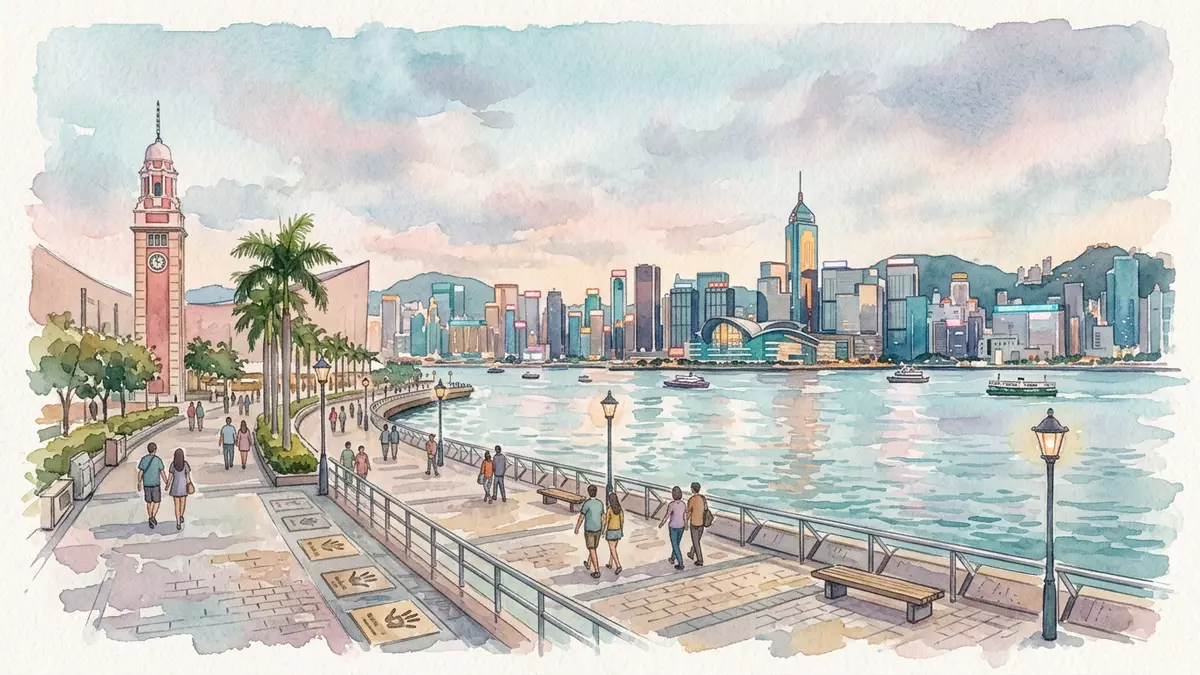
Avenue of Stars traces the Tsim Sha Tsui waterfront beside Victoria Harbour, with Hong Kong Island rising across the water. Its long pedestrian route combines harbour views with handprints, film names and bronze figures, turning a public promenade into an outdoor record of Hong Kong cinema.
Handprints along the Tsim Sha Tsui waterfront
The promenade lies in Kowloon, beside the Tsim Sha Tsui Promenade and close to the Hong Kong Museum of Art. It follows the northern shore of Victoria Harbour, with Salisbury Garden and cultural buildings nearby.
The Avenue opened to the public on 28 April 2004. It is associated with the Hong Kong film industry, and its paved route contains plaques bearing names and handprints of performers, directors and other cinema figures. The arrangement gives the walkway a chronological connection with the development of Hong Kong film.
From a film tribute to a designed public promenade
Avenue of Stars extends for about 440 m (1,440 ft) along the harbourfront. The route includes planted areas, seating, railings and viewing spaces beside the water. Its linear form keeps the film references within the larger walk along Tsim Sha Tsui.
The landscape architect James Corner worked with international and local designers on the redesign completed in 2019. Timber handrails, integrated seating and planted edges form the setting for the handprints. The promenade remains a public landscape as well as a memorial to performers and filmmakers. Avenue of Stars redesign records the connection between the waterfront landscape and its 2019 form.
Bruce Lee, Anita Mui and the bronze language of cinema
The most recognisable sculpture on the route is a bronze statue of Bruce Lee. It rises about 2 m (6.6 ft) and shows the martial artist in a familiar fighting pose. The statue was unveiled on 27 November 2005, linking the promenade with one of Hong Kong cinema’s most influential figures. Bruce Lee bronze statue gives the sculpture a defined place within the Avenue’s film history.
Other features include a statue of Anita Mui, a sculpture of a director at work and plaques carrying the names of cinema personalities. The combination of sculpture, engraved surfaces and harbour scenery makes the route readable as both a cultural display and an urban walk. The Avenue’s connection with Hollywood’s Walk of Fame provides its basic public format, while the people represented belong to Hong Kong’s own screen culture. Tsim Sha Tsui waterfront route places the promenade within the wider harbour walk.
Visiting Avenue of Stars: what travellers from Western Europe should know
- Avenue of Stars runs along the Tsim Sha Tsui waterfront in Kowloon, beside Victoria Harbour and opposite Hong Kong Island. The route connects with the Tsim Sha Tsui Promenade.
- The promenade is a paved pedestrian route with planted edges, railings, seating and sections beside the harbour. Its length is about 440 m (1,440 ft).
- The Hong Kong Museum of Art and Salisbury Garden lie close to the promenade. The route forms part of a larger waterfront area in Tsim Sha Tsui.
- The official languages are Chinese and English, and the currency is the Hong Kong dollar.
Searching for Avenue of Stars on social platforms
These links open searches for Avenue of Stars on each platform.Frequently asked questions about Avenue of Stars
Where is Avenue of Stars?
Avenue of Stars is on the Tsim Sha Tsui waterfront in Kowloon, beside Victoria Harbour. Hong Kong Island lies across the harbour.
What can visitors expect along the promenade?
The route contains film plaques, handprints, sculptures, seating and planted areas beside a paved harbour walk. The Bruce Lee statue is a central feature.
What makes Avenue of Stars distinctive?
It combines an outdoor tribute to Hong Kong cinema with a linear waterfront landscape. Film history appears through names, handprints and bronze sculpture beside Victoria Harbour.


