
At-Turaif in Diriyah, mudbrick citadel of the first Saudi state
Published on 08/21/2026 at 09:51 | Editorial responsibility: Rafael Müller, Editor-in-Chief AD HOC NEWS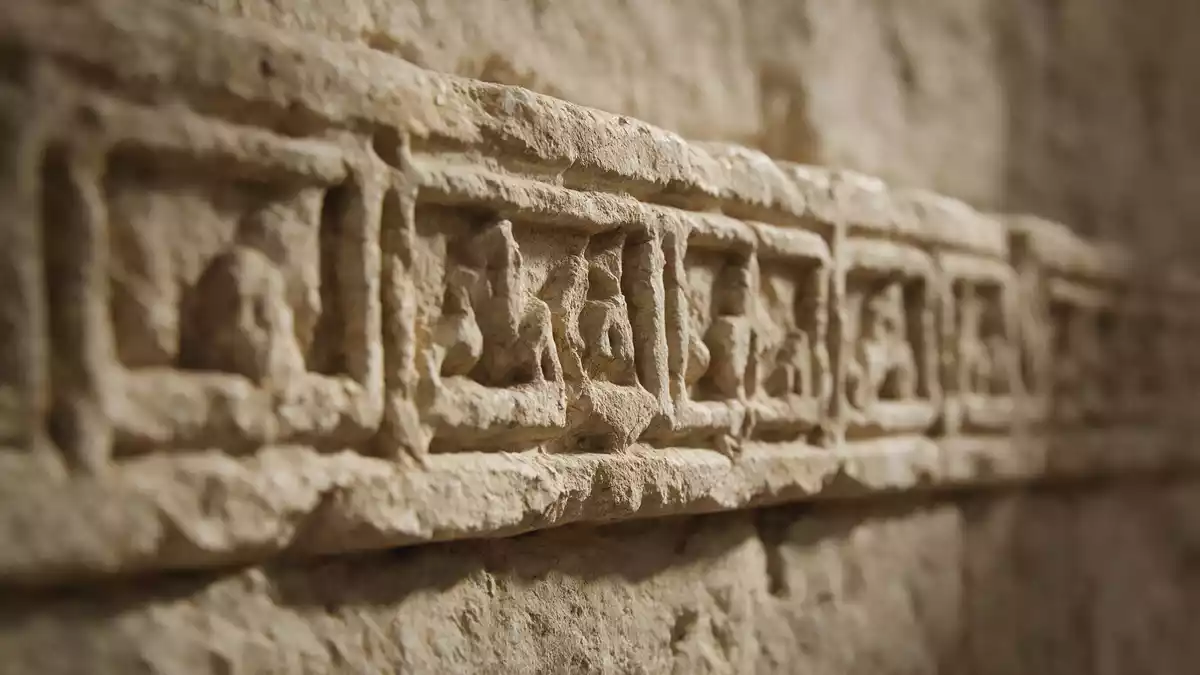
At-Turaif in Diriyah is a historic mudbrick citadel on the north-western outskirts of Riyadh, where the first Saudi state took shape in the eighteenth century within an older oasis settlement founded in the fifteenth century.
Mudbrick palaces above the Wadi Hanifah oasis
At-Turaif occupies a low plateau on the western bank of Wadi Hanifah, rising above the palm groves and fields of the Diriyah oasis in central Saudi Arabia. The district forms a compact urban ensemble of narrow lanes, enclosed courtyards and fortified walls built from adobe and mudbrick, materials suited to the arid climate and readily available in the surrounding plateau. Within this ensemble stand the ruins of extensive palatial complexes, including Salwa Palace, which dominated the citadel and served as a combined residential and political centre for the ruling family of the first Saudi state.Salwa Palace and the palatial complexes The scale of these palaces is still legible in the multi-level platforms, thick defensive walls and sequences of interconnected rooms surrounding interior courtyards.
Among the structures identified within At-Turaif are Saad bin Saud Palace, the Guest House, the At-Turaif Bath House and the Imam Mohammad bin Saud Mosque, which collectively illustrate how governance, religious life and hospitality were integrated within the citadel.Saad bin Saud Palace and the Imam Mohammad bin Saud Mosque The Najdi architectural style, characteristic of the central Arabian Peninsula, appears in the use of thick earthen walls, restrained exterior openings and geometric decorative treatment on façades and parapets. Many buildings were arranged in clusters, with narrow passages between them and stepped roofs above, creating an intimate urban fabric that contrasts clearly with the wide open landscape of the surrounding wadi.
Cradle of the Saudi dynasty and first Saudi state
The settlement at Diriyah is founded in the fifteenth century, and At-Turaif developed as its fortified quarter, becoming closely associated with the House of Saud.Founded in the fifteenth century and linked to the House of Saud In 1727, At-Turaif became the capital of an emerging Saudi polity, sometimes referred to as the first Saudi state, which extended its influence across large parts of the Arabian Peninsula until 1818. From this plateau, the ruling dynasty exercised temporal authority and religious leadership, making the citadel a major political centre in the region. The presence of substantial palaces, administrative buildings and the main congregational mosque reflects this role as a seat of governance and religious life.
The period from the mid eighteenth century to the early nineteenth century at At-Turaif corresponds to an important phase in the settlement of the central Arabian plateau. The urban fabric, with its fortified edges overlooking Wadi Hanifah, demonstrates how a desert environment could support a dense political centre when organised around access to an oasis and defended by substantial mudbrick ramparts.The fortified urban ensemble within an oasis The association of At-Turaif with the early Saudi dynasty gives the district a continuing symbolic significance, and the site is frequently described as a cradle of the Saudi state in Diriyah.
UNESCO World Heritage recognition and restoration
In 2010, At-Turaif District in ad-Dir'iyah was inscribed on the UNESCO World Heritage List as a cultural property under criteria (iv), (v) and (vi, recognising its outstanding Najdi architecture, its role as an exemplary traditional settlement in a desert environment and its association with events and traditions significant to the history of Saudi Arabia.Inscription on the UNESCO World Heritage List in 2010 The listed property covers a substantial area of urban fabric on the limestone plateau above Wadi Hanifah, including the palaces, mosque and surrounding residential quarters. The World Heritage status highlights the careful adaptation of adobe construction to climatic and environmental conditions, as well as the geometrical decoration that characterises the Najdi style.
Diriyah authorities and national heritage organisations have undertaken conservation and presentation works at At-Turaif, stabilising earthen walls, defining visitor routes through the palatial ruins and providing interpretive material about the first Saudi state.Heritage conservation at At-Turaif Historic District The district functions as a heritage site where visitors can walk among preserved structures, view the scale of Salwa Palace and other complexes and gain a sense of how the citadel once operated as a centre of authority over the surrounding oasis and plateau.
Visiting At-Turaif: what travellers from Western Europe should know
- At-Turaif lies in Diriyah, north-west of Riyadh in central Saudi Arabia, and is reached overland from the wider Riyadh urban area, which is served by King Khalid International Airport.
- The historic district stands on a plateau above Wadi Hanifah, and exploring the site involves walking on uneven earthen surfaces and climbing stepped passages between mudbrick structures.
- The surrounding Diriyah area includes the palm-lined course of Wadi Hanifah and newer urban districts, providing a clear visual contrast between the restored mudbrick citadel and contemporary development.
- The official language is Arabic and the currency is the Saudi riyal.
- Entry requirements depend on your nationality; UK travellers can check the FCDO travel advice at gov.uk/foreign-travel-advice, Irish travellers the Department of Foreign Affairs at ireland.ie.
Searching for At-Turaif on social platforms
These links open searches for At-Turaif on each platform.
Frequently asked questions about At-Turaif
Where is At-Turaif and what kind of place is it?
At-Turaif is a historic mudbrick district in Diriyah, north-west of Riyadh in Saudi Arabia, forming a fortified citadel above the Wadi Hanifah oasis.
What can visitors expect when exploring At-Turaif?
Visitors encounter preserved palaces, mosques and residential quarters built in Najdi style, with earthen walls, narrow lanes and stepped paths across the plateau.
What makes At-Turaif distinctive among heritage sites?
At-Turaif combines a large mudbrick citadel, early palaces such as Salwa Palace and its role as the eighteenth-century capital of the first Saudi state and birthplace of the Saudi dynasty.


