
Aso-san and the vast volcanic basin of central Kyushu
Published on 09/17/2026 at 15:00 | Editorial responsibility: Rafael Müller, Editor-in-Chief AD HOC NEWS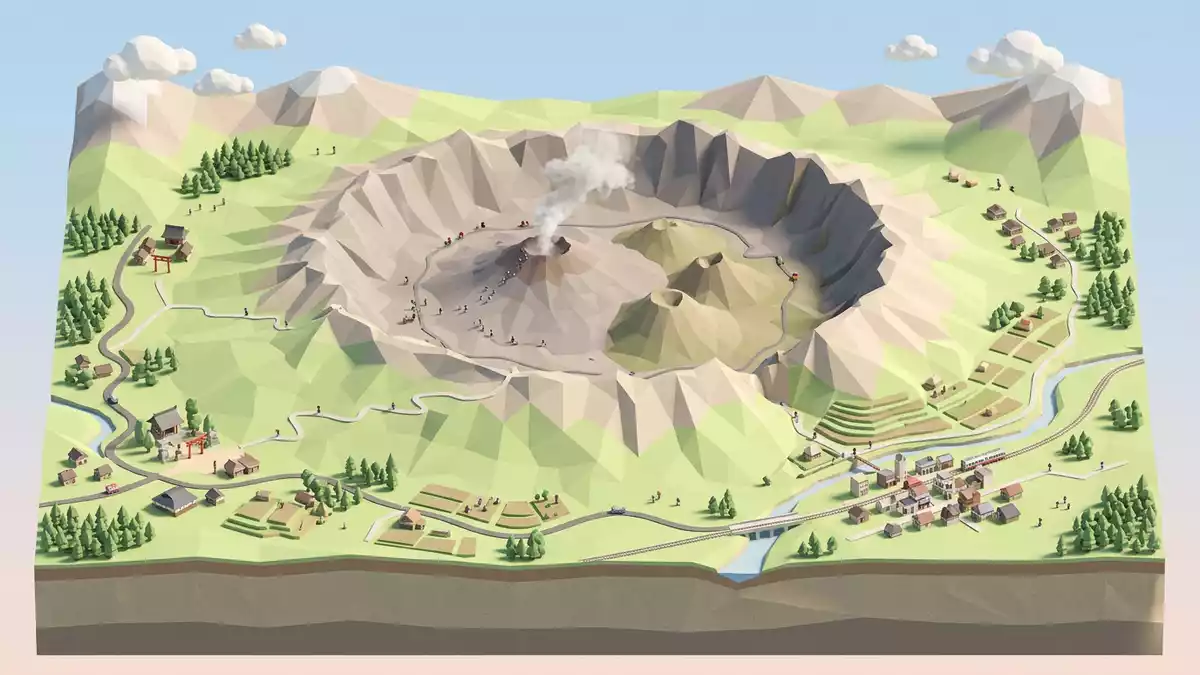
Aso-san in central Kyushu is both a volcano and a landscape: an immense caldera with a ring of peaks, inhabited plateaus and grazing land all inside its basin. Formed by ancient eruptions in Kumamoto Prefecture, it remains an active volcanic area that shapes the region around the city of Aso.
Aso-san as a giant caldera landscape
The name Aso-san usually refers to Mount Aso, an active volcano in Kumamoto Prefecture on the island of Kyushu, set within Aso Kuj? National Park. The wider volcanic structure is a caldera, a broad depression created by major eruptions, whose floor is large enough to host towns, roads and farmland within its boundaries.Mount Aso in Kumamoto The caldera extends roughly 25 km from north to south and 18 km from east to west, giving it a circumference in the region of 100 to 120 km depending on how the rim is traced.dimensions of the caldera
This broad basin is among the largest volcanic calderas on Earth and is often described in Japanese and international sources as one of the world’s largest active volcanic areas.one of the largest calderas Within its gently undulating floor lie the city of Aso and neighbouring municipalities, along with pastureland used for cattle raising, volcanic grasslands and clusters of forest. The surrounding caldera rim rises in places to over 1,000 m (3,281 ft), forming a broken horseshoe of hills and escarpments that define the edge of the volcanic depression.
The Aso Gogaku: five central peaks inside the basin
Inside the caldera, Aso-san is not a single summit but a group of peaks known as the Aso Gogaku, or “five Aso mountains”, aligned roughly east–west across the centre. These include Mount Taka, Mount Naka, Mount Eboshi, Mount Kishima and Mount Neko, all part of the same volcanic complex.five Aso mountains The highest of these peaks reaches an elevation of about 1,592 m (5,223 ft) above sea level, giving the group a substantial relief above the caldera floor.elevation of Asosan
Mount Naka, or Nakadake, is the currently active cone in the group, its crater emitting volcanic gases and occasionally ash plumes from a vent that is closely watched by authorities.Nakadake crater The crater area includes a pool of volcanic water, stepped inner walls and coloured rock layers stained by minerals from the fumaroles. Other peaks such as Taka-dake and Eboshi-dake have more subdued slopes, with trails crossing lava and ash deposits and views across the caldera towards the encircling rim.
Volcanic history and human use of the basin
The caldera of Aso-san records a long volcanic history: at least four major eruptions between about 270,000 and 90,000 years ago generated pyroclastic flows that emptied underground magma chambers and led to the collapse of the central area into a basin. The present caldera reflects these events, with its size and form shaped by the repeated large-scale eruptions of the late Pleistocene.four huge eruptions Subsequent volcanic activity built up the central peaks within this basin, creating the Aso Gogaku as separate cones on the caldera floor.development of the cones
Despite its volcanic character, the Aso caldera has been inhabited for centuries, and around 50,000 residents live in and around its interior according to Japanese geographic surveys.population within the caldera Roads and railways cross the basin, connecting settlements such as Aso City with the wider Kyushu region, and linking the central peaks to viewing areas and trailheads. Grasslands in parts of the basin and on some slopes are used for cattle grazing, with herds scattered across volcanic pastures that lie within sight of the active crater.
Visiting Aso-san: what travellers from Western Europe should know
- Aso-san lies in eastern Kumamoto Prefecture on Kyushu, with Aso City and nearby towns situated inside the volcanic basin; rail access is via JR Aso Station on the H?hi Main Line, from where local buses continue towards the central peaks.
- The terrain inside the caldera ranges from gently rolling pasture to steeper volcanic slopes; approaches to crater viewpoints and ridge trails often involve walking on uneven ground and using stairways built into the ash and lava.
- Winter brings snow to higher parts of the caldera rim and the central peaks, while lower areas combine brown grassland with patches of forest; in warmer months the pastures and hillsides take on a green volcanic grassland character.
- Nearby features include other parts of Aso Kuj? National Park and surrounding uplands of central Kyushu, with views from Aso-san towards distant ranges and, in clear weather, across much of the caldera floor.
- The official language is Japanese and the currency is the yen; entry requirements depend on your nationality, UK travellers can check the FCDO travel advice at gov.uk/foreign-travel-advice, Irish travellers the Department of Foreign Affairs at ireland.ie.
Searching for Aso-san on social platforms
These links open searches for Aso-san on each platform.
Frequently asked questions about Aso-san
Where is Aso-san located?
Aso-san is in Kumamoto Prefecture on the island of Kyushu, with its volcanic caldera surrounding Aso City and neighbouring municipalities inside central Japan’s southern main island.
What should visitors expect inside the caldera?
Visitors encounter a wide volcanic basin with grasslands, inhabited areas, roads and rail lines, along with steeper slopes leading up to crater viewpoints and the central Aso Gogaku peaks.
What makes Aso-san distinctive among volcanoes?
Aso-san combines one of the world’s largest calderas, a cluster of central peaks including the active Nakadake cone, and an inhabited interior where everyday life unfolds inside a volcanic basin.


