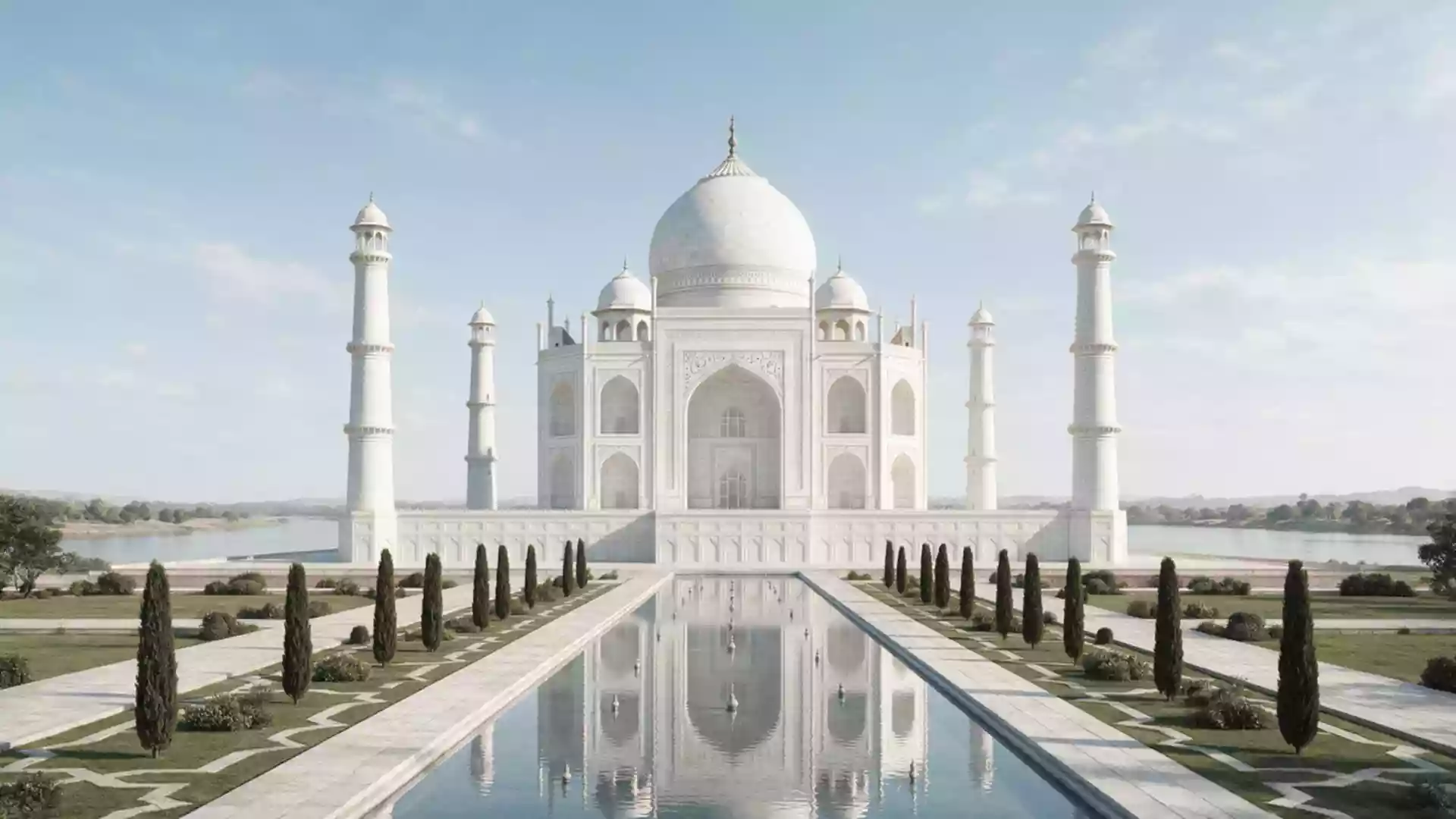
ASI begins Mehman Khana conservation at Taj Mahal on 19 October
Published on 10/21/2026 at 11:28 | Editorial responsibility: Rafael Müller, Editor-in-Chief AD HOC NEWSConservation and heritage context
- Archaeological Survey of India began work at the Mehman Khana in Agra on 19 October 2026.
- The conservation concerns stonework, inlay designs and deteriorated flooring on the guest house's eastern side.
- UNESCO records the Taj Mahal as a World Heritage Site inscribed in 1983.
- The monument stands on the right bank of the Yamuna River in a Mughal garden of nearly 17 hectares.

The Taj Mahal is the site of conservation work that began at its Mehman Khana on 19 October 2026. The guest house stands in Agra, India, on the eastern side of the main mausoleum.
ASI starts conservation at the Mehman Khana in Agra
The Archaeological Survey of India has begun work on the Mehman Khana, with scaffolding being erected along its walls. The project addresses loosened or missing stones in the decorative inlay, damaged masonry joints and sections of deteriorated flooring.
Conservators will reinstall stones from the inlay, replace damaged pieces and carry out repointing between masonry stones. The work also covers the platform outside the building, where red sandstone and yellow marble slabs have developed pits and suffered deterioration.
The building is mainly made of red sandstone, with decorative patterns in white marble and black stone on its front wall. The current work therefore concerns one of the complex's matching side buildings rather than the central marble mausoleum.
How the guest house fits the Taj Mahal complex
UNESCO describes the Taj Mahal as a white-marble mausoleum built in Agra between 1631 and 1648 by order of Mughal emperor Shah Jahan. The World Heritage Centre lists the site as inscribed in 1983 and identifies the Archaeological Survey of India as its management authority.
The monument occupies the right bank of the Yamuna River in a Mughal garden covering nearly 17 hectares. Construction began in 1632 and the mosque, guest house and main gateway were completed subsequently, with the wider complex finished in 1653.
That history places the Mehman Khana within the original architectural composition rather than treating it as a later visitor facility. UNESCO describes the mosque and guest house as identical red-sandstone structures with white-marble portal frames and stone inlay.
Conservation links current access with original design
The repair programme connects a present-day preservation task with the symmetry that defines the complex. The eastern guest house mirrors the mosque on the western side, while the main tomb occupies the centre of the planned ensemble.
UNESCO records Ustad-Ahmad Lahori as the main architect and describes the monument's marble relief and inlay with precious and semi-precious stones. It also notes that future conservation work should preserve the site's form, design and authenticity.
The Mehman Khana work follows that principle by concentrating on inlay stones, masonry joints and floor slabs rather than changing the building's visible arrangement. The report on the work does not announce a closure of the main mausoleum.
Visiting Taj Mahal: what travellers from Western Europe should know
- The conservation work began on 19 October 2026 at the Mehman Khana on the eastern side of the main mausoleum.
- Visitors should expect conservation activity and scaffolding around the guest house; no closure of the main mausoleum is announced in the report.
- The monument is in Agra on the right bank of the Yamuna River, within a Mughal garden covering nearly 17 hectares.
- The complex includes the mausoleum, mosque, guest house and main gateway, with the raised tomb reached by a flight of steps.
- Entry requirements depend on your nationality; UK travellers can check the FCDO travel advice at gov.uk/foreign-travel-advice, Irish travellers the Department of Foreign Affairs at ireland.ie.
The report on the conservation work supplies the 19 October date and the details of the repairs. UNESCO's World Heritage description sets the guest house within the monument's history and protected complex.
Searching for Taj Mahal on social platforms
These links open searches for Taj Mahal on each platform.
Frequently asked questions about Taj Mahal
What has changed at Taj Mahal?
Conservation began at the Mehman Khana on 19 October 2026, addressing inlay stones, masonry joints and deteriorated flooring.
Where is Taj Mahal and how do you get there?
It stands in Agra on the right bank of the Yamuna River, within a Mughal garden of nearly 17 hectares.
What is Taj Mahal?
It is a white-marble mausoleum complex built in Agra between 1631 and 1648 and inscribed as a UNESCO World Heritage Site in 1983.