
Ashinoko, the caldera lake at the heart of Hakone
Published on 09/18/2026 at 12:21 | Editorial responsibility: Rafael Müller, Editor-in-Chief AD HOC NEWS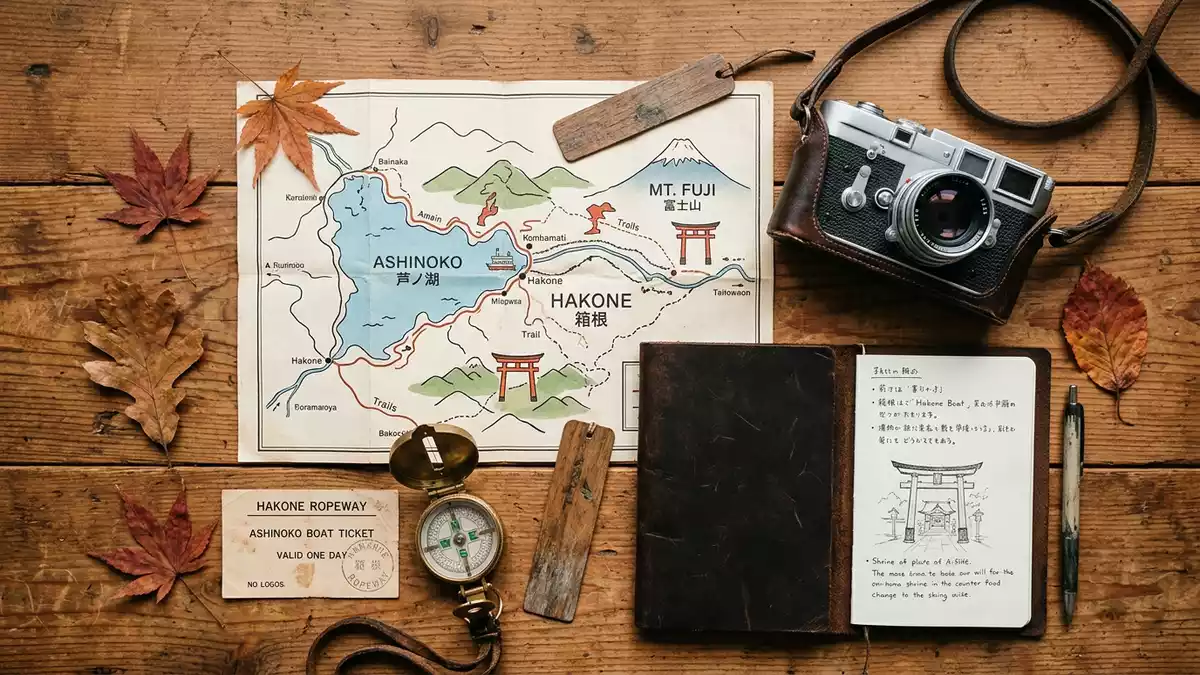
Ashinoko, better known to many visitors as Lake Ashi, is a broad caldera lake in Hakone in Kanagawa Prefecture in Japan, lying within the wider Mount Hakone volcanic landscape. Formed in a volcanic basin and framed by ridges rather than city streets, it offers an open sheet of water with views to surrounding peaks and, on clear days, towards Mount Fuji.
A volcanic basin filled with water and ridges
Ashinoko sits within the caldera of Mount Hakone, a complex volcano on Honsh? whose activity shaped the Hakone landscape and created the basin that now holds the lake.Mount Hakone caldera The lake occupies part of the south-western wall of that caldera rather than a simple valley, and the slopes around it belong to the broader Fuji–Hakone–Izu National Park, which conserves mountain and forest terrain across the region.Fuji–Hakone–Izu National Park
Geologically, Ashinoko is a crater lake formed when volcanic eruptions blocked river flows and left water to accumulate inside the basin. The Hakone volcano last erupted in 1170 CE at ?wakudani, and the caldera structure reflects eruptions thousands of years apart rather than a single event.nature of Lake Ashi The lake surface lies at an elevation of about 724 m (2,375 ft), and the water stretches in an irregular outline with a circumference of around 19 km (11.8 miles) and a surface area close to 7 square kilometres (2.7 square miles).lake dimensions and elevation
Shoreline villages, shrine architecture and the lake’s name
Ashinoko lies within Hakone Town in Ashigarashimo District in western Kanagawa Prefecture, and its shores carry small settlements such as Motohakone and Hakone-machi rather than one continuous urban edge.Motohakone, Hakone-machi location Forested slopes come down towards the water, and piers and quays extend into the lake at various points, linking buses, ropeways and boats into a single circuit around the basin.
The name Ashinoko is rooted in the reeds that once grew in abundance around the lake shore, “Ashi” being the Japanese word for reed and “ko” for lake.origin of the name Ashinoko Along the southern shore stands Hakone Shrine, traditionally dated to the eighth century in its origin, whose bright red lakeside torii gate has become one of the most recognisable human-made elements in the Ashinoko landscape.Hakone Shrine lakeside torii Monks historically used the lake as a holy body of water for purification before ceremonies at the shrine, and stories of a dragon bound beneath the surface remain part of local lore.Hakone Shrine origin story
Water surface, Fuji views and transport across the basin
The most immediate experience of Ashinoko is the wide expanse of water held inside volcanic ridges. On clear days the line of sight from the southern shore runs towards the distant cone of Mount Fuji, which stands above the outer mountains and appears beyond the lake surface in many images and paintings.Lake Ashinoko and Mount Fuji The water itself rarely freezes, a property linked to the volcanic springs in the region, so the basin remains visually open even in midwinter.never-freezing lake surface
Ashinoko is integrated with Hakone’s transport network without losing its character as a lake enclosed by mountains. Roads reach the shoreline from Odawara and Hakone-Yumoto, ropeways climb over ridges to stations such as Togendai, and boats link quays and piers across the water.bus and ropeway access Cruise vessels and smaller craft traverse the basin in various directions, giving travellers alternate perspectives on the caldera walls and the shrine gate as they move between shore villages.
Visiting Ashinoko: what travellers from Western Europe should know
- Ashinoko lies in Hakone Town in western Kanagawa Prefecture; buses link Hakone-Yumoto Station with lakeside areas such as Motohakone and Hakone-machi on the southern shore.
- The lake basin sits at around 724 m (2,375 ft) above sea level, and shore paths often rise and fall with the natural slope of the caldera walls rather than following level ground.
- Hakone Shrine stands close to the water at the southern end of the lake, and access to its lakeside torii involves walking on outdoor approaches that can be uneven underfoot.
- The official language is Japanese and the currency is the yen.
- Entry requirements depend on your nationality; UK travellers can check the FCDO travel advice at gov.uk/foreign-travel-advice, Irish travellers the Department of Foreign Affairs at ireland.ie.
Searching for Ashinoko on social platforms
These links open searches for Ashinoko on each platform.
Frequently asked questions about Ashinoko
Where is Ashinoko and what kind of place is it?
Ashinoko is a caldera lake in Hakone Town in Kanagawa Prefecture on Honsh? in Japan, formed within the volcanic basin of Mount Hakone.
What should travellers expect when visiting Ashinoko?
Travellers encounter a broad volcanic lake enclosed by ridges, shore villages such as Motohakone and Hakone-machi, forested slopes and the prominent lakeside torii of Hakone Shrine.
What makes Ashinoko distinctive among Japanese lakes?
Ashinoko combines a volcanic caldera setting, an elevation of about 724 m (2,375 ft), visible connections to Hakone Shrine and, in clear conditions, long views towards Mount Fuji across the water.


