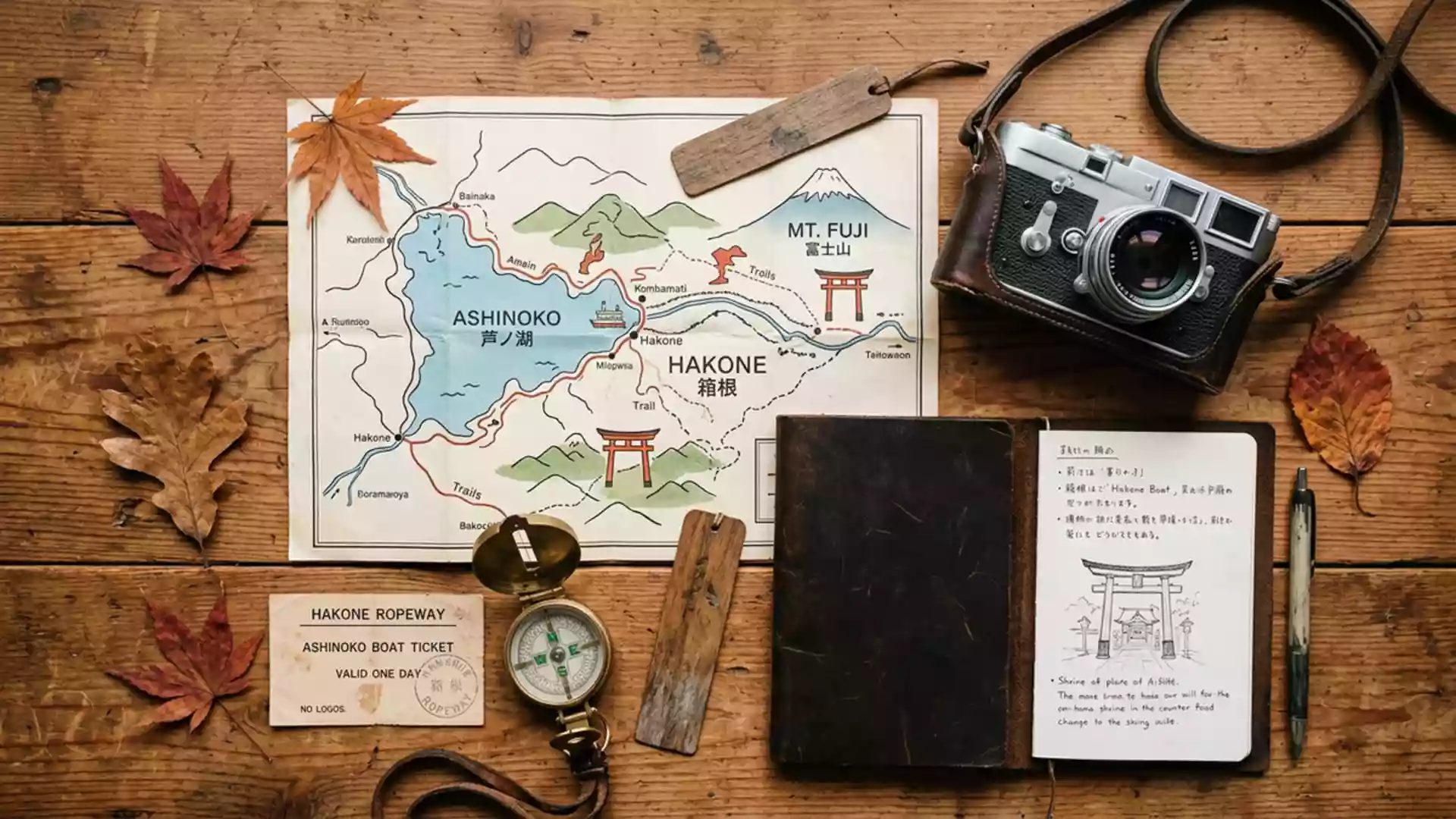
Ashinoko, the caldera lake at the heart of Hakone
Published on 08/22/2026 at 09:54 | Editorial responsibility: Rafael Müller, Editor-in-Chief AD HOC NEWS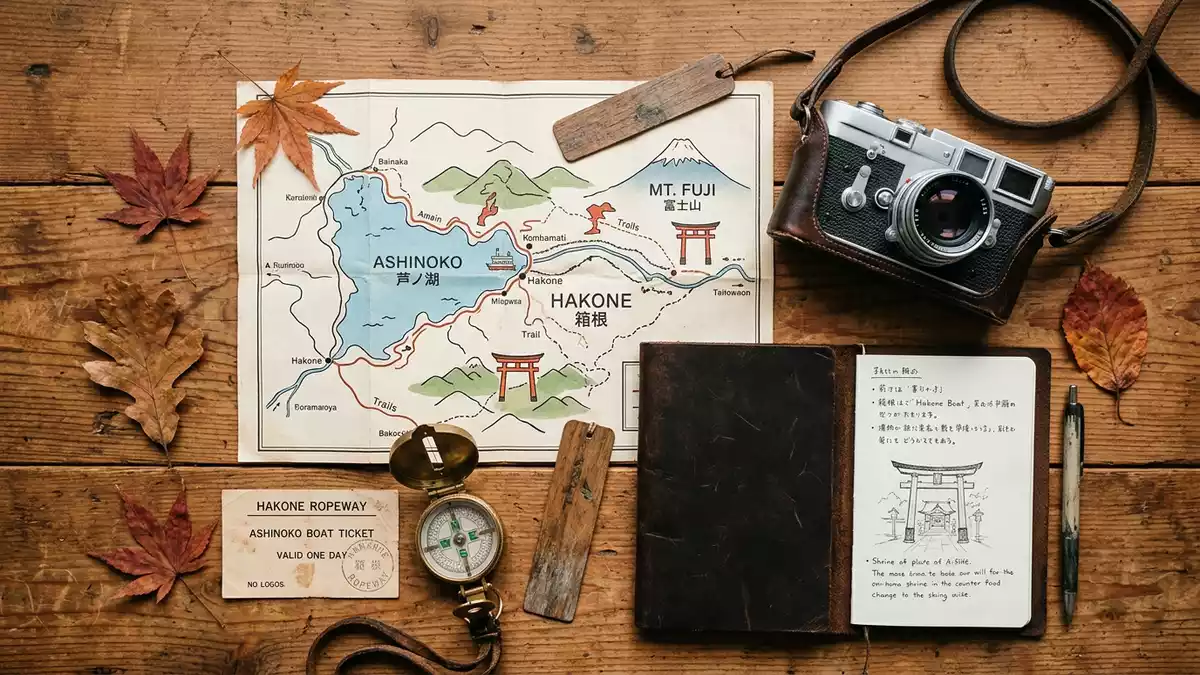
Ashinoko, known in English as Lake Ashi or Lake Ashinoko, is a volcanic caldera lake in the Hakone region of Kanagawa in Japan. Set among wooded slopes and low volcanic peaks, it has become one of Hakone’s defining landscapes, where water, mountain and religious architecture share the same basin.
A volcanic lake shaped by Hakone’s caldera
Ashinoko occupies part of the caldera of Mount Hakone, a complex volcano in central Kanagawa whose eruptions created the basin that now holds the lake.caldera of Mount Hakone The lake formed after a large eruption and landslide blocked drainage on the northern side of the volcano several thousand years ago, leaving water to collect behind a natural dam.natural dam on the slope of Mt. Kamiyama Geologically it is a crater lake, part of a wider cluster of peaks and explosion craters that make up the Hakone volcanic group.
The basin sits at an elevation of just over 700 m (around 2,300 ft), with Ashinoko lying between outer crater rims and inner cones such as Mount Kami and Mount Mikuni.elevation and surrounding crater rim The shoreline runs for almost twenty kilometres, a mix of gentle bays, steeper wooded sections and small harbours. Around the water the vegetation reflects its altitude and humid climate, with broadleaf forest, patches of conifer planting and stretches of reed beds where the ground shallows into the lake. In Japanese the name itself links Ashi, “reed”, with ko, “lake”, pointing to the plants that once dominated the margins.meaning of Ashi and ko in the lake’s name
Water, shrine gates and views towards Mount Fuji
Ashinoko is closely associated with views towards Mount Fuji, whose cone rises beyond the outer rim of Hakone and aligns with parts of the lake on clear days.symbol of Hakone with Mount Fuji behind From the southern shore near Motohakone and Hakone-machi, Fuji appears across the water when the air is clear and the mountain free of cloud, setting a volcanic peak against the foreground of the lake and its boats. This combination of distant snow-covered summit, caldera water and nearer villages has become one of the standard images of Hakone.
Along the shore Ashinoko is edged not only by forest and small settlements but also by religious architecture. One of the most photographed elements is the vermilion torii gate of Hakone-jinja, standing at the edge of the lake with its uprights set in the water and the shrine complex within the trees upslope.torii gate of Hakone-jinja Shrine on the shore Historical accounts describe Ashinoko as a sacred lake where trainee Buddhist monks of Hakone Shrine carried out rituals of purification before formal ceremonies, linking the water to religious practice in the area.Ashinoko as a holy lake for purification The presence of shrines, gates and stone markers around the shore keeps that religious layer visible alongside the more recent recreational use.
Ashinoko as part of Hakone’s landscape and travel routes
Beyond its geological and religious roles, Ashinoko sits within Hakone’s wider pattern of routes and viewpoints. The old Tokaido road between Tokyo and Kyoto once passed near the southern end of the lake, with a historic checkpoint at Hakone-machi overseeing movement through the mountains.Hakone Checkpoint and old Tokaido Road near the lake Travellers on that route encountered the water as part of a controlled pass rather than a leisure landscape, and a reconstruction of the checkpoint on the shore recalls that history.
In the surrounding hills and along sections of the shoreline there are paths that follow the contours of the caldera and connect small harbours, viewpoints and forest clearings.hiking trail around the lake These routes give access to views across Ashinoko towards Fuji, down to reed-fringed bays and up to the crater rim, with some sections tracing remnants of historic pavements on the old highway. On the water, boats run between ports such as Togendai, Motohakone and Hakone-machi, linking lakeside districts and providing vantage points back to the torii gate and the line of the volcano beyond.ports of T?gendai, Moto-Hakone and Hakone-machi
Visiting Ashinoko: what travellers from Western Europe should know
- Ashinoko lies in the Hakone area of Kanagawa Prefecture, south-west of Tokyo, with lakeside districts such as Motohakone and Hakone-machi on its southern shore.
Rail routes from Shinjuku reach Hakone-Yumoto Station, from where buses run up to the lake. - The terrain around the lake combines paved paths, forest tracks and short slopes on volcanic ground, with some stretches of steps linking the shore to shrines and viewpoints.
- Hakone is in Japan, where the official language is Japanese and the currency is the yen.
- Entry requirements depend on your nationality; UK travellers can check the FCDO travel advice at gov.uk/foreign-travel-advice, Irish travellers the Department of Foreign Affairs at ireland.ie.
Searching for Ashinoko on social platforms
These links open searches for Ashinoko on each platform.
Frequently asked questions about Ashinoko
Where is Ashinoko located?
Ashinoko is a caldera lake in the Hakone area of Kanagawa Prefecture in Japan, lying among the peaks of the Hakone volcanic group.
What should travellers expect on a visit to Ashinoko?
Travellers encounter a mountain lake with forested shores, small harbours, shrine gates on the water’s edge and, on clear days, views towards Mount Fuji.
What makes Ashinoko distinctive among Japanese lakes?
Ashinoko combines a volcanic origin, historical routes, religious sites such as Hakone-jinja and the alignment of its basin with distant Mount Fuji.