
Art Nouveau district Riga and its stone imagination
Published on 08/28/2026 at 15:40 | Editorial responsibility: Rafael Müller, Editor-in-Chief AD HOC NEWS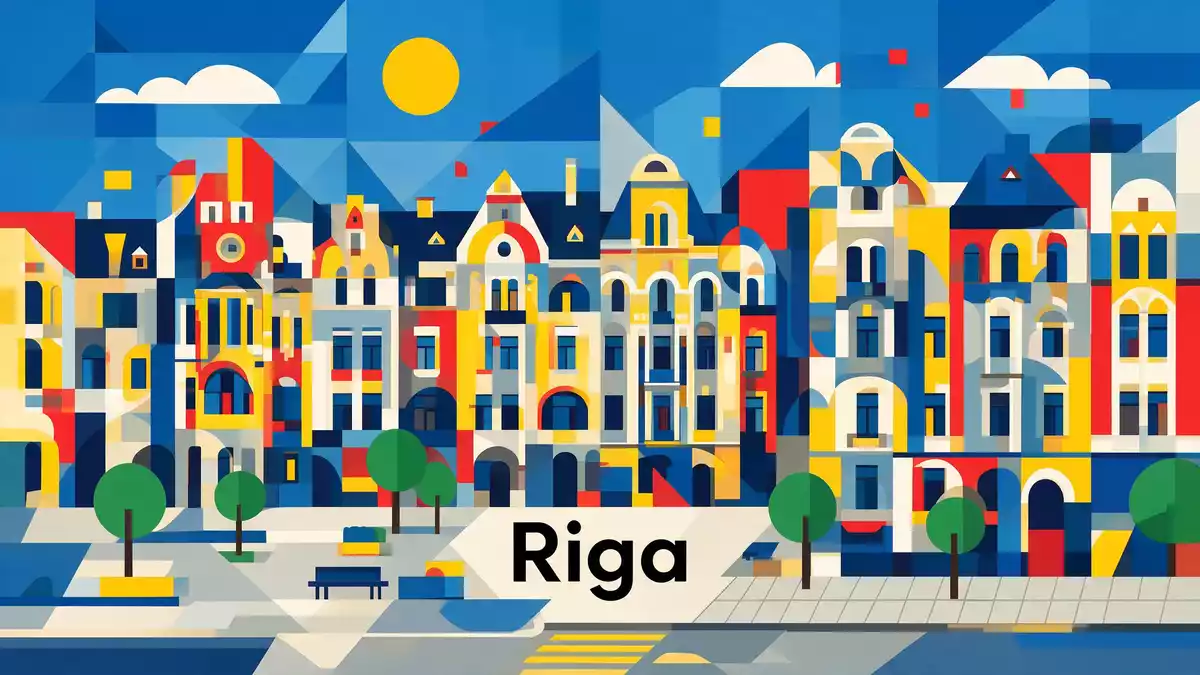
Art Nouveau district Riga is the name most travellers give to the quarter of Riga where early twentieth-century apartment houses turn ordinary streets into an open-air gallery of sculpted stone. In the blocks sometimes called the Quiet Centre, Art Nouveau architecture forms a dense ensemble that shapes much of the Latvian capital’s central identity in the decades around 1900.
Streets where Art Nouveau defines the cityscape
The core of Art Nouveau district Riga lies north of the medieval Old Town, in a grid of streets that includes Alberta iela, Elizabetes iela and several shorter connecting routes. The facades here sit within the wider Historic Centre of Riga, which was inscribed on the UNESCO World Heritage List in 1997 for the quantity and quality of its Art Nouveau and nineteenth-century architecture.Historic Centre of Riga In this area the medieval core gives way to later urban planning, boulevards and rectangular blocks, and Art Nouveau buildings occupy whole street fronts rather than isolated plots.
Within this pattern Alberta iela has become the most recognisable single street, a short residential stretch known for Art Nouveau townhouses on both sides.Riga Art Nouveau district description The concentration extends beyond it: Elizabetes iela carries further examples, and other streets in the Quiet Centre, such as those linking towards Br?v?bas iela and the canal, are lined with facades that share the same era and vocabulary. The result is an urban district where Art Nouveau is not an isolated motif but a continuous backdrop to everyday Riga life.
Faces, florals and national motifs in stone
Art Nouveau district Riga is not defined by a single architect or substyle; instead, it brings together distinct strands of early twentieth-century design. Decorative Art Nouveau, associated with architects such as Mikhail Eisenstein, fills facades with masks, mythic creatures and stylised floral ornament. Several neighbouring buildings on Alberta iela, including addresses like Alberta iela 8 and Alberta iela 4, display richly modelled stonework with figures, animals and abstract profiles arranged across their street fronts.ornamental decorative trend on Alberta iela
Alongside this decorative current, another stream known as National Romanticism appears in the same district, linked to architects including Konstant?ns P?kš?ns and Eižens Laube.competing styles in Riga Here, facades use more restrained ornament, geometric rhythms and references to Latvian vernacular building traditions. In the wider city centre, Art Nouveau architecture is estimated to make up roughly one third of the buildings, so walking through the district gives a sustained encounter with these two approaches laid out block after block.Art Nouveau architecture in Riga
From Bishop Albert to UNESCO recognition
Art Nouveau district Riga sits inside a city whose architectural story runs back to medieval times. Riga itself was founded in 1201 by Bishop Albert, and one of the streets central to the district, Alberta iela, takes its name from him and was laid out at the beginning of the twentieth century.Albert Street in Riga The Art Nouveau buildings that now define the area date largely from the first years of that century, when Riga expanded beyond its old fortifications and new quarters arose on former suburban land.
When the Historic Centre of Riga was added to the UNESCO World Heritage List in 1997, the evaluation highlighted the medieval street pattern, the nineteenth-century wooden architecture and, especially, the richness of Art Nouveau construction.UNESCO decision on Riga The Art Nouveau district forms part of this recognised area, distinguished by intact ensembles where early twentieth-century apartment houses still fulfil their residential roles while carrying facades whose sculpted surfaces have become a major reason for visiting Riga.
Visiting Art Nouveau district Riga: what travellers from Western Europe should know
- Art Nouveau district Riga lies just north of Riga’s Old Town, in the city’s so?called Quiet Centre, and is reached on foot by crossing the park belt and following streets towards Alberta iela and Elizabetes iela.
- The district consists mainly of urban streets with pavements; exploring it involves walking along level surfaces with occasional kerbs and road crossings in a typical early twentieth-century city grid.
- Art Nouveau district Riga forms part of the Historic Centre of Riga in Latvia, where the official language is Latvian and the currency is the euro.
Searching for Art Nouveau district Riga on social platforms
These links open searches for Art Nouveau district Riga on each platform.
Frequently asked questions about Art Nouveau district Riga
Where is Art Nouveau district Riga within the city?
Art Nouveau district Riga is located north of Riga’s Old Town, in the Quiet Centre neighbourhood, within the UNESCO-listed Historic Centre of Riga.
What should visitors expect on a walk through the district?
A visit consists of walking ordinary city streets lined with early twentieth-century apartment houses whose Art Nouveau facades display sculpted figures, florals and geometric ornament.
What makes Art Nouveau district Riga distinctive compared with other parts of Riga?
In this area Art Nouveau architecture forms continuous ensembles on key streets such as Alberta iela and Elizabetes iela, giving the district a concentration of decorated facades not found across the whole city.


