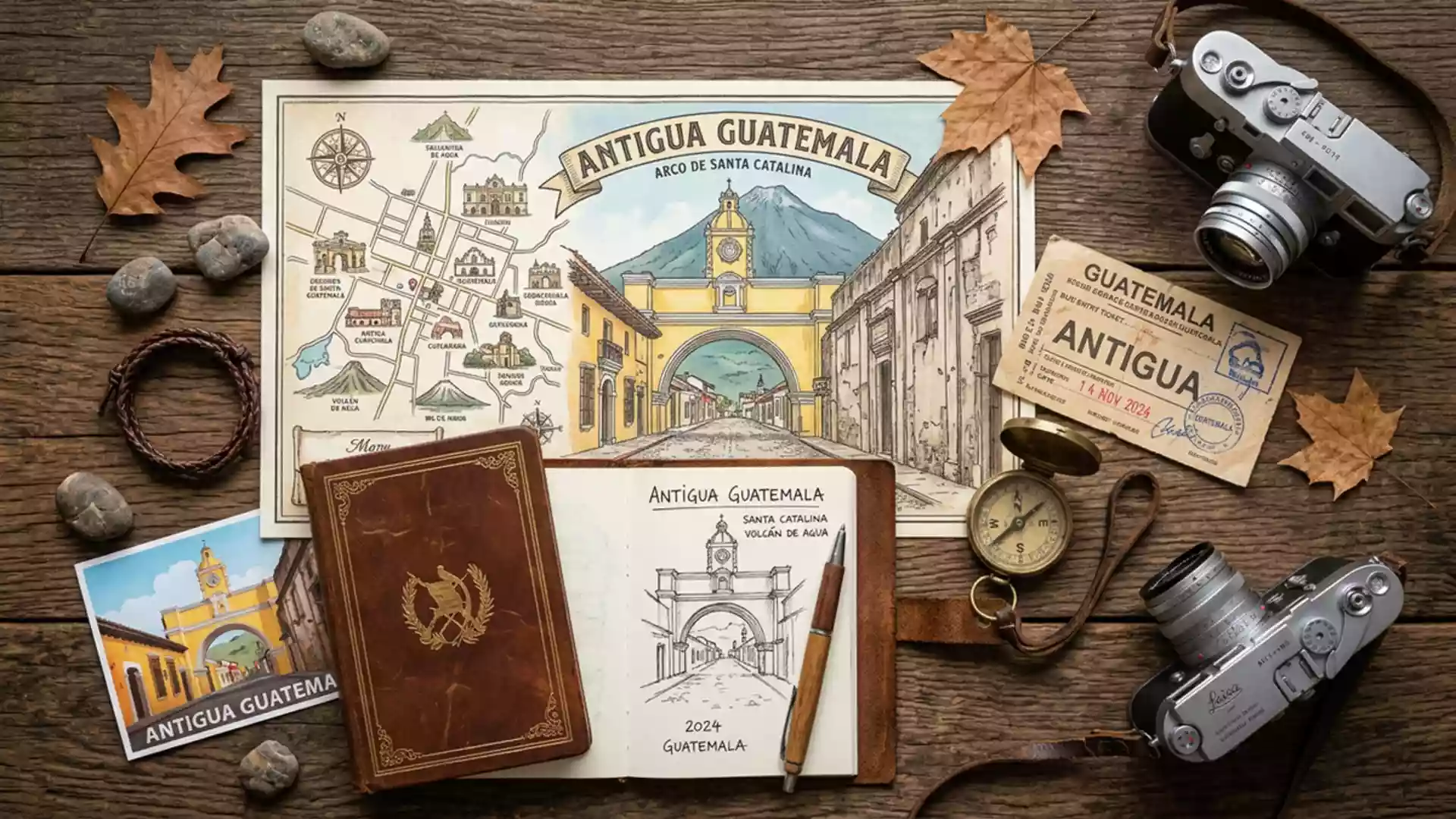
Arco de Santa Catalina and Antigua’s yellow gateway
Published on 09/14/2026 at 06:39 | Editorial responsibility: Rafael Müller, Editor-in-Chief AD HOC NEWS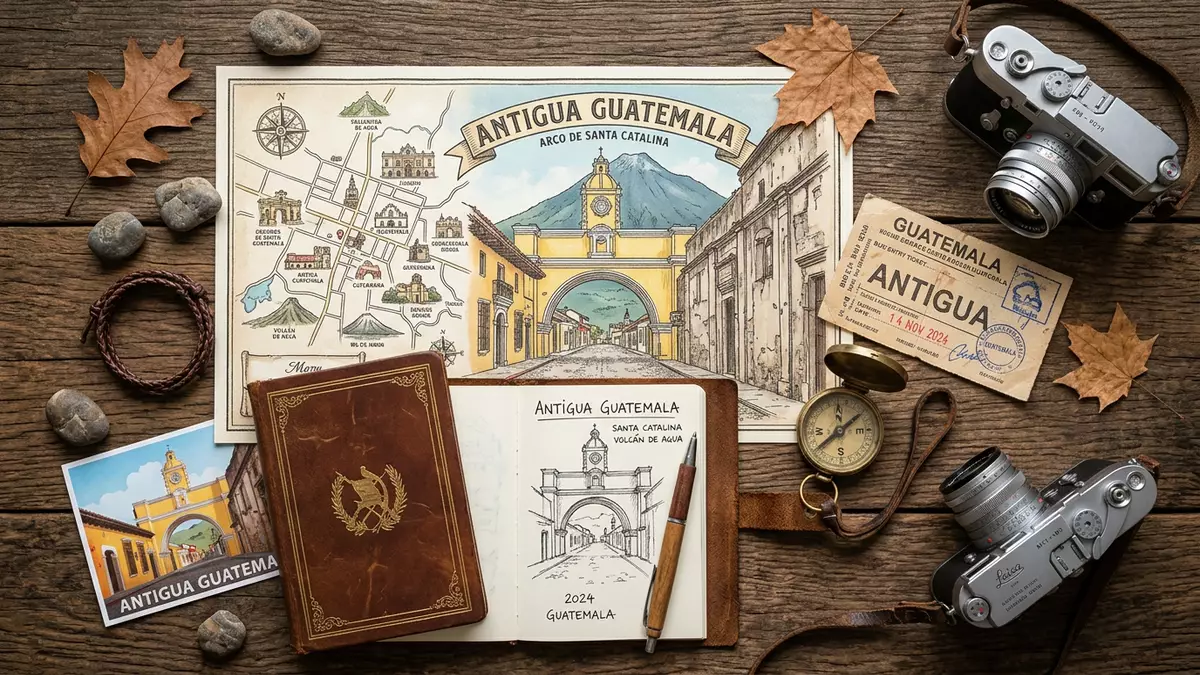
Arco de Santa Catalina in Antigua Guatemala is a yellow arch that bridges the street and the city’s colonial past. Its span, clock tower and painted walls make it one of Antigua’s most recognisable street scenes.
A convent passage over 5a Avenida Norte
The arch was completed in 1694 and formed part of the Convent of Santa Catalina Virgen y Mártir. The structure linked convent buildings across the street and kept movement within the complex discreet.
That origin gives the arch an unusual double identity: it is both a street feature and a surviving fragment of a religious compound. The passage is enclosed, with the arch opening directly above the road and the tower rising above the roofline.1694
Colour, clock tower and colonial profile
The arch’s warm yellow finish and white trim give it a calm, compact profile against the surrounding façades. Above the span, a small clock tower adds a vertical note to an otherwise horizontal composition.
The form belongs to the Spanish colonial fabric of Antigua Guatemala, where churches, convents and civic buildings line narrow streets in a dense grid. Arco de Santa Catalina remains a clear example of how a single structure can combine passage, frontage and street marker in one view.Convent of Santa Catalina
Earthquakes, repair and a later profile
Antigua Guatemala was heavily affected by the earthquakes of 1773, and the arch survived through damage and repair. The structure’s present appearance includes later changes to the upper section, where the clock tower stands above the passage.
Those changes did not erase the original outline. The arch still reads as an enclosed bridge across a public street, with the city’s volcanic backdrop adding a strong visual contrast to the colonial masonry.1773 earthquakes
Visiting Arco de Santa Catalina: what travellers from Western Europe should know
- The arch stands on 5a Avenida Norte in the historic centre of Antigua Guatemala. It is reached on foot through the city grid, and it sits within easy reach of churches and plazas.
- The street below is paved with cobblestones. Footwear with a firm sole is useful on the uneven surface.
- The arch stands in a city at high altitude, with volcanoes on the horizon. The surrounding streets can feel steep in places, especially away from the main avenues.
- Spanish is the main language in Antigua Guatemala, and the currency is the Guatemalan quetzal.
- Entry requirements depend on your nationality; UK travellers can check the FCDO travel advice at gov.uk/foreign-travel-advice, Irish travellers the Department of Foreign Affairs at ireland.ie.
Searching for Arco de Santa Catalina on social platforms
These links open searches for Arco de Santa Catalina on each platform.
Frequently asked questions about Arco de Santa Catalina
Where is Arco de Santa Catalina?
Arco de Santa Catalina stands on 5a Avenida Norte in Antigua Guatemala, Guatemala. It spans one of the city’s central streets in the colonial core.
What does a visit involve?
A visit means walking beneath the arch and looking at it from the street. The setting is urban and compact, with cobbles, low façades and the clock tower overhead.
What makes Arco de Santa Catalina distinctive?
Its enclosed passage, yellow façade and clock tower give it a layered presence on the street. The arch also preserves the memory of the convent life that shaped it in the seventeenth century.