
Arches National Park and its landscape of sandstone openings
Published on 09/23/2026 at 16:02 | Editorial responsibility: Rafael Müller, Editor-in-Chief AD HOC NEWS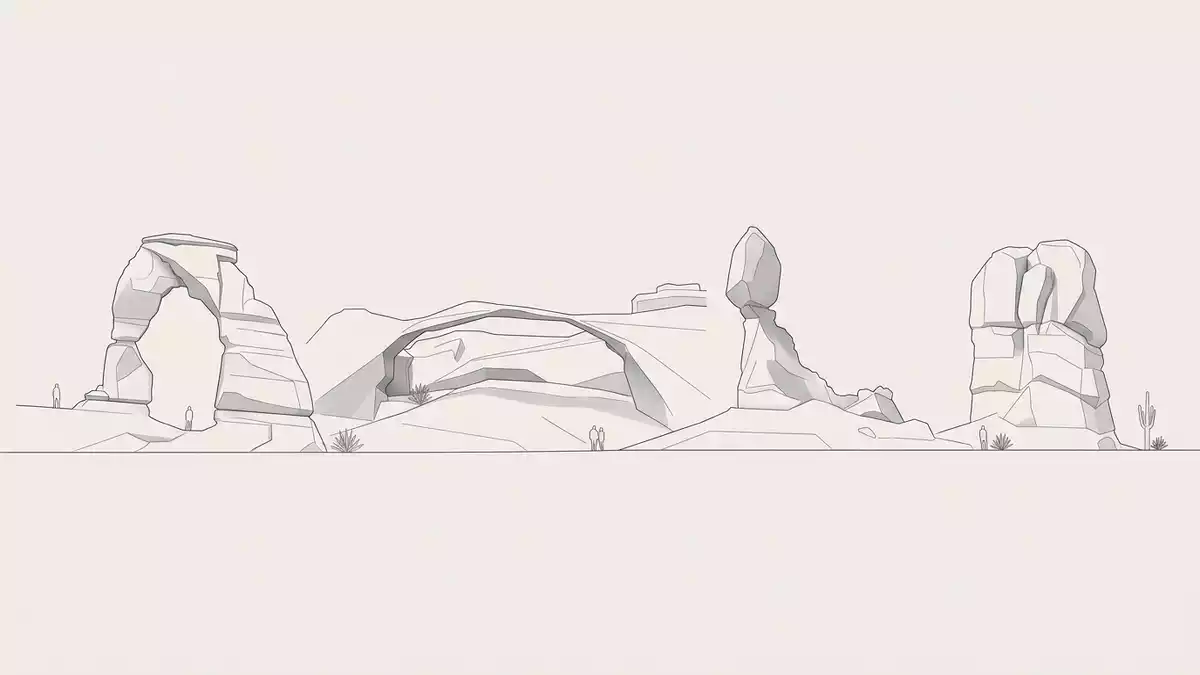
Arches National Park is a high-desert landscape near Moab in eastern Utah, where sandstone walls open into natural arches, windows and narrow fins. More than 2,000 documented arches stand among pinnacles, balanced rocks and broad expanses of exposed rock.
Arches National Park: a landscape built from openings
The park’s defining forms are made chiefly from Jurassic sandstone. The Entrada Sandstone contains many of the arches, while Navajo Sandstone and other sedimentary layers appear across the Colorado Plateau landscape. The rock records environments that included marine, nearshore and continental settings over a span of geological time.Arches geology in Utah
An opening must measure at least 1 m in one direction to count as an official stone arch in the park. The documented formations range from thin cracks in sandstone fins to spans exceeding 300 feet, or 97 m.The park’s arch definition
From Entrada sandstone to Delicate Arch
Delicate Arch is the park’s best-known natural arch. Its light opening is 14 m high, and the surrounding sweep of bare sandstone places the freestanding form against the open Utah sky. The arch appears on the state’s vehicle registration plates and has become a recognised symbol of Utah.
Landscape Arch stretches across Devils Garden, where long sandstone fins stand beside paths, walls and other openings. Balanced Rock presents a different arrangement: a large sandstone boulder rests on a narrower pedestal, creating a distinct vertical composition among the park’s formations.Delicate Arch and Balanced Rock
Salt, faults and the Colorado Plateau
Deep beneath the park lies the Paradox Formation, an evaporite layer associated with an ancient basin. The buried salt influenced folds and faults in the overlying rocks, including the Moab fault south of the visitor centre.
Rainwater enters fractures, freezes in colder conditions and removes loosened grains from the sandstone. Cracks widen into narrow passages, fins separate from surrounding rock, and some openings develop into arches. Wind contributes to erosion, but water is the primary erosional agent recorded in the park’s geological description.
Arches National Monument was established on 12 April 1929. The designation changed to national park status on 12 November 1971, placing this red-rock landscape within the United States national park system.The park’s protected history
Visiting Arches National Park: what travellers from Western Europe should know
- Arches National Park lies north of Moab in eastern Utah, close to US Highway 191 and north of Interstate 70. Moab is the principal nearby town.
- The landscape includes exposed bedrock, sand, fins, steep rock surfaces and uneven desert paths. Several named formations require walking away from the main road.
- Elevations range from about 1,245 m (4,085 ft) near the visitor centre to about 1,723 m (5,653 ft) at Elephant Butte.
- The official language is English and the currency is the United States dollar.
- Entry requirements depend on your nationality; UK travellers can check the FCDO travel advice at gov.uk/foreign-travel-advice, Irish travellers the Department of Foreign Affairs at ireland.ie.
Searching for Arches National Park on social platforms
These links open searches for Arches National Park on each platform.Frequently asked questions about Arches National Park
Where is Arches National Park?
Arches National Park is in eastern Utah, immediately north of Moab and on the Colorado Plateau. US Highway 191 connects the park area with Moab.
What can visitors expect to see?
The park contains natural arches, sandstone fins, windows, pinnacles, canyons and balanced rocks. Named places include Delicate Arch, Landscape Arch, Balanced Rock, Devils Garden and the Windows Section.
What makes Arches National Park distinctive?
Its landscape contains more than 2,000 documented natural stone arches within a compact high-desert setting. The forms expose Jurassic sandstone shaped by fractures, erosion and the deeper geology of the Colorado Plateau.


