
Archaia Olympia and the sanctuary where the Olympic Games began
Published on 08/20/2026 at 21:10 | Editorial responsibility: Rafael Müller, Editor-in-Chief AD HOC NEWS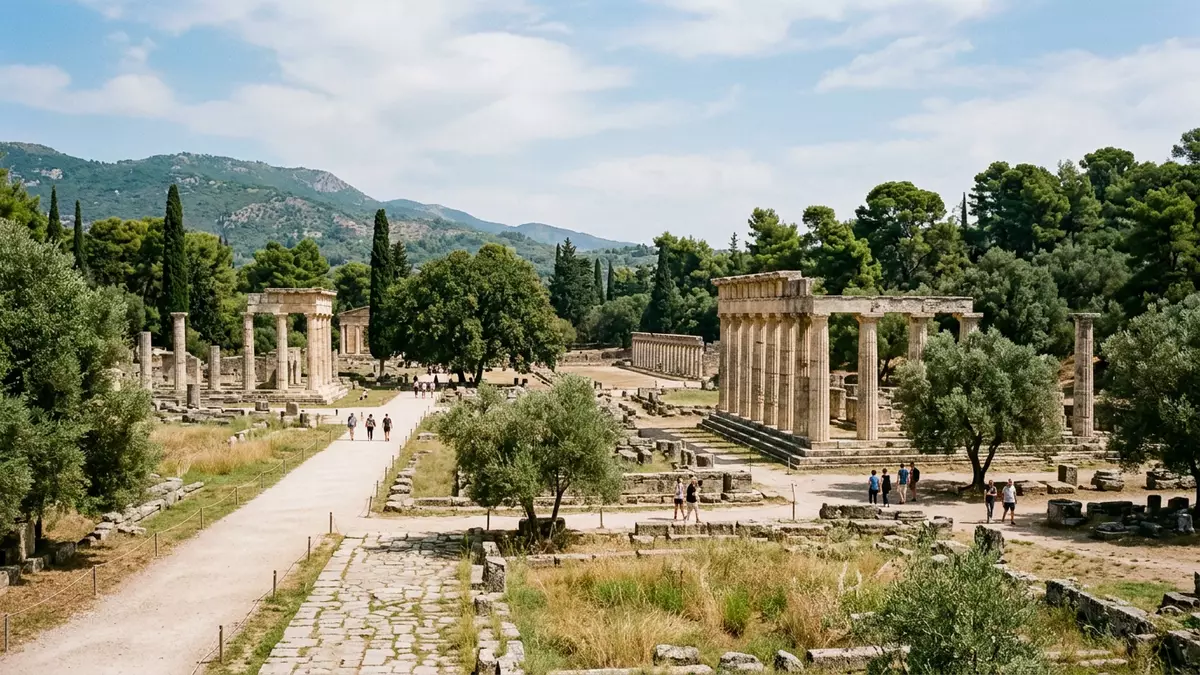
Archaia Olympia is the modern town beside the archaeological site of ancient Olympia in western Greece, where a sanctuary of Zeus and the stadium of the ancient Olympic Games lie in a low, wooded river valley. Set in the region of Elis in the western Peloponnese, the site links a modest settlement with ruins that carry the name Archaeological Site of Olympia on the UNESCO World Heritage List, reflecting both religious and athletic history anchored in the Greek world.
The sacred Altis and the landscape of Archaia Olympia
The heart of ancient Olympia is the Altis, a sacred enclosure dedicated above all to Zeus, laid out on level ground beside the Alpheios and Kladeos rivers and backed by gentle hills such as Mount Kronios.The sanctuary of Olympia gathers temples, treasuries and cult buildings inside this grove, creating a dense cluster of religious structures at the centre of the wider valley.The Altis, the sacred enclosure
The landscape around Archaia Olympia is defined by the confluence of the Alpheios and Kladeos, with the ruins spreading over ground that slopes gently up towards Mount Kronios and other low heights.Olympia is located near the western coast of the Peloponnese The sanctuary sits a short distance inland from the Ionian Sea, yet feels enclosed by countryside rather than coast, with agricultural land and woodland surrounding the site and the modern town following the valley floor nearby.Olympia archaeological site is in a fertile valley
Zeus, Hera and the temples of ancient Olympia
Archaia Olympia grew next to a sanctuary whose identity as a cult centre took shape in the tenth century BC, when Olympia became a place for the worship of Zeus and also for a separate cult of Hera.Olympia became a centre for the worship of Zeus in the tenth century BC Within the Altis, the Temple of Hera rose in the archaic period and is counted among the oldest Doric temples known in Greece, marking an early phase of stone monumental architecture in this sanctuary.The earliest surviving monumental building, the Temple of Hera
The larger Temple of Zeus once stood prominently in the Altis, housing the famed Statue of Zeus created by Phidias, which ancient writers ranked among the Seven Wonders of the World.home of the massive Statue of Zeus Around these main temples, treasuries from different Greek cities lined parts of the enclosure, and other cult buildings and monuments contributed to what UNESCO describes as one of the highest concentrations of masterpieces from the ancient Greek world within a single sanctuary.The Altis has one of the highest concentrations of masterpieces
The ancient Olympic Games and the athletic grounds
The presence of Archaia Olympia beside the ruins keeps close ties to a festival that began in the eighth century BC, when authorities in Elis organised a religious gathering with athletic contests in honour of Zeus at this sanctuary.the first festival was organised there by the authorities of Elis Tradition dates the earliest recorded Olympic Games to 776 BC, and the four-year interval between each set of contests, the Olympiad, became a recognised unit for reckoning time across much of the Greek world.The Olympic Games were held every four years from 776 BCE
The archaeological site at Archaia Olympia includes a stadium with long earth banks for spectators, training grounds such as the palaestra and gymnasion, and other athletic facilities linked to the Olympic programme, alongside administrative buildings and structures for judges and officials.athletic premises used for the preparation and celebration of the Olympic Games These sports structures stand near the temples within the Altis, underlining that the ancient Olympic Games formed part of a religious festival, not a separate secular institution, and that both sacred and athletic architecture grew together on this ground for many centuries.there are the remains of all the sports structures erected for the Olympic Games
Visiting Archaia Olympia: what travellers from Western Europe should know
- Archaia Olympia lies in the regional unit of Elis in the north-western Peloponnese in Greece, in a valley formed by the Alpheios and Kladeos rivers, reached by road connections from nearby towns such as Pyrgos and from the port of Katakolon.
- The archaeological site extends over uneven ground beside the riverbanks and up gentle slopes, with stone remains and earth paths that involve sustained walking on rough surfaces.
- In summer the valley experiences high temperatures by day with limited shade among some ruins, and in winter rain can leave parts of the open site soft underfoot.
- Other points of interest in the vicinity include the archaeological museum of Olympia and views towards Mount Kronios rising above the sanctuary.
- The official language is Greek and the currency is the euro.
Searching for Archaia Olympia on social platforms
These links open searches for Archaia Olympia on each platform.
Frequently asked questions about Archaia Olympia
Where is Archaia Olympia?
Archaia Olympia is a town in the regional unit of Elis in the western Peloponnese in Greece, in a valley formed by the Alpheios and Kladeos rivers.
What can a visitor expect at Archaia Olympia?
A visit brings extensive ruins of the sanctuary of Zeus and athletic grounds linked to the ancient Olympic Games, along with a modern town and nearby museum.
What makes Archaia Olympia distinctive among ancient sites?
Archaia Olympia stands out for combining major temples, treasuries and cult buildings with a complete athletic complex where the Olympic Games were held for many centuries.


