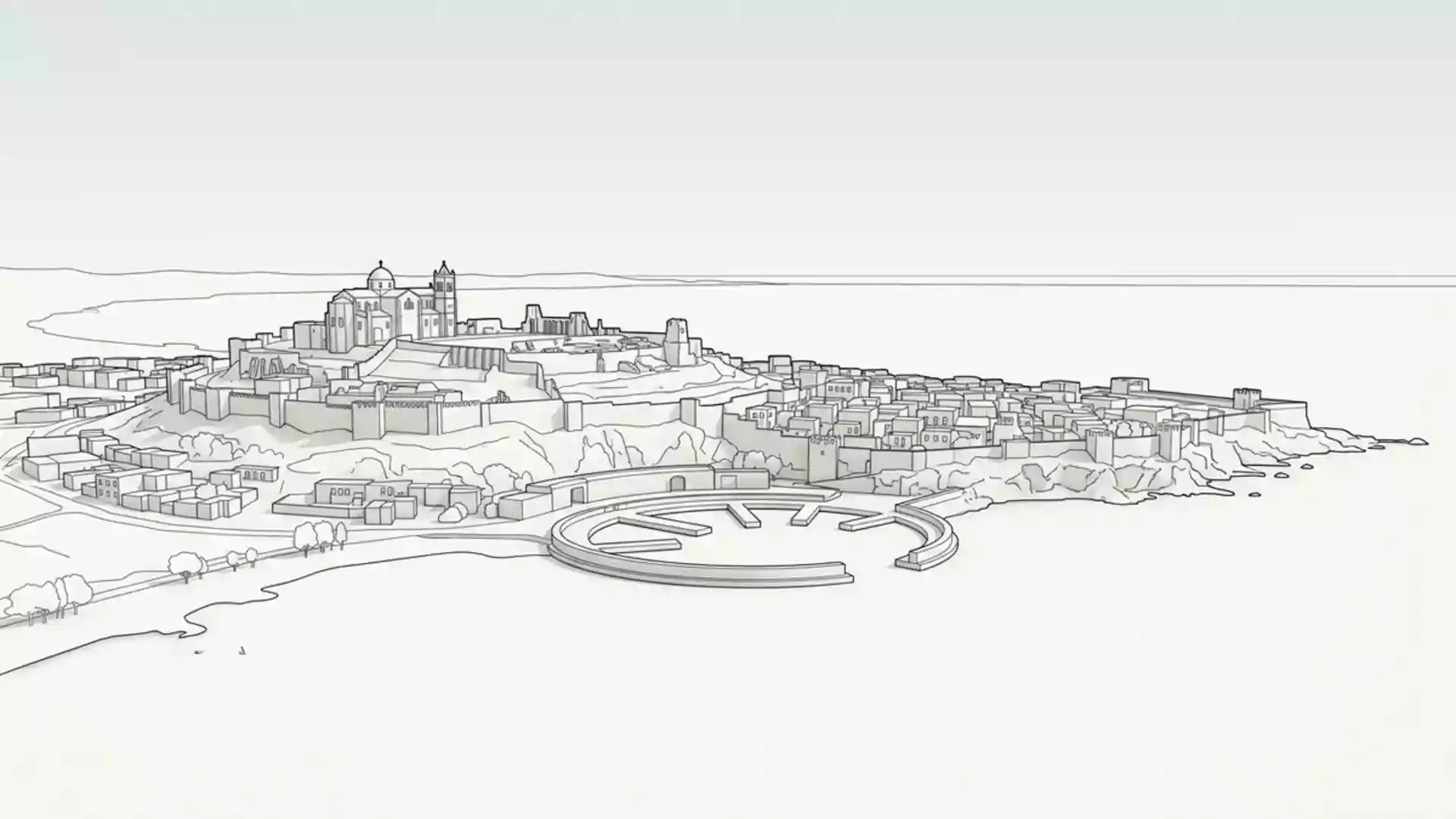
Archaeologists uncover a Roman wall at Carthage on 27 November
Published on 11/28/2026 at 10:24 | Editorial responsibility: Rafael Müller, Editor-in-Chief AD HOC NEWSResearch and heritage at Carthage
- The National Heritage Institute announced findings from the Punic ports on 27 November 2026.
- The Roman wall may mark the outer enclosure of the harbour's central island, while blocks may indicate a breakwater.
- UNESCO lists the Archaeological Site of Carthage as World Heritage since 1979.
- The excavation partnership involves Tunisia's National Heritage Institute and China's National Centre for Archaeology.
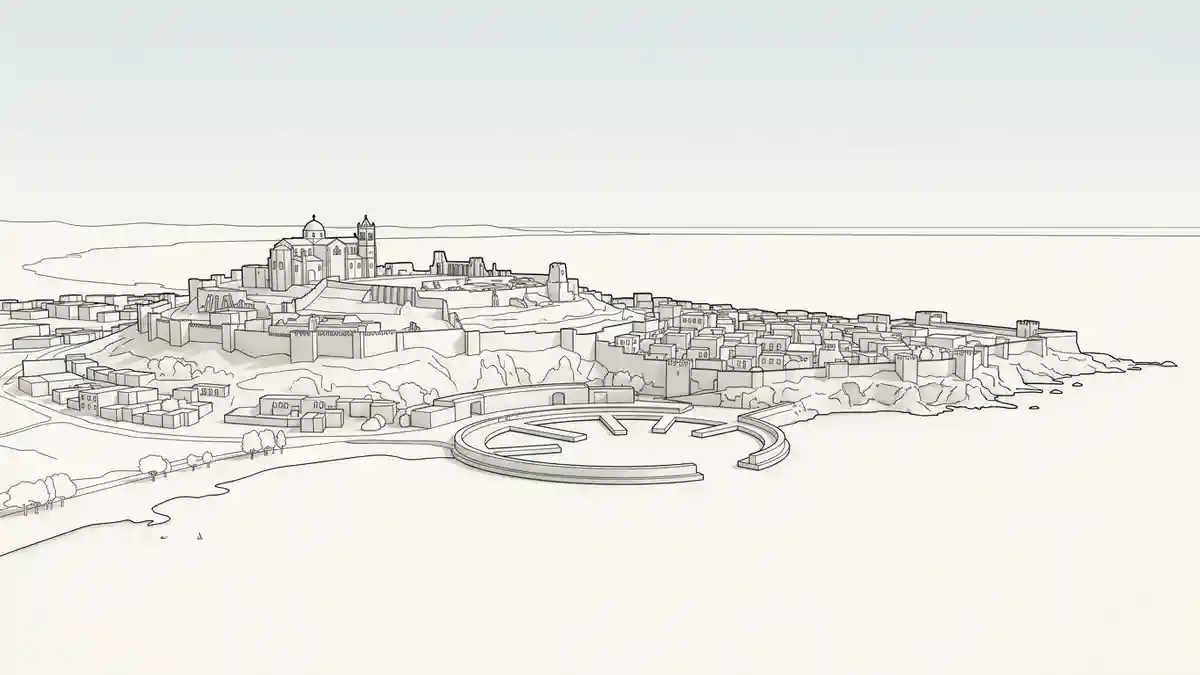
At Carthage, archaeologists uncovered a Roman-era enclosure wall at the Punic ports in a finding announced on 27 November 2026. The wall may have formed the outer boundary of the central island in the circular harbour, adding a current research story to a major archaeological site near Tunis, Tunisia.
A Roman wall emerges from the Punic ports
The excavation campaign is being conducted at the Punic ports by Tunisia's National Heritage Institute, known as the INP, in partnership with China's National Centre for Archaeology, or NACA. The campaign began on 19 October 2026, and the National Heritage Institute announced the new results on 27 November 2026.
The main discovery is an enclosure wall from the Roman period. Archaeologists say it may correspond to the outer boundary of the central island in the circular harbour. Several stone blocks were also found, and their function may have been connected with a breakwater, although that interpretation remains a possibility rather than a settled conclusion.
The recovered material includes amphorae, oil lamps, pottery and bronze coins. According to the findings reported by the TAP excavation report, the objects point to occupation of the site from the Punic period through the Byzantine period.
How the harbour discovery adds to Carthage's history
The possible wall belongs to the harbour complex rather than to an isolated building. Its position may help researchers understand how the central island was enclosed and how the circular harbour changed after the Punic period.
The teams are continuing work on the relationships between walking levels, abandonment layers and built structures. That detail matters because the harbour is not a single-period monument: the finds connect successive phases of use across the Punic, Roman and Byzantine eras.
The wider Archaeological Site of Carthage has been on the UNESCO World Heritage List since 1979. A November 2026 UNESCO conservation report describes the property as a World Heritage site and records continuing conservation, documentation and research work by the National Heritage Institute.
The new harbour results therefore link a present-day Tunisian-Chinese research partnership with a site whose archaeological record extends across several civilisations. The possible breakwater is particularly relevant to that connection, because it could help explain how maritime installations were organised, even though its precise function still requires investigation.
Research continues around the circular harbour
The announcement does not present the wall as fully identified. Researchers still have to clarify its exact relationship with the central island, establish the role of the stone blocks and set the structures within the sequence of occupation recorded by the excavated layers.
For visitors, the practical consequence is that the new report concerns archaeological knowledge rather than a newly announced festival, reopening or entrance change. The findings provide a current reason to follow the Punic ports as research continues, while the wider site remains a landscape of separate archaeological areas around the ancient city.
Visiting Carthage: what travellers from Western Europe should know
- The current finding was announced on 27 November 2026 at the Punic ports, within the Archaeological Site of Carthage.
- The report concerns a Roman-era wall, possible breakwater blocks and continuing excavations; it announces no closure or changed entrance.
- The archaeological evidence from the campaign includes amphorae, oil lamps, pottery and bronze coins, with occupation indicated from the Punic period to the Byzantine period.
- The site is in the Tunis area of Tunisia, and the property has UNESCO World Heritage status from 1979.
Searching for Carthage on social platforms
These links open searches for Carthage on each platform.
Frequently asked questions about Carthage
What was found at Carthage on 27 November 2026?
Archaeologists uncovered a Roman-era enclosure wall and stone blocks that may have formed part of a breakwater at the Punic ports.
Where are the new Carthage discoveries?
They are at the Punic ports within the Archaeological Site of Carthage near Tunis in Tunisia.
What is Carthage?
Carthage is an archaeological site whose remains record Punic, Roman and Byzantine occupation. UNESCO has listed it as World Heritage since 1979.