
Apartheid Museum in Johannesburg and the architecture of memory
Published on 09/18/2026 at 06:22 | Editorial responsibility: Rafael Müller, Editor-in-Chief AD HOC NEWS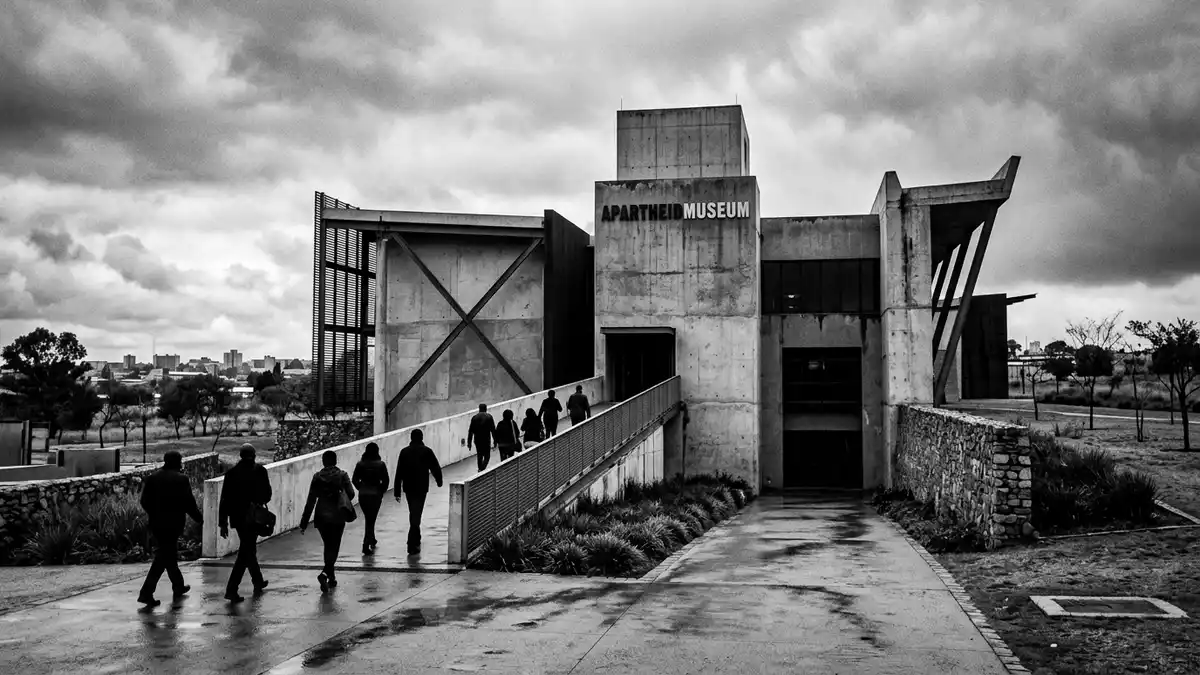
Apartheid Museum in Johannesburg is a purpose-built institution dedicated to South Africa’s apartheid era and wider 20th-century history, combining concrete structures, outdoor installations and curated galleries into a single, unfolding route through the story of segregation and democracy.
An architecture shaped by concrete, steel and stone
The building complex of Apartheid Museum stands on a multi-hectare site in Ormonde, in southern Johannesburg, close to the Gold Reef City entertainment precinct. It occupies land beside major city roads, including Northern Parkway and Gold Reef Road, which place the museum within a broad transport corridor leading south from the central business district.Northern Parkway and Gold Reef Roads The museum sits slightly apart from the theme park structures around it, framed by parking areas and low landscaping that make its robust architecture easy to pick out against the skyline.
The architecture emerged from a consortium of South African practices, including GAPP Architects and Urban Designers, Mashabane Rose Associates, Britz Architects and Linda Mvusi, which worked together to shape the complex on a site of around seven hectares.architectural consortium Across the buildings and boundary walls, the material palette mixes off-shutter concrete, steel framing, red face brick and stone-filled gabion cages, producing façades that feel deliberately heavy and industrial. Dry-stacked stone panels and raw plaster surface in different parts of the complex, so that visitors move from rough, rock-textured walls to smoother planes of brick and concrete. Indigenous landscaping designed by Patrick Watson threads grasses and gravel paths between these structures, helping the museum’s built forms sit within their site rather than read as a single monolithic block.indigenous landscaping designed by Patrick Watson
Exhibitions tracing apartheid and South Africa’s 20th century
Apartheid Museum opened in 2001 as an institution focused on apartheid and the political story of South Africa in the twentieth century.opened in 2001 It presents apartheid as both a legal system of racial segregation and a lived experience, setting that era within longer historical narratives that include the discovery of gold on the Witwatersrand and the migration into Johannesburg. The permanent exhibition is organised as a single route through a sequence of areas, so visitors follow the story in a structured order rather than moving randomly between themes.single route through exhibition areas
The journey begins outside the main building, where installations such as “Journeys” use large-scale photographs of families whose histories tie back to gold rush migration into Johannesburg after 1886.Journeys exhibit Near the entrance, visitors encounter the Pillars of the Constitution, a courtyard installation in which individual pillars represent values written into the post-apartheid constitution, including Democracy, Equality, Reconciliation, Diversity, Responsibility, Respect and Freedom.Pillars of the Constitution Inside, the galleries move through segregation policies, race classification systems, resistance movements and negotiations toward the 1994 elections, using photographs, archival footage, documents and sculptural elements within concrete and brick-lined rooms. Dedicated areas highlight figures such as Nelson Mandela and Desmond Tutu, while some spaces focus on themes like political executions or the rise of Black Consciousness.Mandela and Tutu exhibitions
Landscape, installations and the choreography of a visit
The outdoor areas at Apartheid Museum form an important part of the experience, as pathways, gravel courts and planted strips lead visitors between building volumes and installations. Gabion and stone walls border some of these spaces, creating narrow passages and wider yards that change the rhythm of movement across the site.gabion and stone walls Within one area, an installation of suspended nooses represents executed political prisoners under apartheid, a stark contrast to nearby landscaped zones planted with indigenous grasses.exhibit of 131 nooses
Inside the museum, concrete floors and brick surfaces frame multimedia installations and wall-sized images, so that architectural elements become part of the exhibition design. Visitors pass through darkened corridors and more open galleries in succession, with transitional spaces marking shifts between themes such as segregation law, life under apartheid and the transition to democracy.segregation and democracy themes The curated route links outdoor displays, constitutional pillars and interior rooms into a continuous sequence, turning the museum into an extended walk through interlocking architectural and narrative spaces.permanent exhibition route
Visiting Apartheid Museum: what travellers from Western Europe should know
- Apartheid Museum stands in Ormonde in southern Johannesburg, adjacent to the Gold Reef City complex and beside major routes including Northern Parkway and Gold Reef Road.
- The museum complex incorporates outdoor courtyards, gravel paths and landscaped areas, and a visit involves walking between buildings and installations on surfaces ranging from concrete to stone.
- The museum lies several kilometres south of central Johannesburg and is accessible by road via routes that link the city centre to the Gold Reef City precinct.
- The official language is English and the currency is the South African rand.
- Entry requirements depend on your nationality; UK travellers can check the FCDO travel advice at gov.uk/foreign-travel-advice, Irish travellers the Department of Foreign Affairs at ireland.ie.
Searching for Apartheid Museum on social platforms
These links open searches for Apartheid Museum on each platform.Frequently asked questions about Apartheid Museum
Where is Apartheid Museum located in Johannesburg?
Apartheid Museum is located in Ormonde in southern Johannesburg, beside Northern Parkway and Gold Reef Road near the Gold Reef City complex.
What can visitors expect during a visit to Apartheid Museum?
Visitors follow a structured route through outdoor installations and interior galleries that explore apartheid, segregation policies, resistance movements and South Africa’s transition to democracy.
What makes Apartheid Museum distinctive among history museums?
The combination of industrial materials, indigenous landscaping and a single, choreographed exhibition route makes Apartheid Museum a distinctive architectural and historical environment.


