
Apartheid Museum in Johannesburg and the architecture of memory
Published on 09/12/2026 at 18:01 | Editorial responsibility: Rafael Müller, Editor-in-Chief AD HOC NEWS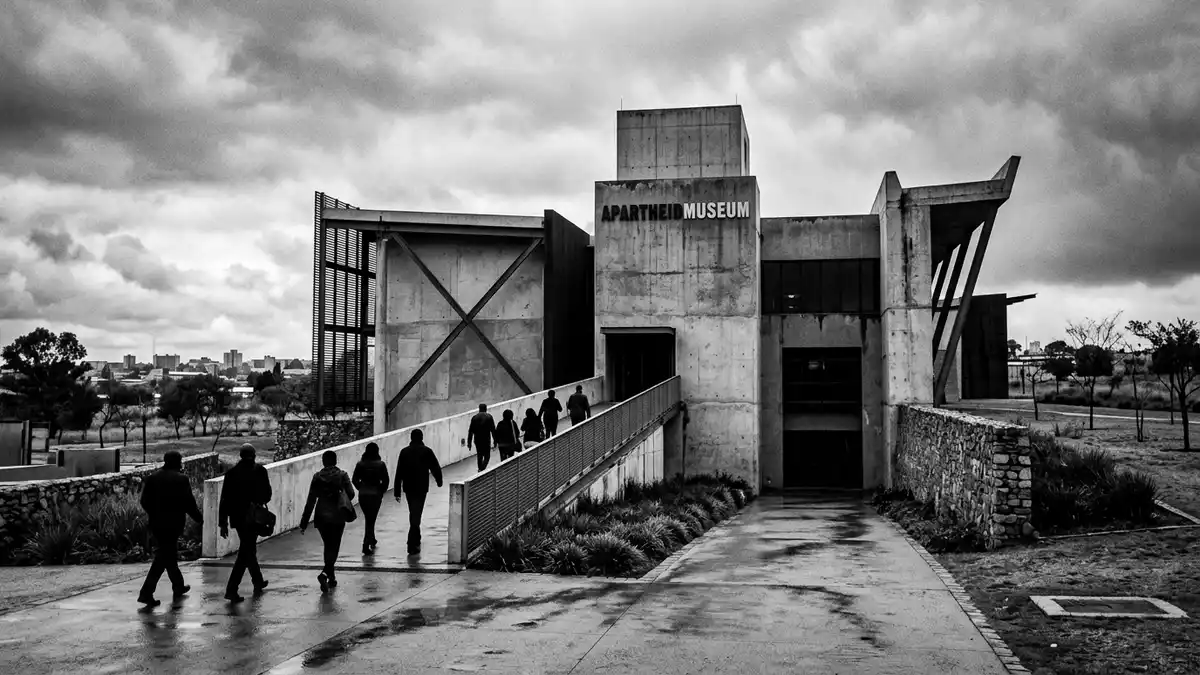
Apartheid Museum in Johannesburg is a history museum and a piece of architecture that turns South Africa’s apartheid past into a physical, structured journey through space. Opened in 2001 on the southern edge of the city, it uses concrete, steel and brick to frame exhibitions about racial segregation and the country’s path towards democracy.
Architecture of concrete, steel and landscape
Apartheid Museum stands on a seven-hectare site in Ormonde, a district south of Johannesburg’s central business area, next to the Gold Reef City leisure complex and former mine infrastructure.Opened in 2001 on a seven-hectare stand the building was conceived by a consortium of South African architectural practices, including GAPP Architects and Urban Designers, Mashabane Rose Associates, Britz architects and Linda Mvusi, whose collaboration treated the whole site as a single composition of structures and open ground.Designed by a joint venture of South African practices
The architecture relies heavily on raw concrete walls, steel frames and red brick surfaces, combined with planted embankments and gravelled courtyards. These materials give the museum an industrial character that relates to Johannesburg’s mining history while distinguishing it from traditional gallery buildings in the city centre. Outside, a series of rectilinear blocks, ramps and terraces step across the site, creating enclosed courtyards and sightlines towards the city and towards the Gold Reef City theme park next door.
A guided route through South Africa’s 20th?century history
The core of Apartheid Museum is a permanent exhibition devoted to apartheid and the wider 20th?century history of South Africa, laid out as a single route through a sequence of areas rather than a set of independent rooms.The museum illustrates apartheid and South Africa’s 20th?century history Visitors move from outdoor installations into darker interior galleries where blown?up photographs, artefacts, documents and film footage trace the development of segregationist laws and the resistance movements that opposed them.Large photographs, artefacts and film footage animate the apartheid story
Near the entrance stands an installation known as the “Pillars of the Constitution”, a courtyard arrangement of tall structures, each bearing one of the founding values written into South Africa’s post?apartheid constitution, such as Democracy, Equality, Reconciliation and Freedom.The Pillars of the Constitution form the first exhibit From there, outdoor displays like “Journeys” use large photographs of families whose histories reflect migration into Johannesburg after the discovery of gold in 1886, linking individual stories to the industrial landscape around the museum.
Exhibitions on apartheid and figures of the democratic transition
Inside the museum, themed sections address different aspects of life under apartheid and the political struggle against it, including segregationist policies, everyday restrictions, resistance organisations and the transition to democratic elections in 1994.Permanent exhibits include Segregation, Life Under Apartheid and The Rise of Black Consciousness Multimedia installations mix archive footage, recorded testimony and objects, making the route a dense sequence of images and sounds surrounded by the museum’s concrete and steel structure.
The museum also devotes space to dedicated exhibitions on major figures in South Africa’s recent history, including Nelson Mandela and Desmond Tutu.A Mandela exhibition runs alongside the main narrative These sections follow Mandela’s path from rural beginnings through the Rivonia Trial and long imprisonment to his role in negotiated transition, and Tutu’s involvement as an Anglican cleric and public voice against apartheid. Together they sit within the wider historical route rather than apart from it, reinforcing the museum’s emphasis on individual lives inside systemic change.
Visiting Apartheid Museum: what travellers from Western Europe should know
- Apartheid Museum is located in Ormonde in south Johannesburg, on the corner of Northern Parkway and Gold Reef Roads, next to the Gold Reef City casino and theme park complex.
- The museum building stands on sloping ground with outdoor ramps and internal staircases linking its exhibition levels, and the route through the galleries involves extended walks along concrete corridors.
- The site lies close to major roads such as the M1 freeway, and travellers reach it by road transport from central Johannesburg or from nearby districts including Soweto and the areas around Gold Reef City.
- English is an official language in South Africa and the currency is the South African rand.
- Entry requirements depend on your nationality; UK travellers can check the FCDO travel advice at gov.uk/foreign-travel-advice, Irish travellers the Department of Foreign Affairs at ireland.ie.
Searching for Apartheid Museum on social platforms
These links open searches for Apartheid Museum on each platform.
Frequently asked questions about Apartheid Museum
Where is Apartheid Museum in Johannesburg?
Apartheid Museum stands in Ormonde in southern Johannesburg, on the corner of Northern Parkway and Gold Reef Roads, beside the Gold Reef City complex.
What should visitors expect inside Apartheid Museum?
Visitors follow a structured route through outdoor installations and interior galleries where photographs, documents, artefacts and film footage present apartheid and South Africa’s 20th?century political history.
What makes Apartheid Museum distinctive?
The combination of raw concrete, steel and brick architecture with a choreographed historical exhibition, including features like the Pillars of the Constitution, gives Apartheid Museum a distinctive character among history museums in Johannesburg.


