
Aoraki / Mount Cook National Park, where glaciers crowd the sky
Published on 08/30/2026 at 10:38 | Editorial responsibility: Rafael Müller, Editor-in-Chief AD HOC NEWS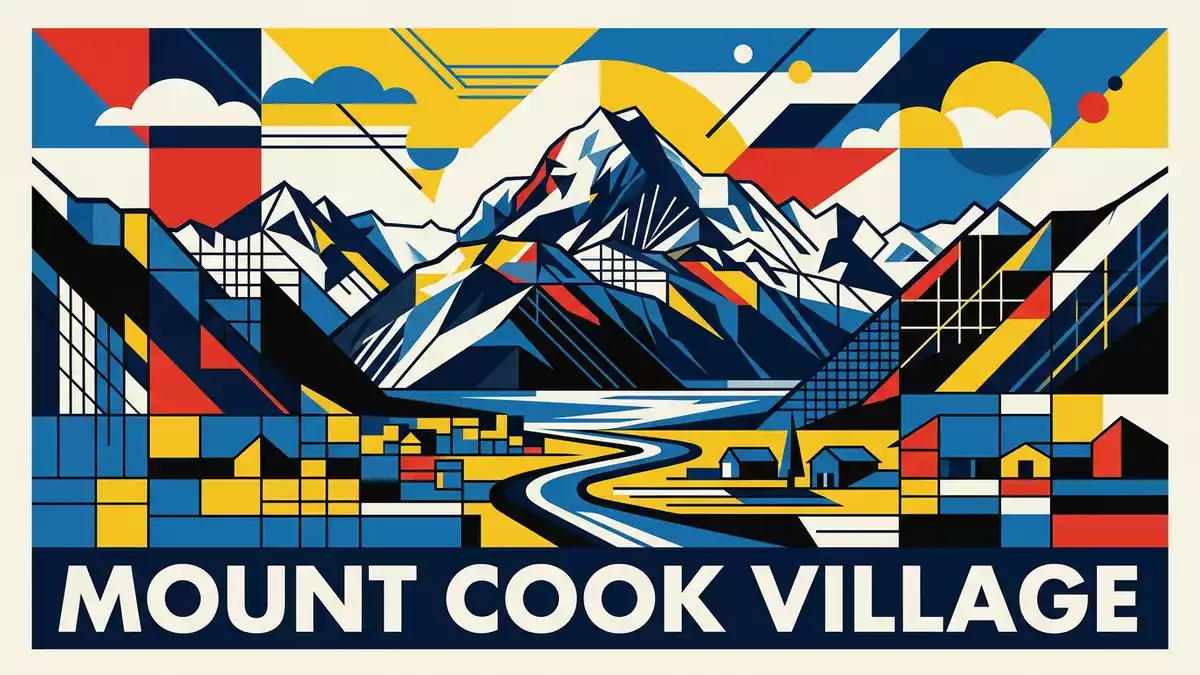
Aoraki / Mount Cook National Park in New Zealand’s Southern Alps is an alpine landscape where high peaks, broad glaciers and steep valleys surround the small settlement of Mount Cook Village. The park was established in 1953 to protect the country’s loftiest mountains, with Aoraki / Mount Cook itself dominating the skyline above the southern part of the South Island.
Alpine scale: Aoraki, peaks and glaciers
Aoraki / Mount Cook National Park spreads along the eastern flank of the Southern Alps, with the protected area extending for tens of kilometres along the main divide of the range.The park extends along the crest of the Southern Alps The park’s area is recorded at around 707 km² (273 sq mi), giving space for a dense concentration of summits and glacier systems.The park covers about 707 km²
At the centre stands Aoraki / Mount Cook, the highest mountain in New Zealand, rising to 3,724 m (12,218 ft) above sea level in a cluster of ridges and faces that tower over surrounding valleys.Aoraki / Mount Cook reaches 3,724 m The wider park holds numerous other major summits, with 19 peaks recorded above 3,000 m (9,843 ft), turning the skyline into a jagged horizon of snow and rock.The park contains 19 peaks over 3,000 m Valleys carved by ice run outward from this high corridor, and visitors based in Mount Cook Village see sheer walls and snowfields enclosing the settlement on several sides.
Ice country: Tasman, Hooker and other glaciers
A defining feature of Aoraki / Mount Cook National Park is the presence of extensive glaciers, with glaciated terrain covering a large share of the protected area.Over a third of the park is glaciated This concentration of permanent ice gives the park its reputation as New Zealand’s main glacier region, where thick flows descend from high plateaus into long valleys cut deep into the bedrock.Glaciers cover about 40% of the park
Tasman Glacier, on the eastern side of Aoraki, is one of the best-known individual systems in the park and runs for many kilometres down a broad trough lined with moraine and gravel.Tasman Glacier is a prominent valley glacier Nearby Hooker Glacier forms another major ribbon of ice below steep faces, feeding a lake at the head of Hooker Valley that sits directly opposite the summit pyramid of Aoraki. In many valleys a layered pattern appears: bare rock walls, bands of scree, the broken ice of glacier tongues and, farther down, braided rivers and lakes carrying meltwater away across the wider Mackenzie Basin.
Protection, night skies and Mount Cook Village
Aoraki / Mount Cook National Park forms part of Te W?hipounamu – South West New Zealand, a World Heritage area recognised for its outstanding natural values.Te W?hipounamu was designated a World Heritage site The national park also lies within the Aoraki Mackenzie International Dark Sky Reserve, an officially recognised dark-sky region where low levels of artificial light give clear views of stars and the Milky Way above the mountains.The park is part of the Aoraki Mackenzie International Dark Sky Reserve
Mount Cook Village sits inside the park as the main hub for visitors, with accommodation, guiding services and information about walks and alpine routes. The village lies near the end of a valley road that runs from the wider Mackenzie Basin towards the foot of Aoraki, giving road access to places such as White Horse Hill and the start of several walking tracks. The headquarters of the national park administration are based at Mount Cook Village, placing park staff and information close to trailheads and visitor facilities.Park headquarters are located at Mount Cook Village
Visiting Aoraki / Mount Cook National Park: what travellers from Western Europe should know
- Aoraki / Mount Cook National Park is on the South Island of New Zealand, reached along State Highway 80 from the Mackenzie Basin towards Mount Cook Village.
- The terrain in the park is strongly alpine, with steep valley sides, high altitude tracks and approaches that may include rocky paths and exposed sections.
- Mount Cook Village lies near the end of a valley road, with walking routes beginning at nearby trailheads such as White Horse Hill car park.
- The official language is English and the currency is the New Zealand dollar.
- Entry requirements depend on your nationality; UK travellers can check the FCDO travel advice at gov.uk/foreign-travel-advice, Irish travellers the Department of Foreign Affairs at ireland.ie.
Searching for Aoraki / Mount Cook National Park on social platforms
These links open searches for Aoraki / Mount Cook National Park on each platform.
Frequently asked questions about Aoraki / Mount Cook National Park
Where is Aoraki / Mount Cook National Park located?
The park lies on the South Island of New Zealand, along the eastern side of the Southern Alps, with Mount Cook Village as its main visitor hub.
What can visitors expect when staying in Mount Cook Village?
Visitors in Mount Cook Village are surrounded by high mountains, glacier-fed valleys and alpine walking tracks that begin close to the settlement.
What makes Aoraki / Mount Cook National Park distinctive among New Zealand’s protected areas?
The park combines New Zealand’s highest peaks, extensive glaciers and a recognised dark-sky reserve within a single alpine corridor of ice and rock.


