
Aoi Ike in Biei, the blue pond of trees and light
Published on 09/17/2026 at 11:21 | Editorial responsibility: Rafael Müller, Editor-in-Chief AD HOC NEWS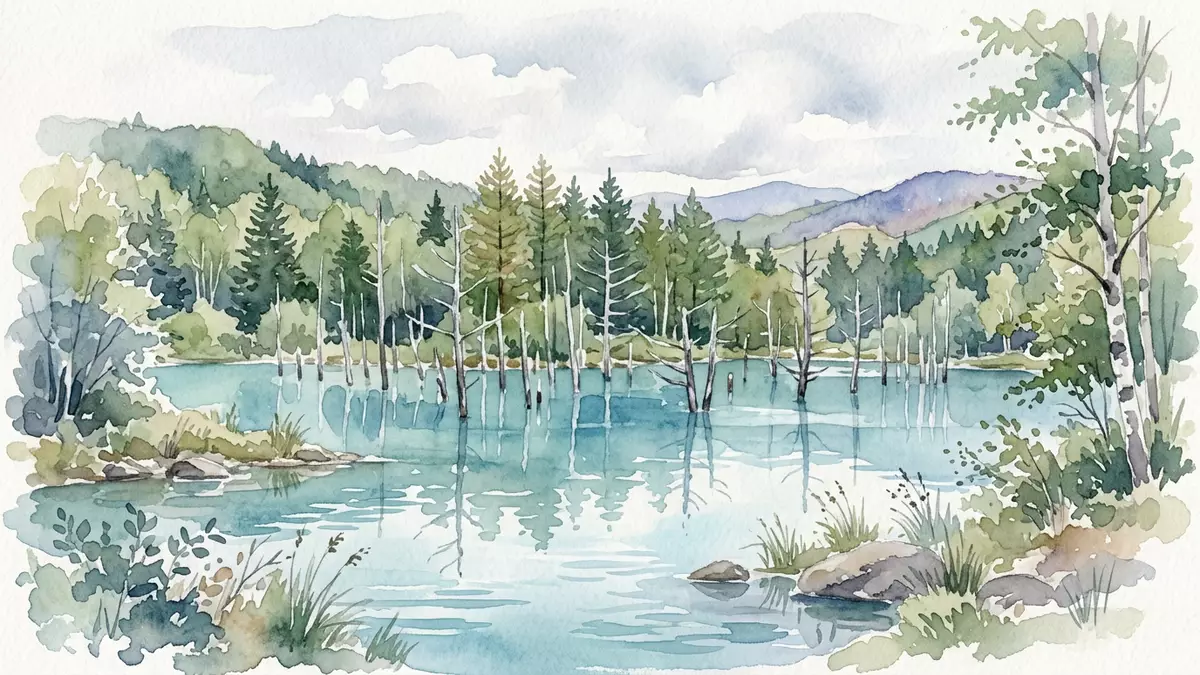
Aoi Ike in Biei is a small man-made pond in central Hokkaido where pale tree trunks rise from vividly coloured water, forming a quiet composition of vertical lines and reflected blue. Set in the forested Shirogane area beside the Biei River, the pond is part of an erosion control system created in the late twentieth century after the 1988 eruption of Mount Tokachi in the Tokachi mountain group, and its Japanese name simply means “blue pond”.
A blue pond born from river engineering
Aoi Ike lies in Biei Town in Hokkaido’s Kamikawa District, in a belt of woodland known as Shirogane along the upper course of the Biei River, with the volcanic Tokachi range rising to the south.Blue Pond in Biei The pond did not begin as a scenic feature; it took shape when a series of dams and basins were constructed on the river in the late 1980s as part of an erosion control system developed after the 1988 eruption of Mount Tokachi to protect the valley from mudflows.erosion control system put in place following the eruption of Mount Tokachi
Concrete structures in the riverbed impound the flow and form a chain of ponds, of which Aoi Ike is one basin set in the forest near Shirogane. The English name used in travel writing is Blue Pond, while the Japanese form “Aoi-ike” is written with characters that translate directly as “blue pond”, emphasising the colour that visitors notice most strongly.Blue Pond and the Japanese form Aoi-ike Although the pond began as part of a functional river project, the combination of still water, tree trunks, forest and distant mountains has given it a distinct visual identity within the wider landscape of Biei.
Colour, trees and reflections
The defining impression at Aoi Ike is the contrast between the pale trunks and the strong colour of the water. The pond’s surface shows shades of blue and turquoise that vary with light and weather, and on clear days the colour appears especially vivid as sky and trees reflect across the surface.Blue Pond outside Shirogane Onsen is named after its deep blue colour This tint is linked to fine mineral particles in the water, including colloidal aluminium compounds carried down from upstream waterfalls and hot spring areas around Shirogane and Tokachidake, which scatter light in a way that emphasises blue wavelengths.sunlight hits small particles in the water, making the pond appear blue
Across the pond, slender dead birch and larch trunks stand in the water, remnants of trees flooded when the basin formed, and they create a regular rhythm of vertical lines against the horizontal plane of the surface.turquoise water against the white of dead birch trees Reflections of these trunks, together with the forested banks and the outlines of the Tokachi mountains beyond, turn the pond into a layered image in which foreground trees, mid-ground water and distant slopes interact. The surrounding woodland, with its mixture of conifers and deciduous trees, means that the tones and textures around the pond change with the seasons even as the basic geometry of trunks and water remains.
Aoi Ike within the Hokkaido countryside
Biei itself is a rural town known for fields and gently undulating hills, set between the cities of Asahikawa and Furano in central Hokkaido.Biei is located in central Hokkaido, between Asahikawa and Furano Aoi Ike lies away from the farmed landscape in the Shirogane area, a zone of forest, river terraces and hot spring resorts along the Biei River. The access road is Hokkaido Prefectural Road 966, which runs from central Biei towards the mountain onsen settlements at Shirogane and Tokachidake, and the pond is reached by a short walk from parking and bus stops beside this road.the Blue Pond is located along prefectural road number 966
A simple path leads through the forest to the water’s edge, where visitors follow a walkway along one side of the pond and look out over the trunks and their reflections. From some vantage points, the Tokachi mountain group forms a backdrop beyond the trees, connecting the quiet basin with the volcanic terrain that prompted its construction. The combination of engineered river works, natural mineral processes and the wider agricultural and mountainous setting makes Aoi Ike a compact point where several layers of Hokkaido’s landscape and geology are visible at once.
Visiting Aoi Ike: what travellers from Western Europe should know
- Aoi Ike is located in the Shirogane area south-east of central Biei in Hokkaido’s Kamikawa District, beside the Biei River along Prefectural Road 966 between Biei and the hot spring area of Tokachidake Onsen.
- The pond is reached on foot along a short forest path from the roadside parking and bus stops; the route is on level ground but includes unpaved surfaces and low steps near the water’s edge.
- Buses on the route between JR Biei Station and Shirogane Onsen stop at points marked for the Blue Pond, including Shirogane Aoiike Iriguchi, and the area is also accessible by car from Biei and Asahikawa.
- The official language is Japanese and the currency is the yen.
- Entry requirements depend on your nationality; UK travellers can check the FCDO travel advice at gov.uk/foreign-travel-advice, Irish travellers the Department of Foreign Affairs at ireland.ie.
Searching for Aoi Ike on social platforms
These links open searches for Aoi Ike on each platform.
Frequently asked questions about Aoi Ike
Where is Aoi Ike located within Hokkaido?
Aoi Ike lies in the Shirogane area of Biei Town in Hokkaido’s Kamikawa District, beside the Biei River along Prefectural Road 966 between central Biei and the Tokachidake Onsen area.
What can visitors expect when they reach the pond?
Visitors walk along a forest path to a small man-made pond where pale tree trunks stand in blue-tinted water, with views over reflections and towards the Tokachi mountain group.
What makes Aoi Ike distinctive among Biei’s landscapes?
The pond combines engineered river works, mineral-rich blue water and standing tree trunks in a compact basin, creating a scene that contrasts with the surrounding fields and rolling farmland of Biei.


