
Antigua Guatemala between baroque ruins and living city
Published on 09/12/2026 at 20:50 | Editorial responsibility: Rafael Müller, Editor-in-Chief AD HOC NEWS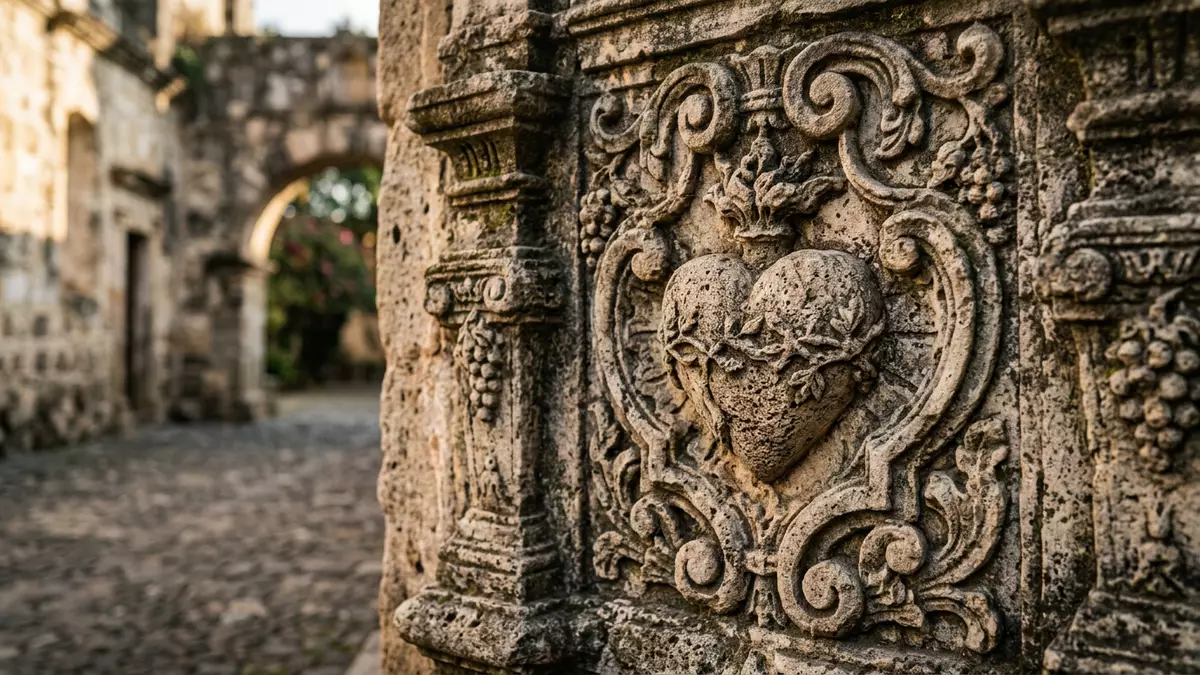
Antigua Guatemala is a historic city in southern Guatemala, laid out on a regular grid and ringed by volcanic hills, where colonial baroque architecture and ruined church facades stand alongside lived-in streets and courtyards. Founded in the sixteenth century as Santiago de Guatemala, it served as the capital of the Captaincy General of Guatemala for more than two centuries, leaving a dense concentration of religious and civic buildings that still shape the city centre.capital of the Captaincy General
A planned colonial capital in the Guatemalan highlands
Antigua Guatemala lies in the central highlands of Guatemala, in a valley overlooked by Volcán de Agua and other volcanic peaks that define the skyline around the city.central highlands Established in 1524 as Santiago de Guatemala, the settlement was among the earliest Spanish foundations in the region and became the administrative centre of a territory that extended across much of Central America.Santiago de Guatemala in 1524
In 1543 the city was re-established in the Panchoy Valley, where it developed the rectilinear street grid still visible in the historic centre and received the formal name Santiago de los Caballeros de Guatemala from Philip II in the sixteenth century.Santiago de los Caballeros de Guatemala For about 230 years it functioned as the seat of the Real Audiencia and the capital of the Kingdom of Guatemala, overseeing territories that included present-day Guatemala, El Salvador, Honduras, Nicaragua, Costa Rica and Chiapas in Mexico.administrative centre of the Kingdom of Guatemala
Baroque churches, cloisters and earthquake-shaken ruins
The historic core of Antigua Guatemala is characterised by Spanish baroque-influenced architecture that developed between the sixteenth and eighteenth centuries, with churches, convents and civic buildings constructed in stone and brick around patios and arcaded corridors.Spanish Baroque-influenced architecture Many façades carry elaborate stucco decoration and sculpted niches, while interiors often open onto cloistered courtyards that combine masonry with gardens.
Earthquakes repeatedly damaged the city, culminating in the Santa Marta earthquakes of 1773, which destroyed large parts of Antigua Guatemala and prompted the relocation of the capital to the site of present-day Guatemala City in the later 1770s.Santa Marta earthquakes of 1773 The move left numerous religious complexes and public buildings as partial ruins, with roofless naves, broken vaults and open courtyards that still reveal the structural form of the colonial architecture and give the city centre its distinctive mix of intact and fragmented construction.city left with ruins after earthquakes
Antigua Guatemala as a World Heritage city framed by volcanoes
Antigua Guatemala sits at about 1,500 m (4,921 ft) above sea level in an earthquake-prone valley, with streets aligned to provide vistas towards surrounding volcanic summits and slopes.1,530.17 m above sea level Its regular layout and concentration of monumental baroque architecture led to its inscription as a UNESCO World Heritage Site in 1979, recognising both the preserved buildings and the ruins as part of a coherent urban ensemble.UNESCO World Heritage Site in 1979
Beyond formal monuments such as churches, convents and civic palaces, Antigua Guatemala retains one- and two-storey houses with tiled roofs, thick masonry walls and street-facing colonnades that follow the original grid pattern described in colonial sources.grid pattern and preserved colonial architecture Within this framework, the city functions as a living settlement, with markets, language schools and small businesses occupying former colonial buildings, so that daily activity moves through arcades, plazas and ruined complexes that still carry the scale and material of the baroque capital.
Visiting Antigua Guatemala: what travellers from Western Europe should know
- Antigua Guatemala lies south-west of Guatemala City in the Guatemalan highlands, reached by road from the capital and other regional centres, with the surrounding volcanoes visible on the approach.
- The historic centre is laid out on a rectilinear grid with cobbled streets; walking involves uneven surfaces and a number of short slopes between plazas and side streets.
- The official language is Spanish and the currency is the Guatemalan quetzal.
- Entry requirements depend on your nationality; UK travellers can check the FCDO travel advice at gov.uk/foreign-travel-advice, Irish travellers the Department of Foreign Affairs at ireland.ie.
Searching for Antigua Guatemala on social platforms
These links open searches for Antigua Guatemala on each platform.Frequently asked questions about Antigua Guatemala
Where is Antigua Guatemala located?
Antigua Guatemala is in the central highlands of Guatemala, in a valley south-west of Guatemala City and overlooked by volcanic peaks such as Volcán de Agua.
What should visitors expect on a visit to Antigua Guatemala?
Visitors encounter a compact historic centre with cobbled streets, plazas, colonial houses and church ruins, all set within a planned grid that makes the layout straightforward to grasp on foot.
What makes Antigua Guatemala distinctive among historic cities?
Antigua Guatemala combines a former role as a sixteenth- to eighteenth-century colonial capital with a concentration of baroque churches, cloisters and earthquake-damaged ruins framed by surrounding volcanoes.


