
Antigua Guatemala beneath volcanoes and Baroque arcades
Published on 09/14/2026 at 08:55 | Editorial responsibility: Rafael Müller, Editor-in-Chief AD HOC NEWS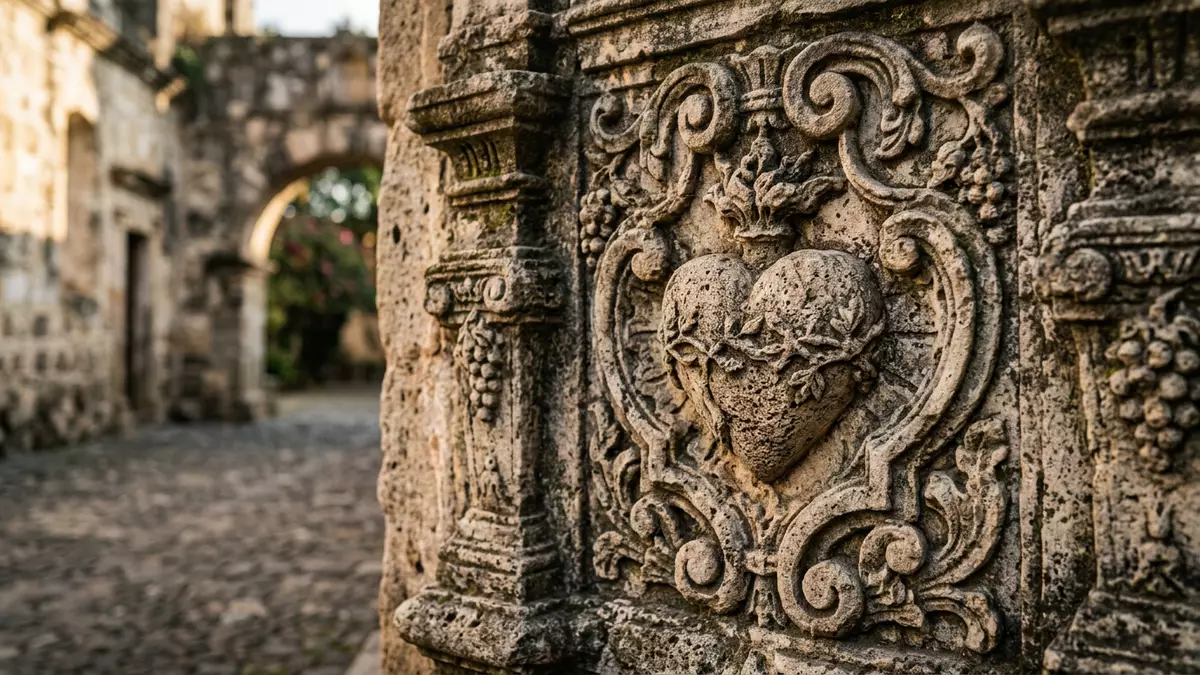
Antigua Guatemala is a colonial city in the central highlands of Guatemala, laid out on a straight street grid and framed by volcanic peaks. It served as the capital of the Spanish Captaincy General of Guatemala for more than two centuries, and its streets still carry the rhythm of that Baroque-era plan. In 1979 the city was inscribed as a UNESCO World Heritage Site for its preserved colonial urban fabric and monumental architecture.
A planned Spanish colonial capital in the Panchoy Valley
The city known today as Antigua Guatemala began life in the sixteenth century as Santiago de los Caballeros de Guatemala, one of several successive capitals established by the Spanish conquerors after they entered the region under Pedro de Alvarado in the 1520s. Set in the Panchoy Valley at an elevation of around 1,500 m (4,921 ft), it became the seat of the Captaincy General of Guatemala, administering a vast territory that included much of Central America.Seat of the Captaincy General The colonial authorities laid it out on a rectilinear plan inspired by Renaissance town-planning ideas, with straight streets meeting at right angles and blocks arranged around central spaces.Grid pattern inspired by the Italian Renaissance
From the mid-sixteenth century until the 1770s Santiago de los Caballeros grew into one of the principal centres of administration, religion and culture in Spanish Central America. Stone and masonry buildings occupied the blocks, while plazas and courtyards provided open space within the grid. Churches, convents, civic buildings and arcaded houses were built in forms influenced by Spanish Baroque architecture, adapted to a highland landscape with nearby volcanoes such as Agua. The combination of straight streets, one-storey and two-storey masonry structures and religious complexes made the city a recognisable colonial capital in the region.
Baroque façades, arcades and ruins in an earthquake landscape
Antigua Guatemala’s character rests on the coexistence of standing Baroque façades and roofless ruins that mark the city’s long relationship with earthquakes. The Captaincy General’s capital stood in an earthquake-prone zone, and tremors repeatedly damaged churches, convents and civic buildings over the centuries.Earthquake-prone region Many structures were rebuilt several times, so a single complex can show phases of construction across the sixteenth, seventeenth and eighteenth centuries, with solid masonry walls, decorative stucco work and carved stone details sharing space with collapsed vaults and open courtyards.
In 1773 a series of powerful tremors known as the Santa Marta earthquakes devastated the colonial capital, destroying and severely damaging numerous monumental buildings.Santa Marta earthquakes in 1773 The Spanish authorities responded by relocating the seat of government eastwards to a new site that became Guatemala City. The former capital acquired the name Antigua Guatemala, “Old Guatemala”, and entered a period in which many ecclesiastical and civic structures remained as ruins. That combination of standing buildings, partial remains and open courtyards is visible throughout the historic centre, where arcaded houses line the streets and church fronts rise above interior spaces left open to the sky.Baroque-influenced architecture and layout
UNESCO recognition and a living highland city
In 1944 Guatemala declared Antigua Guatemala a national monument, and in 1979 it received inscription on the UNESCO World Heritage List as a cultural site. The World Heritage listing recognises the city’s role as a major colonial centre and the way its surviving monuments and ruins illustrate Spanish Baroque town planning in the Americas.UNESCO World Heritage inscription in 1979 The designation covers the historic core, where the grid of streets, the main square and surrounding religious complexes retain elements of their sixteenth- to eighteenth-century form.
Antigua Guatemala today is both a protected heritage site and a functioning urban community. It serves as the administrative centre of the Sacatepéquez department, and its streets host local markets, language schools, small hotels and cultural institutions.UNESCO World Heritage city and major destination Volcanic peaks such as Agua rise above the rooftops, providing a constant backdrop to the colonial architecture. Within the grid, courtyards and cloisters create enclosed spaces behind façades, while the ruins of churches and monasteries offer views of heavy masonry walls, fragments of decorative programmes and open former naves.
Visiting Antigua Guatemala: what travellers from Western Europe should know
- Antigua Guatemala lies in the central highlands of Guatemala, west of Guatemala City, and is reached by road from the capital and its La Aurora International Airport.
- The historic centre sits at high altitude with cobbled streets, uneven pavements and courtyards; exploring the colonial core involves walking on stone surfaces and using staircases within older buildings.
- The surrounding landscape includes prominent volcanoes such as Agua, with views to further volcanic cones from parts of the city.
- The official language is Spanish and the currency is the Guatemalan quetzal.
- Entry requirements depend on your nationality; UK travellers can check the FCDO travel advice at gov.uk/foreign-travel-advice, Irish travellers the Department of Foreign Affairs at ireland.ie.
Searching for Antigua Guatemala on social platforms
These links open searches for Antigua Guatemala on each platform.Frequently asked questions about Antigua Guatemala
Where is Antigua Guatemala?
Antigua Guatemala is a colonial city in the Sacatepéquez department of Guatemala, lying in the central highlands west of Guatemala City.
What should a visitor expect in Antigua Guatemala?
A visitor encounters straight streets on a historic grid, Baroque-style churches and convents, arcaded houses, interior courtyards and prominent ruins shaped by past earthquakes.
What makes Antigua Guatemala distinctive among colonial cities?
The combination of a Renaissance-inspired street grid, Spanish Baroque architecture, highland volcanic setting and extensive preserved ruins gives the city a distinctive character.


