
Antigua Guatemala, a baroque city in a volcanic valley
Published on 09/16/2026 at 08:30 | Editorial responsibility: Rafael Müller, Editor-in-Chief AD HOC NEWS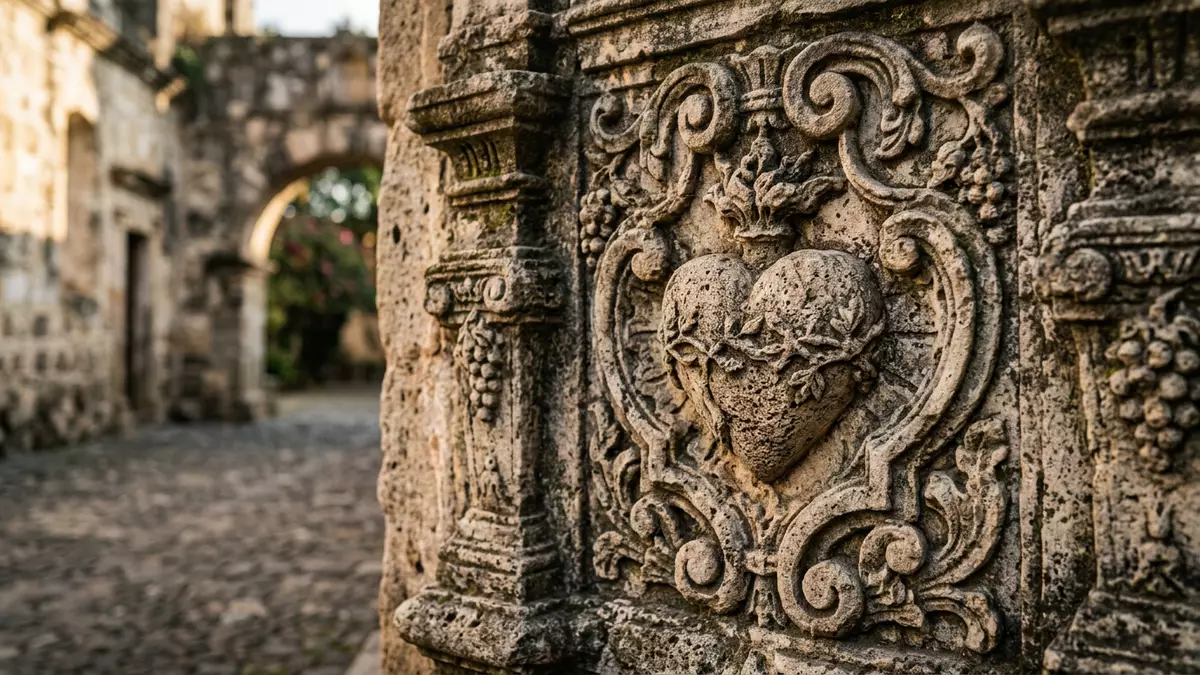
Antigua Guatemala is a colonial city in Guatemala’s highlands, set in the Panchoy Valley under the volcanic cone of Volcán de Agua and lined with baroque churches, cloisters and plazas. Founded as Santiago de Guatemala in the sixteenth century and later renamed, it served as the capital of the Captaincy General of Guatemala until the eighteenth century, a role that shaped its dense grid of religious and civic buildings. The entire historic centre is recognised as a UNESCO World Heritage Site for its Spanish baroque-influenced architecture and urban layout.
A planned colonial capital beneath Volcán de Agua
Antigua Guatemala lies in Sacatepéquez Department in southern Guatemala, in a valley framed by Volcán de Agua to the south and the volcanic massif of Acatenango and Fuego to the west and south-west. The city occupies a plateau at an elevation of around 1,500 m (4,900 ft), an altitude that gives it a highland character distinct from the lowland tropics further east.Panchoy Valley elevation The regular street grid dates from the sixteenth century and was influenced by Renaissance ideas about urban planning, with straight north–south and east–west streets enclosing rectangular blocks and civic spaces.Renaissance-inspired grid layout
The city’s origins lie in the early Spanish conquest of Central America. Santiago de Guatemala was founded in 1524 and re-established in 1527 after early disasters affected its first sites.Founding in the 1520s The present location in the Panchoy Valley was inaugurated in March 1543 and became the capital of the Captaincy General of Guatemala, administering territory from Chiapas in present-day Mexico down through Costa Rica.Colonial capital of the Captaincy General That administrative role brought churches, convents, schools and government buildings into a compact urban area whose plan is still legible in the streets.
Baroque churches, seismic ruins and “Barroco antigueño”
Much of what visitors see in Antigua Guatemala dates from the seventeenth and eighteenth centuries, when Spanish baroque forms were adapted to local conditions. Facades of churches and convents carry elaborate stucco ornament, with niches, pilasters and relief carving concentrated around main portals and upper windows.Stucco ornament on baroque facades A regional variation of baroque known as “Barroco antigueño” developed in Antigua Guatemala, characterised by massive volumes and relatively low bell towers, a form that responds to the city’s frequent earthquakes without needing slender high spires.Barroco antigueño architectural style
Earthquakes have marked the city’s history and left an architectural palimpsest of standing churches and partial ruins. The Santa Marta earthquakes of 1773 destroyed large parts of the town, prompting the relocation of the capital to what is now Guatemala City, but many monumental structures remained in varying states of repair.Santa Marta earthquakes in 1773 Inside the historic centre, some former churches stand as roofless shells where arches and walls frame open courtyards, while others were rebuilt or stabilised and continue in religious use. Together, they give Antigua Guatemala a layered character: not a single intact baroque ensemble, but a city where preserved facades and partial structures make the seismic past visible in stone and stucco.
Streets, plazas and a living World Heritage city
Because its baroque-influenced architecture and urban layout remain largely intact, Antigua Guatemala was inscribed on the UNESCO World Heritage List as a cultural site in 1979.UNESCO World Heritage inscription in 1979 The designation covers the historic urban area, where single-storey and two-storey buildings line cobbled streets and the skyline is punctuated by church fronts and the profiles of volcanoes beyond. Plaza Mayor de la Antigua, the central square, is enclosed by civic and religious buildings that illustrate the city’s colonial function: a cathedral complex on one side, arcaded structures on others and a fountain at the centre.
Despite the eighteenth-century relocation of the capital, Antigua Guatemala has remained inhabited and its historic houses, former monasteries and civic buildings have taken on varied uses. Many courtyards sit behind plain street walls, revealing arcades, gardens and cloisters only when you enter. The regular grid means that even short walks cross several historic streets and pass church complexes, small chapels and institutional buildings that all belong to the baroque period of the seventeenth and eighteenth centuries.Seventeenth- and eighteenth-century building stock The result is a compact city where daily life unfolds among structures that reflect more than two centuries of colonial history.
Visiting Antigua Guatemala: what travellers from Western Europe should know
- Antigua Guatemala lies in Sacatepéquez Department in southern Guatemala, in the highlands west of Guatemala City, reached overland from the capital on main roads that cross the valley landscape.
- The historic centre stands at an altitude of around 1,500 m (4,900 ft), with cobbled streets and some uneven pavements; many church complexes and ruins are approached over short walks on stone surfaces.
- To the south of the city rises Volcán de Agua, while the volcanic complex of Acatenango and Fuego lies to the west and south-west, giving clear skyline views of these peaks from various streets and plazas.Volcanoes surrounding the city
- The official language is Spanish and the currency is the Guatemalan quetzal.
- Entry requirements depend on your nationality; UK travellers can check the FCDO travel advice at gov.uk/foreign-travel-advice, Irish travellers the Department of Foreign Affairs at ireland.ie.
Searching for Antigua Guatemala on social platforms
These links open searches for Antigua Guatemala on each platform.
Frequently asked questions about Antigua Guatemala
Where is Antigua Guatemala located?
Antigua Guatemala is in Sacatepéquez Department in southern Guatemala, in the Panchoy Valley west of Guatemala City and beneath the volcanic cone of Volcán de Agua.Location in Sacatepéquez
What can visitors expect in the historic centre?
Visitors encounter a compact colonial city with a sixteenth-century street grid, cobbled streets, baroque churches and convents, and both intact buildings and seismic ruins within walking distance of one another.Preserved grid and baroque structures
What makes Antigua Guatemala distinctive among Central American cities?
Antigua Guatemala is distinctive for its long role as capital of the Captaincy General of Guatemala, its UNESCO-listed baroque urban landscape, and its setting amid the volcanoes of Agua, Fuego and Acatenango.Capital role and volcanic setting


