
Antigua Guatemala, a baroque city framed by volcanoes
Published on 09/15/2026 at 09:49 | Editorial responsibility: Rafael Müller, Editor-in-Chief AD HOC NEWS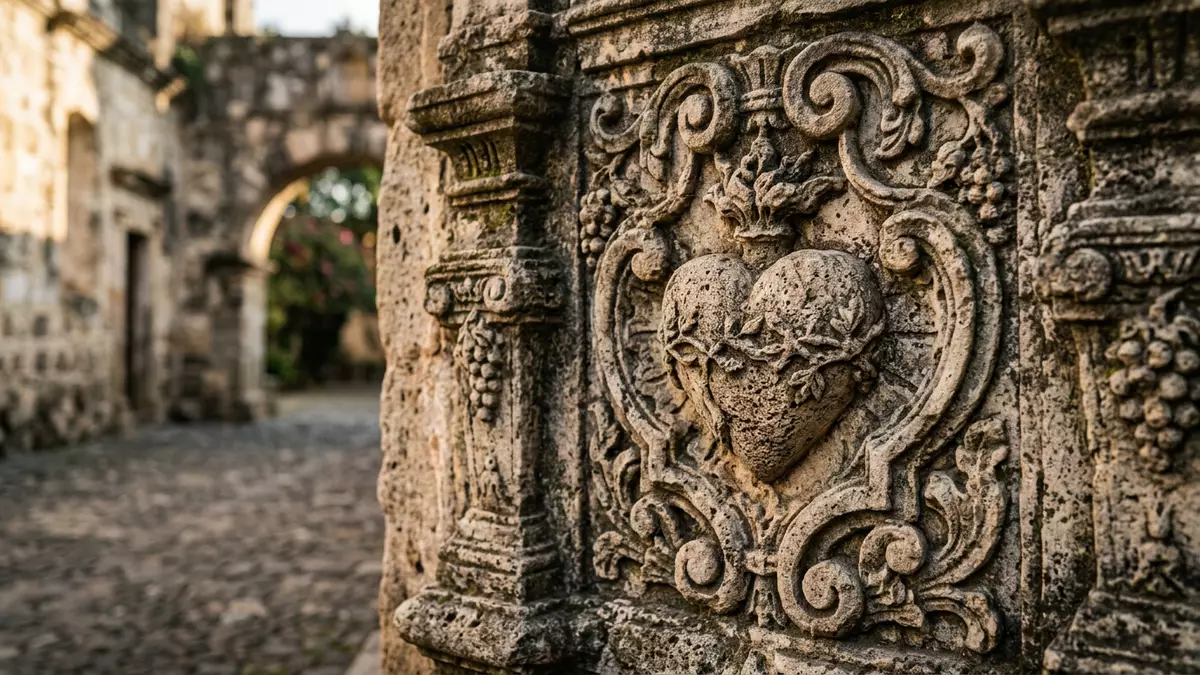
Antigua Guatemala is a colonial-era city in Guatemala’s central highlands, laid out on a regular grid and surrounded by the cones of Agua, Fuego and Acatenango volcanoes. Founded in the sixteenth century as Santiago de los Caballeros de Guatemala, it later served as the capital of the Captaincy General of Guatemala until the 1770s, leaving a dense concentration of churches, convents and civic buildings in Spanish baroque style.
A former colonial capital in the highlands
Antigua Guatemala lies in the Panchoy Valley at more than 1,500 m (4,900 ft) above sea level, with streets and plazas aligned to a grid plan introduced during the sixteenth century. The city’s setting below Volcán de Agua and near the volcanic peaks of Fuego and Acatenango gives its historic centre a clear backdrop of mountains that frame views along the main axes.Panchoy Valley setting The elevation and basin landscape contribute to a cool highland climate compared with Guatemala’s lowland plains.
The settlement that became Antigua Guatemala was established in 1524 under the name Santiago de los Caballeros de Guatemala, led by Spanish conquistador Pedro de Alvarado. Over the following centuries it grew into the capital of the Captaincy General of Guatemala, administering territory that extended from present-day Chiapas to Costa Rica.Captaincy General of Guatemala This role concentrated religious orders, administrative offices and trade in the city, shaping a built environment dominated by ecclesiastical and governmental structures.
Spanish baroque streets, plazas and church ruins
Antigua Guatemala’s historic centre preserves a system of straight cobbled streets meeting at right angles, with single-storey and two-storey houses built around internal courtyards. Many façades show restrained baroque ornament: pilasters, stucco reliefs and cornices adapted to an earthquake-prone region where heavy vaulting was replaced by lighter construction.Spanish-colonial urban landscape Street elevations are generally low, so church towers and domes rise clearly above the horizontal lines of roofs.
Earthquakes in the eighteenth century caused severe damage to many of Antigua Guatemala’s principal monuments, leaving extensive ruins beside restored structures. Former monasteries and churches retain standing walls, arches and cloisters, while some sanctuaries were rebuilt on the same plots with reinforced masonry.earthquake damage and preserved ruins The coexistence of intact churches and open, roofless naves is one of the most distinctive visual experiences in the city centre, especially around major religious complexes.
UNESCO recognition and living heritage
In 1979 Antigua Guatemala was inscribed on the UNESCO World Heritage List as a cultural site, recognised for its Spanish baroque-influenced architecture, town plan and concentration of religious monuments dating from the sixteenth to the eighteenth century.UNESCO World Heritage inscription The designation covers the historic urban area and underlines the city’s role in demonstrating colonial urban planning in Latin America.
Beyond its formal status, Antigua Guatemala functions as a residential city and a centre of cultural activity, with Spanish-language schools, crafts workshops and local markets occupying historic buildings. Annual religious processions move through the gridded streets, making use of plazas and church fronts that were established during the colonial period.Holy Week traditions The layered fabric of houses, convents, ruins and everyday shops gives the baroque setting a continuous contemporary life.
Visiting Antigua Guatemala: what travellers from Western Europe should know
- Antigua Guatemala stands south-west of Guatemala City in Guatemala’s Sacatepéquez Department, reached by road through the central highlands with the route passing near Volcán de Agua.
- Within the historic centre, streets are cobbled and pavements can be uneven, with many sites accessed by internal courtyards and occasional staircases inside former convents and bell towers.
- Rainfall patterns in the central highlands create clearer mountain views in some seasons, while clouds can gather around Agua, Fuego and Acatenango at other times.
- The official language is Spanish and the currency is the Guatemalan quetzal.
- Entry requirements depend on your nationality; UK travellers can check the FCDO travel advice at gov.uk/foreign-travel-advice, Irish travellers the Department of Foreign Affairs at ireland.ie.
Searching for Antigua Guatemala on social platforms
These links open searches for Antigua Guatemala on each platform.
Frequently asked questions about Antigua Guatemala
Where is Antigua Guatemala located?
Antigua Guatemala is in Guatemala’s Sacatepéquez Department in the central highlands, south-west of Guatemala City and set within the Panchoy Valley below Volcán de Agua.
What can visitors expect on a first visit to Antigua Guatemala?
Visitors encounter a compact colonial city with straight cobbled streets, low houses, numerous churches, convents and open ruins, all framed by consistent views towards nearby volcanoes.
What makes Antigua Guatemala distinctive among historic cities in Central America?
Its combination of sixteenth- to eighteenth-century Spanish baroque architecture, preserved grid plan, extensive religious complexes and dramatic volcanic backdrop gives Antigua Guatemala a rare concentration of colonial urban heritage.


