
Antelope Canyon’s sculpted sandstone labyrinth near Page
Published on 09/15/2026 at 21:49 | Editorial responsibility: Rafael Müller, Editor-in-Chief AD HOC NEWS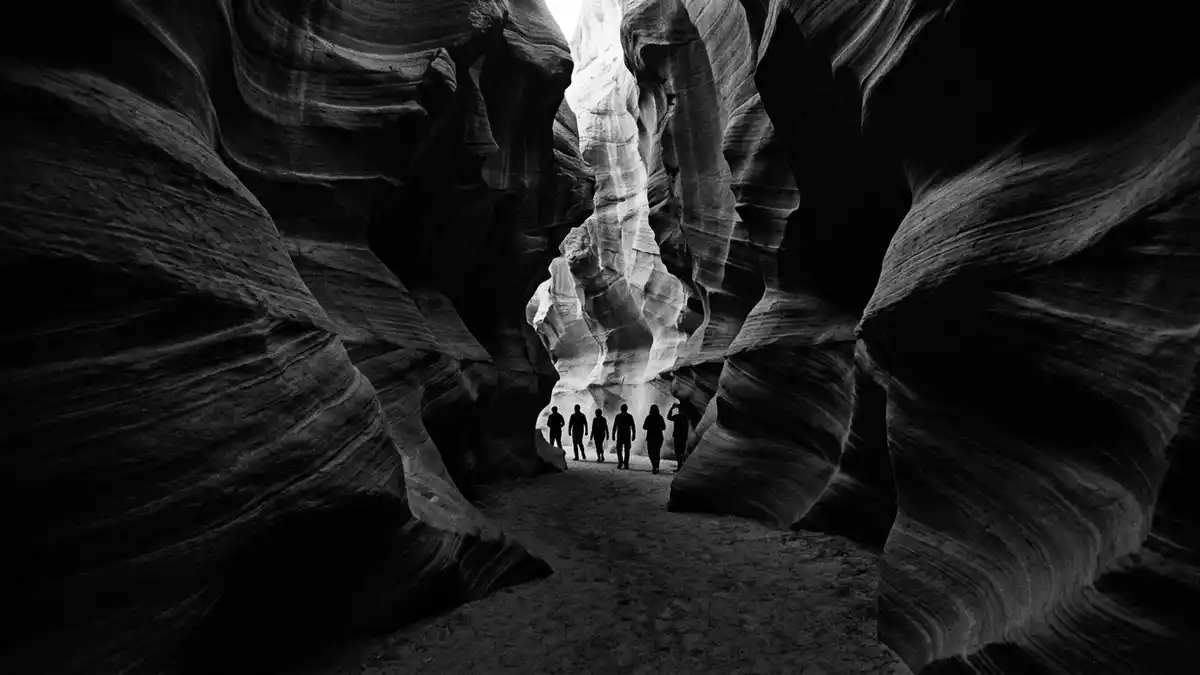
Antelope Canyon is a network of narrow sandstone gorges on Navajo Nation land east of Page in northern Arizona, where light and carved rock turn a desert wash into an underground landscape of shifting colour and flowing forms. The canyons lie within Lake Powell Navajo Tribal Park on the Navajo reservation, close to State Highway 98 and a short distance from the southern shores of Lake Powell.
Sandstone waves carved over millions of years
Antelope Canyon belongs to the wider canyon country of the Colorado Plateau, but its defining experience takes place inside the rock rather than along an open rim. The passages cut through Navajo Sandstone, a fine-grained sedimentary rock laid down in ancient dune fields and later hardened into the pale orange and red cliffs that frame much of northern Arizona.Navajo Sandstone slot canyons Over geological time, flash floods have travelled down the desert washes east of Page, concentrating in weakened layers and scouring them into deep, narrow channels with smooth, flowing walls.
Inside Antelope Canyon the result is a series of tall, twisting corridors where the sandstone is sculpted into curves, fins and hollows that can give the impression of frozen waves or draped fabric. In places the rock surface is polished by repeated floodwaters; elsewhere it is etched with cross-bedded lines that record the dune structures of the original sand deposits.wave-like sandstone walls The canyon floor is generally sandy, echoing its formation from former dunes and washed sediments.
Upper and Lower Antelope: two approaches to the same canyon wash
Although “Antelope Canyon” is often spoken of as a single place, visitors encounter it through two distinct main sections, Upper Antelope Canyon and Lower Antelope Canyon, which cut through the same Navajo sandstone on opposite sides of a common drainage east of Page.Upper and Lower Antelope Canyon Both are slot canyons: their walls rise steeply from a relatively narrow floor, and the passages can feel enclosed as they twist and turn beneath the desert surface.
Upper Antelope Canyon is entered at ground level from the desert wash, with visitors walking into a tall corridor that narrows overhead and winds through the rock on a sandy, gently inclined floor.Upper Antelope Canyon walk-in route Lower Antelope Canyon is reached by descending from the surface into the sandstone via metal staircases, then following a more confined path that climbs and drops through a sequence of steps, ladders and tight turns before emerging back onto the desert. In both sections the passages vary in width along their length, with some chambers expanding enough to permit small groups to stand together while others taper into narrower slots that must be negotiated one by one.
Light, shadow and colour in a Navajo Tribal Park
Antelope Canyon lies within the Lake Powell Navajo Tribal Park, established by the Navajo Nation to manage access to the slot canyons east of Page as part of a protected landscape.Navajo Tribal Park designation The canyons are on tribal land and visits are conducted with Navajo guides under regulations set by the tribal authorities.Navajo-guided tours requirement The surrounding terrain is high desert, with sparse vegetation on the surface and long views towards Lake Powell and the border country between Arizona and Utah.
Inside the canyon the dominant impression is the shifting play of light and colour on the sandstone. Sunlight enters through the narrow opening above and filters down in bands and patches, producing strong contrasts between bright surfaces and shaded recesses. In some parts of Upper Antelope Canyon, beams of light can reach the floor when the sun is high, illuminating suspended dust and making the rock surfaces around them glow. As the angle of light changes, the sandstone can appear to move through a palette of orange, red, purple and brown, with the tones depending on the mineral content of the rock and the thickness of the illuminated layers.
Visiting Antelope Canyon: what travellers from Western Europe should know
- Antelope Canyon lies a few miles south-east of Page in northern Arizona, on US Highway 98 near the Arizona–Utah border in the Navajo Nation. Page itself is reached by road from other towns in Arizona and Utah, and Antelope Canyon is visited on guided excursions that depart either from Page or from designated meeting points close to the canyon entrances.location near Page and Highway 98
- The terrain at Antelope Canyon is desert wash and sandstone. Inside Upper Antelope Canyon the route follows a gently inclined sandy floor, while Lower Antelope Canyon involves descending and ascending several staircases and ladders within a confined slot, with sections that require stooping or turning sideways through narrow gaps.stairs and ladders in Lower Antelope Canyon
- Antelope Canyon is in the United States. The official language is English and the currency is the US dollar.
- Entry requirements depend on your nationality; UK travellers can check the FCDO travel advice at gov.uk/foreign-travel-advice, Irish travellers the Department of Foreign Affairs at ireland.ie.
Searching for Antelope Canyon on social platforms
These links open searches for Antelope Canyon on each platform.
Frequently asked questions about Antelope Canyon
Where is Antelope Canyon and what kind of landscape surrounds it?
Antelope Canyon is on Navajo Nation land a few miles south-east of Page in northern Arizona, in high desert terrain near Lake Powell and the Arizona–Utah border.
What should visitors expect when entering the canyon passages?
Visitors walk or climb into narrow sandstone corridors where the walls rise steeply around a sandy floor, with bends, chambers and constricted sections that create a sense of moving through a sculpted rock labyrinth.
What makes Antelope Canyon distinctive among the slot canyons of the Southwest?
The combination of finely carved Navajo sandstone, the enclosed slot geometry, and the way sunlight filters down through the narrow opening to create strong colour contrasts gives Antelope Canyon a characteristic visual drama that is closely associated with Page and the Lake Powell Navajo Tribal Park.


