
Angkor Thom, the walled Khmer capital in the forests of Siem Reap
Published on 09/09/2026 at 16:15 | Editorial responsibility: Rafael Müller, Editor-in-Chief AD HOC NEWS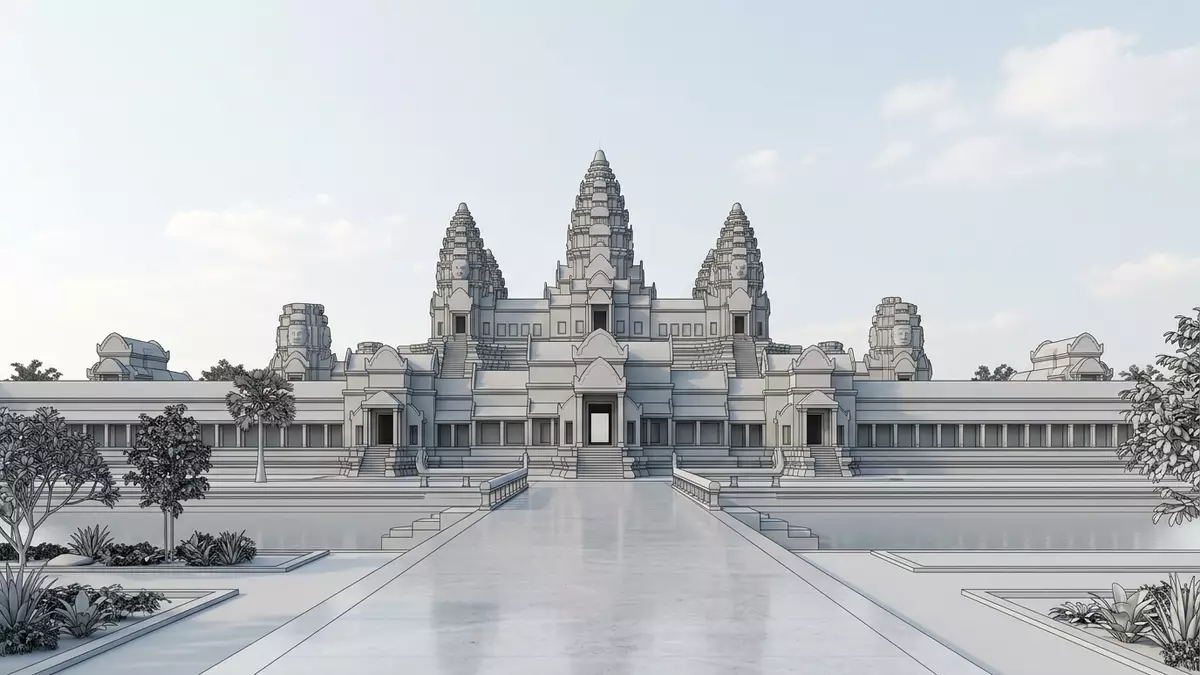
Angkor Thom in Siem Reap in Cambodia is the name of a walled royal city, the last enduring capital of the Khmer Empire, laid out in the late twelfth century under King Jayavarman VII. The “Great City” encloses temples, terraces and former palace grounds in a vast square of earth ramparts and moats, where causeways lined with sculpted figures lead towards the stone faces of the Bayon at the centre.
A square capital on a monumental scale
Angkor Thom is a planned city rather than a single temple complex, enclosed within ramparts that form a near-square plan in the lowland plain north of Siem Reap. The fortified outline, with walls running for several kilometres on each side and a broad moat outside them, defines an area that once contained administrative quarters, religious monuments and royal residences for the Khmer court.last and most enduring capital Inside this enclosure, later stone temples such as the Bayon stand among traces of earlier structures that belonged to the older city of Yasodharapura, including Phimeanakas and Baphuon.
The foundations of Angkor Thom lie in the Angkor Period between the ninth and fifteenth centuries, when the Khmer Empire controlled large parts of mainland South-East Asia from this region. Jayavarman VII, who ruled during the late twelfth and early thirteenth centuries, established Angkor Thom as his capital after military campaigns against Cham forces, and set in motion a major programme of construction that reshaped the city’s core.constructed by King Jayavarman VII The city remained a Khmer royal centre for generations before its eventual abandonment and the later movement of the capital towards Phnom Penh.
Gates, causeways and the faces of Bayon
Entry into Angkor Thom passes through monumental gates cut into the ramparts, each approached by a straight stone causeway that crosses the surrounding moat. The main gates are set at the cardinal points, with an additional eastern gate known as the Victory Gate, together forming five openings into the walled city.five magnificent gates Along the causeways, lines of sculpted figures grasp naga balustrades, creating a sequence where human and mythical forms flank the approach to each gate tower.
At the geometric centre of Angkor Thom stands the Bayon, a state temple begun under Jayavarman VII in the late twelfth or early thirteenth century and built as a Buddhist sanctuary.Bayon sits at the exact geometric centre The temple rises in tiers of galleries and towers, with many towers carrying multiple carved faces that look outwards across the city. These faces, combined with dense narrative bas-reliefs at lower levels, make the Bayon one of the most recognisable compositions in the Angkor region, distinct from the axial, single-temple plan of nearby Angkor Wat.Bayon at the centre of Angkor Thom
Royal terraces and layered religious history
The core of Angkor Thom also includes long ceremonial platforms, notably the Terrace of the Elephants and the Terrace of the Leper King, which face what were once royal courtyards and parade grounds. Reliefs of elephants, warriors and court scenes line these terraces, marking the edge of the elevated zone that carried the wooden structures of the royal palace above the surrounding city.Royal Terraces and Bayon Temple Around them, stone temples from different reigns, including Phimeanakas and Baphuon, illustrate changes in architectural style and religious orientation over several centuries.
Angkor Thom reflects a transition in Khmer religious life, with Jayavarman VII adopting Mahayana Buddhism while earlier kings had patronised Hindu temples dedicated to deities such as Shiva and Vishnu. The Bayon’s iconography, with its combination of Buddhist imagery and royal symbolism, was later modified under rulers who returned to Shaivism, leaving traces of reworked sculptures and inscriptions.Buddhist king of the Khmer Empire In the wider enclosure, the survival of both Buddhist and Hindu monuments, along with the sequence of terraces and gates, gives Angkor Thom a layered character where different phases of Khmer civilisation share the same walled space.
Visiting Angkor Thom: what travellers from Western Europe should know
- Angkor Thom lies north of Siem Reap within the Angkor Archaeological Park, reached by road from the town and by internal routes that link it with Angkor Wat and other nearby temple groups.
- The interior of the walled city involves walking over uneven stone, climbing stairways in temple complexes such as Bayon and moving along raised terraces, so visits include stretches on foot over varied ground.
- Angkor Thom stands in lowland forest near the Siem Reap River, and the combination of enclosed spaces, exposed causeways and shaded temple interiors means changes in light and shelter during a day’s exploration.
- The official language is Khmer and the currency is the Cambodian riel.
- Entry requirements depend on your nationality; UK travellers can check the FCDO travel advice at gov.uk/foreign-travel-advice, Irish travellers the Department of Foreign Affairs at ireland.ie.
Searching for Angkor Thom on social platforms
These links open searches for Angkor Thom on each platform.
Frequently asked questions about Angkor Thom
Where is Angkor Thom in relation to Siem Reap?
Angkor Thom lies to the north of Siem Reap in north-western Cambodia, within the Angkor Archaeological Park that also includes Angkor Wat and other major temple sites.
What should visitors expect inside the walled city?
Visitors encounter a sequence of monumental gates, long causeways, royal terraces and temple complexes such as Bayon, with extensive areas of stone steps, raised platforms and forested clearings.
What makes Angkor Thom distinctive among Angkor sites?
Angkor Thom is distinctive as a walled Khmer capital laid out under Jayavarman VII, combining the central temple of Bayon, processional terraces and multiple gates within a single planned urban enclosure.


