
Angkor Thom and the stone faces at the heart of Siem Reap
Published on 09/24/2026 at 03:33 | Editorial responsibility: Rafael Müller, Editor-in-Chief AD HOC NEWS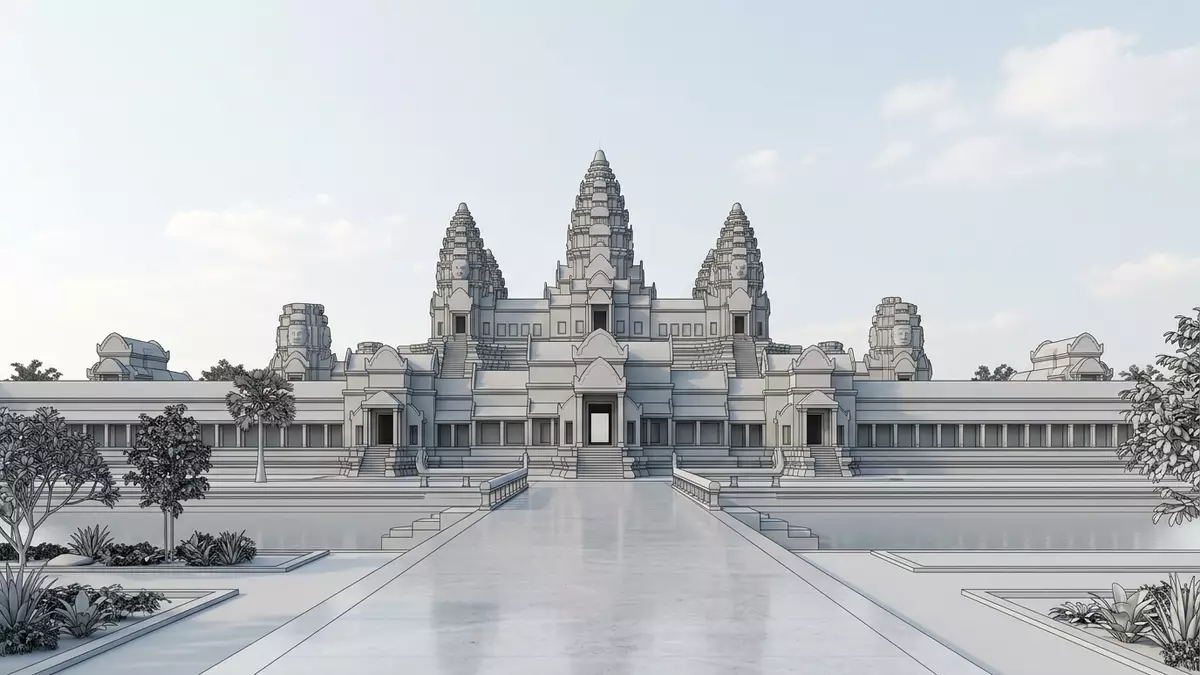
Angkor Thom is a walled Khmer capital near Siem Reap, organised around the Bayon temple and its carved stone faces. Built about 1200 under King Jayavarman VII, the city combines monumental architecture, religious imagery and a broad archaeological landscape.
Angkor Thom: a capital gathered around the Bayon
The name Angkor Thom means “Great City”. Its surviving remains belong to the former urban centre of the Khmer Empire, whose capitals occupied the Angkor region in Cambodia between the ninth and fifteenth centuries. The wider archaeological park extends across forest, temples, reservoirs, canals and historic routes.
Jayavarman VII established Angkor Thom as the capital associated with his reign. The city’s central temple is the Bayon, a Buddhist monument with labyrinthine galleries, sculpted reliefs and towers carrying monumental faces. Jayavarman VII’s capital took shape around 1200.
The Bayon’s towers and changing religious imagery
The Bayon occupies the centre of Angkor Thom. Its stone towers rise above galleries decorated with faces, mythological scenes and episodes of Khmer court and military life. The temple’s architecture is dense, with passages, terraces and carved surfaces arranged within a compact monumental complex.
The Bayon began as a Buddhist place of worship and contains imagery connected with Mahayana Buddhism. Hindu elements also appear within the monument, reflecting religious changes in the history of the Khmer court. The Bayon’s religious changes can be read through its sculpture and architectural remains.
Angkor Thom contains more than the Bayon. The Baphuon, Phimeanakas, the Terrace of the Elephants and the Terrace of the Leper King occupy different parts of the former capital. Their materials and forms belong to several stages of Khmer architectural development.
Gates, walls and the geography of the former city
Large walls enclose Angkor Thom, with gates placed around the city perimeter. Stone figures associated with the naga flank the approach to the gates, creating a formal threshold between the outer landscape and the former capital.
The city’s plan belongs to the wider symbolic and practical world of Angkor. Temples, reservoirs, canals and routes formed parts of an extensive urban and hydraulic landscape. The World Heritage property covers approximately 400 square kilometres and includes remains from several Khmer capitals. Angkor’s archaeological landscape places Angkor Thom within that larger historical setting.
The entrance causeways carry rows of sculpted figures. Their stone bodies and naga imagery connect the gateways with Khmer religious art, while the walls define the city as a planned royal centre. Within them, temples and terraces appear as distinct monuments rather than as a single building.
Visiting Angkor Thom: what travellers from Western Europe should know
- Angkor Thom lies in Siem Reap Province, north of the modern town of Siem Reap, within the Angkor Archaeological Park. The site is reached by road from Siem Reap, with tuk-tuks, taxis and bicycles used in the surrounding park.
- The area contains broad exterior approaches, stone causeways, uneven ground and temple steps. The Bayon includes narrow galleries, terraces and carved architectural surfaces.
- The official language is Khmer and the currency is the Cambodian riel.
- Angkor Thom lies near Angkor Wat, the Bayon, the Baphuon and the terraces of the former royal city. These monuments belong to the same archaeological landscape.
Searching for Angkor Thom on social platforms
These links open searches for Angkor Thom on each platform.
Frequently asked questions about Angkor Thom
Where is Angkor Thom?
Angkor Thom is in Siem Reap Province, Cambodia, within the Angkor Archaeological Park. It lies near the modern town of Siem Reap and includes the Bayon at its centre.
What can visitors see at Angkor Thom?
Visitors encounter the Bayon, city gates, walls, causeways, the Baphuon, Phimeanakas and royal terraces. The site combines temple architecture, sculpture and the remains of a former capital.
What makes Angkor Thom distinctive?
The city’s central Bayon is surrounded by towers bearing monumental carved faces. Its walls, gateways and clustered temples preserve the form of a Khmer royal capital from the reign of Jayavarman VII.


