
Ananda Pahto, Bagan’s cruciform temple of four Buddhas
Published on 08/30/2026 at 12:08 | Editorial responsibility: Rafael Müller, Editor-in-Chief AD HOC NEWS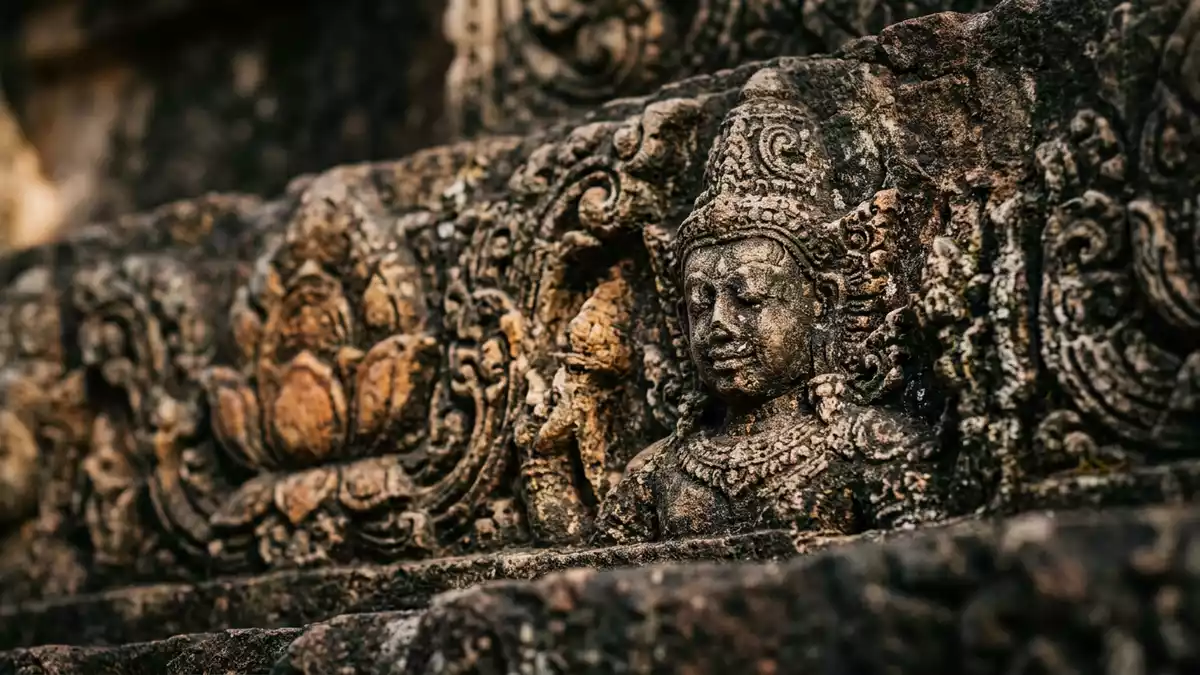
Ananda Pahto in Bagan is a Buddhist temple from the Pagan Dynasty, laid out on a cruciform plan and centred on four towering standing Buddha images at its core.Ananda Temple Completed around 1105 during the reign of King Kyanzittha, it stands just outside the walls of Old Bagan within the wider Bagan Archaeological Zone in central Myanmar.Ananda Temple
The cruciform plan and central tower
The core of Ananda Pahto is a single brick structure whose ground plan is in the form of a cross, with devotional halls extending from each side towards the cardinal directions.ground plan in the form of a cross At the centre rises a massive tower, topped by a gilded hti that creates a vertical accent over the surrounding plains of Bagan.gold corn-cob hti The brickwork is coated in white stucco, giving the temple a pale shell that contrasts with the earth tones of many neighbouring monuments in the Archaeological Zone.white stucco exterior
Walkways run around the inner mass of the building, tracing the cruciform plan and linking the outer entrances to the central core. Above them, terraces step back towards the tower in a series of diminishing levels, a characteristic composition in Bagan architecture that balances the heavy base with a more slender upper profile.diminishing terraces The overall effect is of a temple both compact and layered, with the cruciform ground plan expressed clearly in the massing of the upper storeys.
Four standing Buddhas and inner imagery
At the heart of Ananda Pahto stand four large Buddha images facing the cardinal directions, each housed in its own devotional hall and towering over the surrounding corridors.four large vestibules The figures represent Kakusandha, Konagamana, Kassapa and Gautama, the Buddhas of the present world age in Theravada tradition.four Buddhas of the present world age Two of the statues are original to the Pagan period, while the other two are later replacements following a Mandalay style, a visible layering of artistic eras within a single interior.originals and later images
Along the outer walls of the corridors, rows of terracotta tiles recount episodes from the jataka tales, the narrative cycle that follows the previous lives of the Buddha.terra-cotta tiles recounting jataka The tiles sit within the brickwork beneath the stucco, and their small scale contrasts with the monumental standing figures nearby. On upper levels, terraces were historically used as places of learning and meditation, turning the building into a layered environment in which narrative reliefs, corridors and open platforms together form a complex religious setting.upper terraces used as places of learning
Pagan Dynasty context and Indian influences
Ananda Pahto belongs to the early phase of large stone and brick temples in Bagan, marking a shift from the earliest experiments to the more mature middle period of Pagan Dynasty architecture.heralds end of early Bagan period It was constructed during the reign of King Kyanzittha, who ruled the Bagan Empire in the late eleventh and early twelfth centuries and is closely associated with the consolidation of Theravada Buddhism in the region.reign of King Kyansittha The temple’s layout and superstructure draw on Indian architectural ideas, with clear parallels to structures in Bengal and other centres of Buddhist building.architectural prototypes at Paharpur
The structure combines Mon and North Indian influences within a single brick shell, an arrangement that can be read in the cruciform plan and in the tower profile rising from the centre.Mon and North Indian influences This blend makes Ananda Pahto a key monument for understanding how architectural forms travelled between the Indian subcontinent and Myanmar in the eleventh and twelfth centuries.transmission of Indian architectural ideas Its position in Old Bagan, southeast of Tharabar Gate and within the formally recognised Bagan Archaeological Zone, places it among a dense concentration of royal and religious structures that chart the development of the Pagan capital.location southeast of Tharabar Gate
Visiting Ananda Pahto: what travellers from Western Europe should know
- Ananda Pahto stands in Old Bagan within the Bagan Archaeological Zone in central Myanmar’s Mandalay Region, south-west of Mandalay itself, on the Ayeyarwady River plain.Old Bagan within the Bagan Archaeological Zone It lies southeast of Tharabar Gate, close to other major temples.
- The temple rises on level ground and is approached along paved paths, but inside the structure access to upper terraces and galleries involves staircases that can be steep and narrow in places.upper terraces
- The official language is Burmese and the currency is the Myanmar kyat.
- Entry requirements depend on your nationality; UK travellers can check the FCDO travel advice at gov.uk/foreign-travel-advice, Irish travellers the Department of Foreign Affairs at ireland.ie.
Searching for Ananda Pahto on social platforms
These links open searches for Ananda Pahto on each platform.
Frequently asked questions about Ananda Pahto
Where is Ananda Pahto located?
Ananda Pahto stands in Old Bagan within the Bagan Archaeological Zone in Myanmar’s Mandalay Region, southeast of Tharabar Gate on the Ayeyarwady River plain.
What should visitors expect inside Ananda Pahto?
Visitors encounter a cruciform sequence of corridors leading to four large standing Buddha images at the centre, with terracotta jataka tiles and upper terraces above.
What makes Ananda Pahto distinctive among Bagan’s temples?
Its white stucco exterior, cruciform plan, four cardinal-direction Buddhas and early twelfth-century construction under King Kyanzittha together make it a key monument of Bagan.


