
Ananda Pahto, Bagan’s cruciform temple of four Buddhas
Published on 08/29/2026 at 15:59 | Editorial responsibility: Rafael Müller, Editor-in-Chief AD HOC NEWS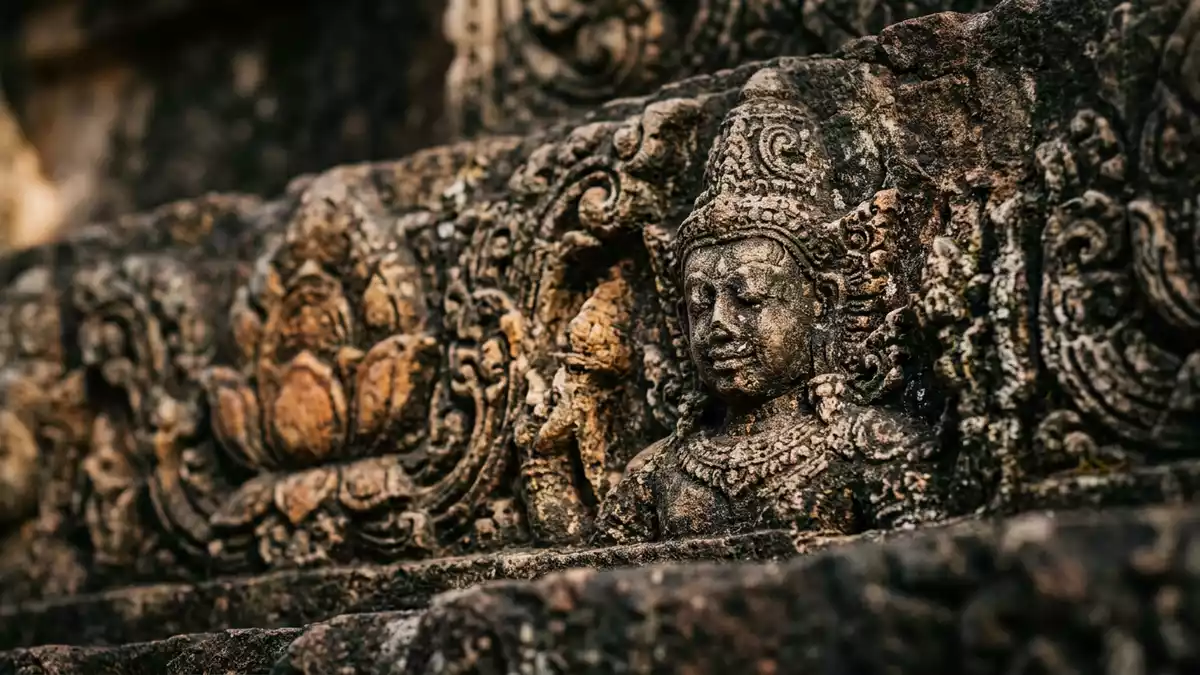
Ananda Pahto in Bagan is a Buddhist temple from the Pagan Dynasty, laid out on a cruciform plan and centred on four towering standing Buddha images at its core. Completed around 1105 during the reign of King Kyanzittha, it stands just outside the walls of Old Bagan as one of the defining brick monuments of Myanmar’s ancient capital.
A cruciform brick temple at the edge of Old Bagan
Ananda Pahto stands in the Bagan Archaeological Zone, southeast of Tharabar Gate on the eastern side of the Ayeyarwady River plain. The temple belongs to the dense ensemble of pagodas that mark Old Bagan’s former city walls, with its whitewashed superstructure rising clearly above the surrounding low stupas.Southeast of Tharabar Gate
The building dates to the early twelfth century and is consistently linked with King Kyanzittha, whose reign between 1084 and the early 1110s represents the height of the Pagan Dynasty.Completed in 1105 under King Kyanzittha Its plan forms a near-square core from which four large vestibules project along the cardinal axes, giving Ananda Pahto its characteristic cross-shaped footprint.A cruciform temple plan
Brick, stucco and a tower that recalls Indian temples
Ananda Pahto is built primarily of brick masonry, its walls and external surfaces coated with stucco that picks out pilasters, niches and relief panels in pale tones against the darker core.Brick construction with stucco Above the central block rises a tall tower with a tiered superstructure and a shikhara-like profile that reflects strong links with Indian temple architecture.Indian-influenced tower form
The façades carry rows of glazed tiles and reliefs that show Buddhist stories and courtly figures set into the brickwork. Mon-language captions accompany some of these panels, underlining the blend of local and Mon artistic traditions that characterises the transition from the Early Bagan period to the Middle Bagan phase around 1105.
Four standing Buddhas at the heart of the temple
At the centre of Ananda Pahto lies a high, dimly lit hall where four standing Buddha images face the cardinal directions from deep recesses. Each figure represents a different Buddha associated with one of the past and present world ages, including Gautama facing west from the innermost axis.Four directional Buddha images
These Buddhas stand above visitors, framed by high arches and backed by layered halos that pick up the warm tones of the interior brick. Around them, a ring of corridors carries smaller niches with seated Buddhas, guardian figures and rows of tiles that narrate Jataka tales, turning a walk through Ananda Pahto into a tour through Buddhist narrative carved in baked clay.
Visiting Ananda Pahto: what travellers from Western Europe should know
- Ananda Pahto stands in Old Bagan, just outside the city walls, southeast of Tharabar Gate within the Bagan Archaeological Zone. The site lies on the eastern side of the Ayeyarwady River plain.
- The temple rises on level ground, but access inside involves steps, narrow passages and shaded interior corridors that loop around the central core.
- Road approaches bring visitors close to the temple precinct, where brick platforms and smaller stupas surround the main structure and frame views of its white stucco exterior and central tower.
- The official language is Burmese and the currency is the kyat. Entry requirements depend on your nationality; UK travellers can check the FCDO travel advice at gov.uk/foreign-travel-advice, Irish travellers the Department of Foreign Affairs at ireland.ie.
Searching for Ananda Pahto on social platforms
These links open searches for Ananda Pahto on each platform.
Frequently asked questions about Ananda Pahto
Where is Ananda Pahto located?
Ananda Pahto stands in Old Bagan in Myanmar, southeast of Tharabar Gate within the Bagan Archaeological Zone on the eastern side of the Ayeyarwady River plain.
What should visitors expect inside Ananda Pahto?
Visitors encounter a central hall with four towering standing Buddha images, surrounded by corridors lined with smaller statues, relief tiles and stucco decoration on brick walls.
What makes Ananda Pahto distinctive among Bagan’s temples?
Ananda Pahto combines a cruciform ground plan, early twelfth-century brick construction under King Kyanzittha and a central core dominated by four large standing Buddhas facing the cardinal directions.


