
Amphitheatre of El Jem, a Roman giant on Tunisian flat ground
Published on 08/28/2026 at 14:40 | Editorial responsibility: Rafael Müller, Editor-in-Chief AD HOC NEWS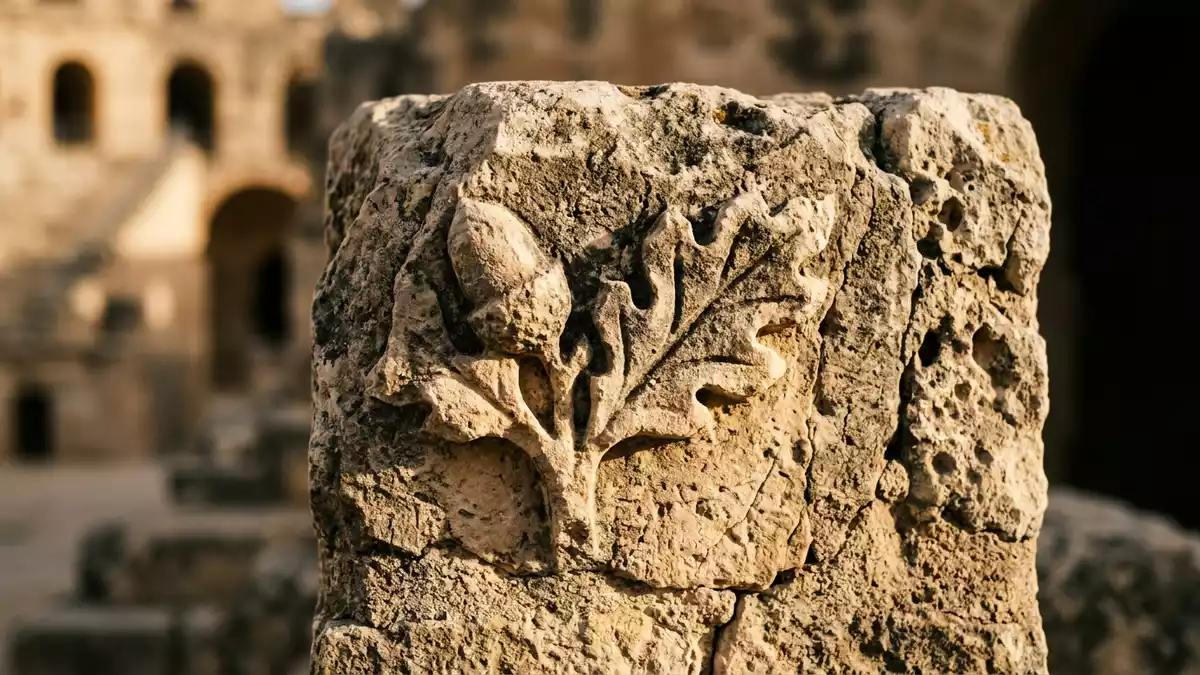
The Amphitheatre of El Jem in El Jem in Tunisia is an immense Roman arena whose stone ellipse still dominates the surrounding town and plains. Built in the third century AD in the ancient city of Thysdrus, it shows how far Roman spectacle architecture reached across North Africa.
A colossal Roman arena on the plains of Thysdrus
The Amphitheatre of El Jem stands in the centre of El Jem, corresponding to the Roman town of Thysdrus in the province of Africa Proconsularis. Its construction is dated to around 238 AD, in the early third century, during the high point of Roman civic building in the region.built around 238 AD At that time Thysdrus was an important settlement whose wealth depended on agriculture and trade within the wider Roman Empire.
The amphitheatre takes the form of a vast oval stone shell laid out on flat ground rather than being cut into a hillside, a feature that is regularly highlighted in descriptions of the monument.built on flat ground The outer axes of this ellipse measure about 148 m (486 ft) and 122 m (400 ft), giving the building a footprint comparable with the largest amphitheatres of the Roman world.148 metres by 122 metres Within this shell the arena itself forms a smaller oval ringed by terraces, staircases and corridors that once guided crowds to their seats.
Architecture in stone: arcades, tiers and sandstone blocks
The Amphitheatre of El Jem is built entirely from cut stone blocks, described in research as sandstone from regional quarries. The outer facade rises through three main storeys of arcades, stacked one above another, with a succession of arches framing the light. Surviving sections show the rhythm of engaged columns and pilasters that articulate the facade, with ornamental capitals at different levels reflecting Roman architectural orders.three tiers of arcades
Inside, the stands were carried by a web of vaults, stairs and galleries. These were arranged symmetrically along the long and short axes of the oval, dividing the immense stone volume into sectors and creating a clear hierarchy of levels from the arena floor up to the upper tiers.symmetrical sectors along the main axes Beneath the arena a system of underground spaces once provided service corridors and holding areas linked to the spectacles above. The overall height of the outer walls reaches around 36 m (118 ft), adding vertical drama to the amphitheatre’s already vast footprint.height of approximately 36 metres
From Roman spectacles to World Heritage landmark
In the Roman period the Amphitheatre of El Jem was used for public spectacles such as gladiatorial contests, staged hunts involving wild animals and other forms of mass entertainment recorded across the empire.combats of gladiators and hunts Its capacity is generally estimated at around 35,000 spectators, making it one of the largest amphitheatres in the Roman world and the largest known example in North Africa.up to 35,000 spectators The scale of the building reflects the ambitions of Roman civic architecture in a provincial setting far from Rome itself.
Over the centuries the amphitheatre was abandoned as a venue for spectacles and parts of it were adapted for defensive use, yet substantial stretches of its walls and arcades have survived. In 1979 the Amphitheatre of El Jem was inscribed as a UNESCO World Heritage Site, recognised as an outstanding example of Roman amphitheatre design and as the most prominent ancient monument of Tunisia.UNESCO World Heritage Site since 1979 Standing free on its stone foundations in the modern town, it now forms a central landmark where the outlines of Roman public life remain clearly legible.
Visiting Amphitheatre of El Jem: what travellers from Western Europe should know
- El Jem lies in eastern Tunisia, inland from the Mediterranean coast, and the Amphitheatre of El Jem stands close to the town’s railway station and main roads.
- Within the monument many sections are reached by stone staircases and corridors, some narrow and uneven underfoot, and the upper tiers rise well above street level.
- The town of El Jem is surrounded by low plains, so the upper levels of the amphitheatre offer wide views over the surrounding landscape and urban fabric.
- The official language is Arabic and the currency is the Tunisian dinar.
- Entry requirements depend on your nationality; UK travellers can check the FCDO travel advice at gov.uk/foreign-travel-advice, Irish travellers the Department of Foreign Affairs at ireland.ie.
Searching for Amphitheatre of El Jem on social platforms
These links open searches for Amphitheatre of El Jem on each platform.
Frequently asked questions about Amphitheatre of El Jem
Where is the Amphitheatre of El Jem located?
The Amphitheatre of El Jem stands in the town of El Jem in eastern Tunisia, on the site of the Roman city of Thysdrus in Africa Proconsularis.
What can visitors expect on a visit to the amphitheatre?
Visitors encounter an immense Roman stone structure with an oval arena, high tiers of seating, staircases, underground spaces and wide views over the surrounding plains.
What makes the Amphitheatre of El Jem distinctive among Roman amphitheatres?
Its size, flat-ground construction and well-preserved arcades make it the largest amphitheatre in North Africa and a major example of Roman spectacle architecture.


