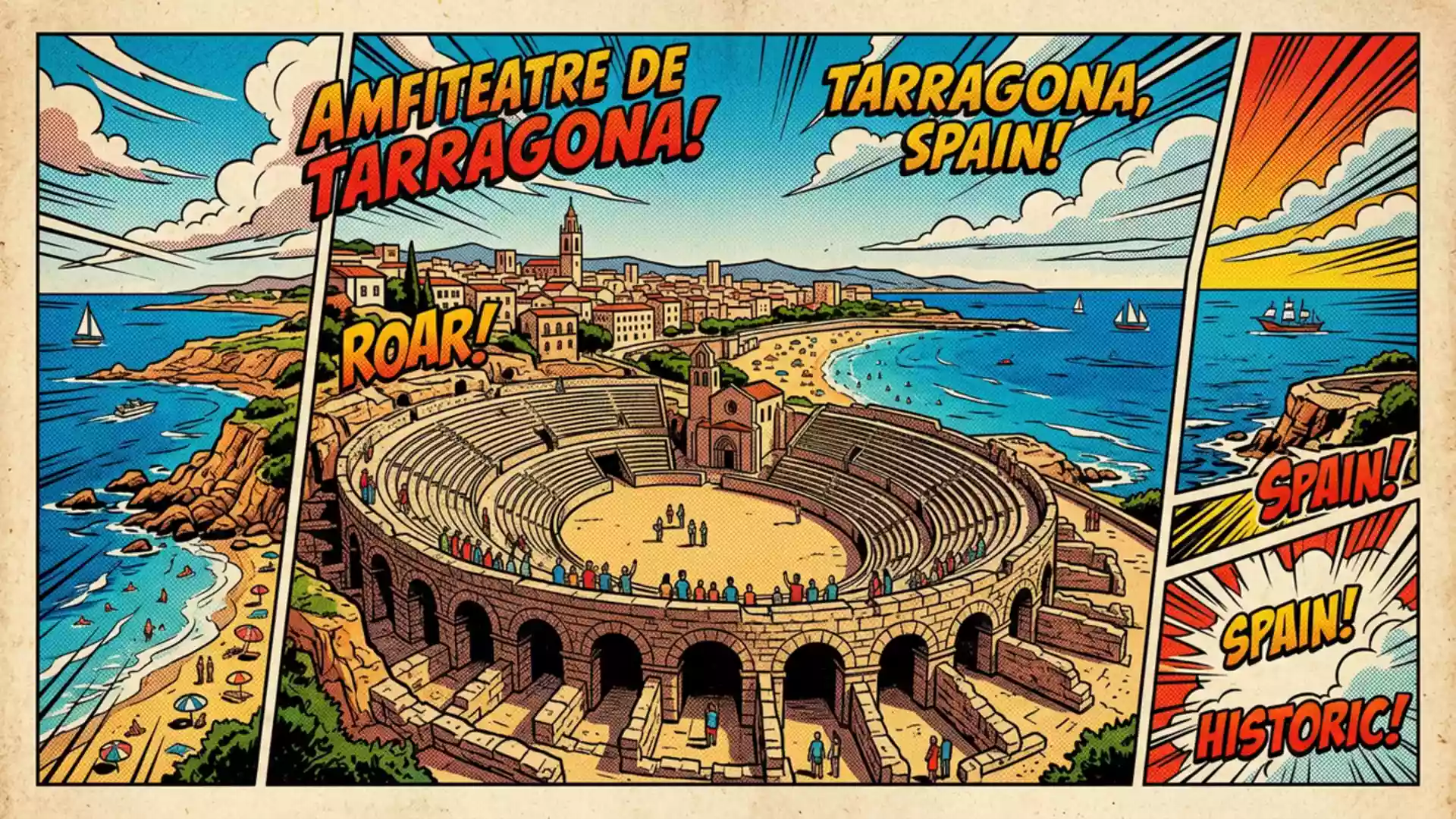
Amfiteatre de Tarragona and the sea-facing arena of ancient Tarraco
Published on 09/07/2026 at 18:20 | Editorial responsibility: Rafael Müller, Editor-in-Chief AD HOC NEWS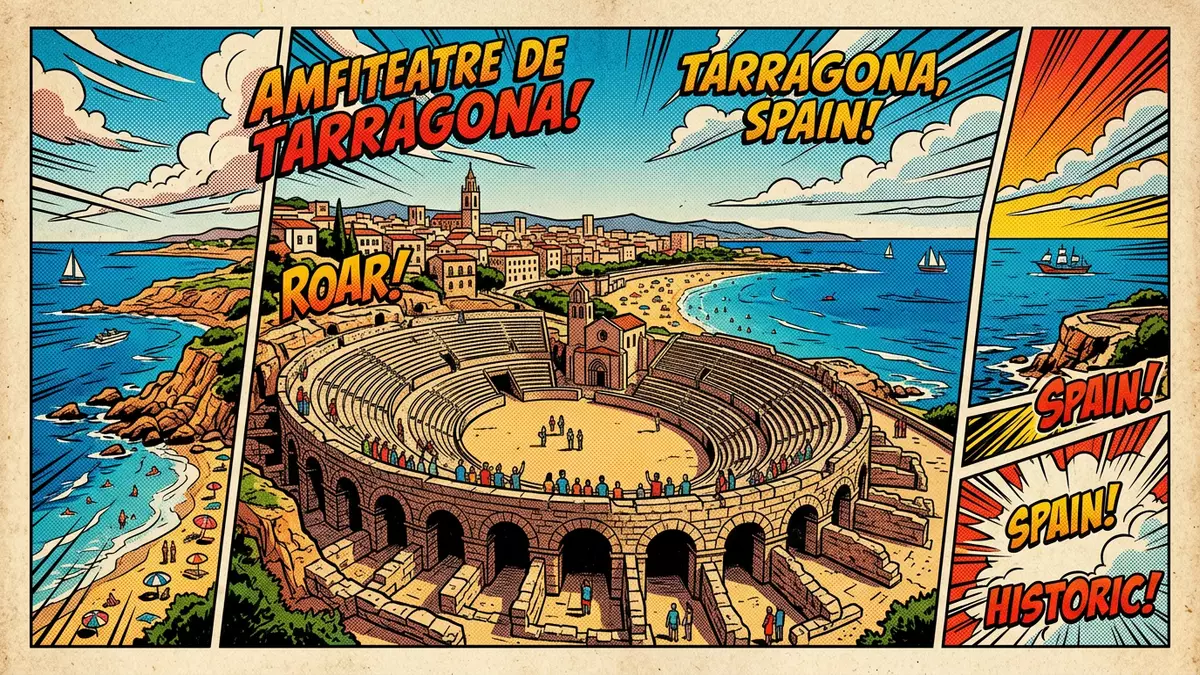
Amfiteatre de Tarragona is a Roman amphitheatre on the coastal slope of Tarragona in Catalonia, where the outline of an ancient arena meets the Mediterranean shoreline. Built in the second century AD for mass spectacles in the Roman colonia of Tarraco, it belongs to the archaeological ensemble of Roman monuments in the city that has been recognised as a World Heritage Site by UNESCO.
An amphitheatre carved between city and sea
The Roman Amfiteatre de Tarragona stands on ground falling towards the Mediterranean, with the arena and terraces occupying a strip of land below the modern streets of central Tarragona. From the higher points of the city the amphitheatre appears held between contemporary buildings and open water, its surviving stone seating descending towards the centre where the performances once took place.Tarragona Amphitheatre is a Roman amphitheatre in the city of Tarraco The location on the coastal side of the former Roman town links the monument visually to the sea and to the nearby railway and road corridor that now follow the shore.
The amphitheatre forms part of the wider Roman complex of Tarraco, which included a forum, circus and defensive walls that defined the ancient provincial capital.capital of the Roman province of Hispania Tarraconensis Within this ensemble Amfiteatre de Tarragona provided the venue for gladiatorial combats and staged hunts, a counterpart to the political and religious spaces of the forum. The structure was laid out near that civic centre, extending the urban fabric towards the sea with a purpose-built arena for spectacles involving combat between fighters and animals.
Stone terraces and the footprint of a Roman arena
Architecturally Amfiteatre de Tarragona follows the elongated ground plan associated with large Roman amphitheatres, with the external footprint measuring around 130 m by 102 m (427 ft by 335 ft).It measured 130 by 102 metres Within that outline the arena occupies a smaller central space, surrounded by a podium and stone terraces that once accommodated assembled spectators. Parts of the terraces remain in place, and the gradients of the surviving seats still convey the original layout of the viewing areas.
The monument combines sections carved directly into natural rock with built components supported by vaults, reflecting both the sloping site and the engineering of Roman public buildings.a heavily eroded section of the northern stands carved directly into the rock survives On one side the seating emerges from the hillside, where the rock forms the mass behind the steps, while elsewhere the terraces rest on constructed substructures. The arena floor lies below these tiers, with traces of walls and later constructions marking changes in use across the centuries.
From Roman spectacles to a World Heritage landscape
When Amfiteatre de Tarragona was built in the second century AD, Tarraco served as the capital of the Roman province known as Hispania Citerior or Hispania Tarraconensis. The amphitheatre formed part of the city’s programme of entertainment, hosting gladiatorial fights, staged animal hunts and public executions in front of thousands of spectators.Tarragona Amphitheatre is a 2nd century AD sports arena Its capacity is recorded at around 14,000 to 15,000 people, reflecting its role as a major venue in the provincial capital.Aforo: 14.000 personas
Across the medieval and later periods, structures associated with Christian worship were established within the former arena, integrating the amphitheatre into changing religious landscapes of Tarragona. In the twentieth century archaeological work and conservation measures focused on stabilising the surviving terraces and recovering the outline of the Roman monument.Amfiteatre de Tarragona is one element of the archaeological ensemble of Tarraco inscribed on the World Heritage list In 2000 the site was included in the Archaeological Ensemble of Tarraco, a World Heritage listing that groups key Roman remains across the city.
Visiting Amfiteatre de Tarragona: what travellers from Western Europe should know
- Amfiteatre de Tarragona lies on the coastal slope below central Tarragona in Catalonia, Spain, close to the Parc de l’Amfiteatre romà and near the Mediterranean shoreline.
- The monument occupies uneven terrain where stone terraces and paths descend towards the former arena, with sections of seating reached by stairways over historic masonry.
- Railway lines and roads run along the nearby seafront, and the site sits within walking distance of Tarragona’s main promenade and viewpoints overlooking the Mediterranean.
- The official language is Catalan and Spanish, and the currency is the euro.
Searching for Amfiteatre de Tarragona on social platforms
These links open searches for Amfiteatre de Tarragona on each platform.
Frequently asked questions about Amfiteatre de Tarragona
Where is Amfiteatre de Tarragona located?
Amfiteatre de Tarragona stands on the coastal slope of Tarragona in Catalonia, Spain, near the Parc de l’Amfiteatre romà and close to the Mediterranean shoreline.
What can visitors expect when exploring the site?
Visitors encounter the outline of a Roman arena framed by stone terraces, carved rock and later structures, with the surrounding urban landscape and sea forming a constant backdrop.
What makes Amfiteatre de Tarragona distinctive among Roman monuments?
The amphitheatre combines a large second-century Roman arena and terraces with a coastal setting below a modern city, and forms part of the World Heritage Archaeological Ensemble of Tarraco.