
Amboseli National Park and the wetlands beneath Kilimanjaro
Published on 09/23/2026 at 20:32 | Editorial responsibility: Rafael Müller, Editor-in-Chief AD HOC NEWS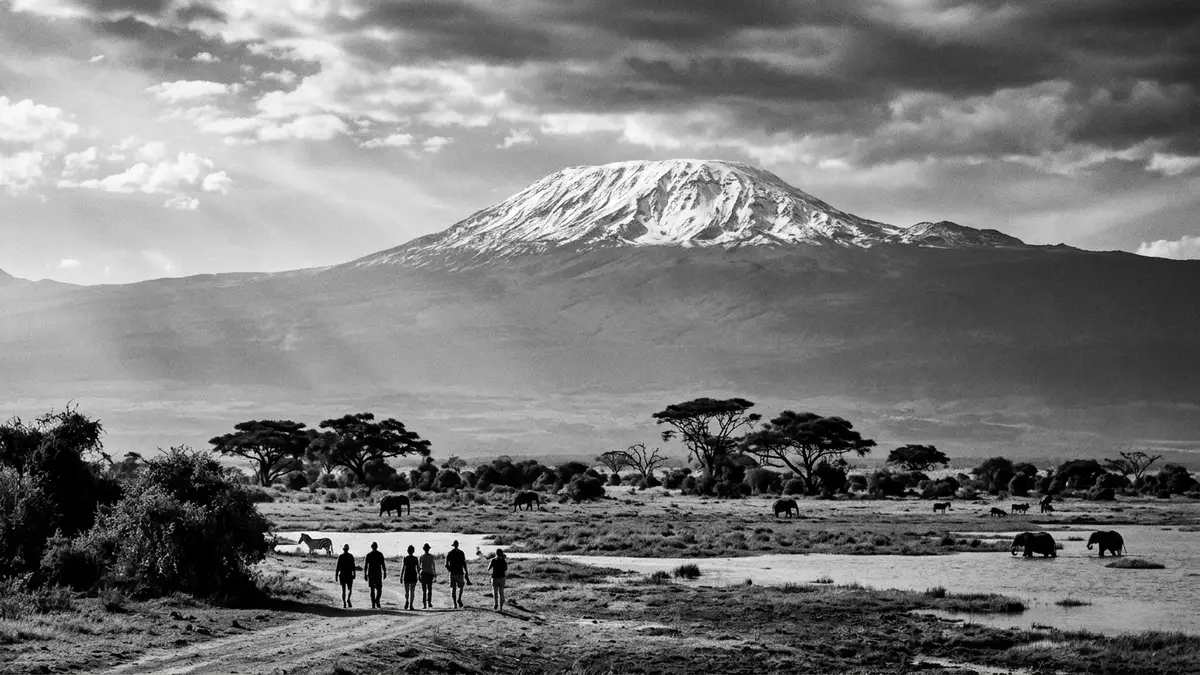
Amboseli National Park is a Kenyan wildlife reserve where open savannah, freshwater swamps and Mount Kilimanjaro share the same horizon. Large African elephants move through this semi-arid basin, while the mountain rises beyond the park and gives the landscape its defining vertical presence.
Amboseli’s basin of grassland, woodland and water
The park lies in southern Kenya, near the border with Tanzania, within the wider Amboseli ecosystem. Its ground forms part of a Pleistocene lake basin, with dry lakebed, saline plains, grassland and wetlands occupying different parts of the landscape. The five main habitats include savanna grassland, acacia woodland, rocky thorn bush, swamps and marshland.
Amboseli National Park covers about 392 square kilometres. Seasonal water gathers in Lake Amboseli after heavy rain, while groundwater associated with Kilimanjaro feeds permanent swamps such as Enkong Narok. The contrast between dusty open ground and green wetland is one of the park’s clearest physical features.
Elephants and the mountain horizon
Elephants are closely associated with Amboseli National Park, and the park protects large populations of them alongside lions, cheetahs, buffalo, zebras, wildebeest and giraffes. Hippos occur in wetland areas, while smaller mammals occupy the woodland, thorn bush and grassland.
Mount Kilimanjaro rises across the border in Tanzania. Its summit reaches 5,895 m (19,341 ft), and its volcanic slopes form part of the ecological setting recorded for the Amboseli Biosphere Reserve. The mountain and the elephants create a visible relationship of scale: a broad animal moving through low vegetation, with a massive volcanic peak beyond it. The Amboseli Biosphere Reserve was nominated in 1991 and includes mountains, dry forest, savannah rangelands, wetlands and swamps.
From game reserve to protected landscape
Amboseli’s conservation history reaches back to the early twentieth century. The area formed part of the Southern Game Reserve in 1906, became a game reserve again in 1948, and was established as Amboseli National Park in 1974.
The park forms part of a larger landscape inhabited by Maasai communities and shaped by livestock keeping, wildlife conservation and tourism. Maasai culture remains visible around the reserve through settlements, cultural centres and pastoral traditions. The UNESCO biosphere designation covers a much wider area than the national park itself, linking conservation with the lives and livelihoods of communities in southern Kenya.
Birdlife adds another layer to the park’s identity. More than 400 species have been recorded in the ecosystem, including waterbirds associated with wetlands and birds of prey. Flamingoes may occur around the seasonal lake when water conditions create suitable habitat, while kingfishers, pelicans and other wetland birds use the marshes.
Visiting Amboseli National Park: what travellers from Western Europe should know
- Amboseli National Park lies in Kajiado County in southern Kenya. Road access uses the Iremito, Kimana and Meshanani gates, while light aircraft use Kimana airstrip.
- The landscape combines semi-arid plains, rocky thorn bush, woodland and wetlands. Roads and viewing areas cross open ground, marsh edges and dry lakebed.
- Observation Hill, also known as Nomatior, provides a raised view across the park. Lemomo Hill lies in Kitenden Conservancy outside the park boundary.
- The official language is English and Swahili, and the currency is the Kenyan shilling.
- Entry requirements depend on your nationality; UK travellers can check the FCDO travel advice at gov.uk/foreign-travel-advice, Irish travellers the Department of Foreign Affairs at ireland.ie.
Searching for Amboseli National Park on social platforms
These links open searches for Amboseli National Park on each platform.
Frequently asked questions about Amboseli National Park
Where is Amboseli National Park?
Amboseli National Park is in southern Kenya, in Kajiado County near the Tanzanian border. Mount Kilimanjaro rises across the border to the south.
What can visitors see in Amboseli National Park?
Visitors can see elephants, lions, cheetahs, buffalo, zebras, wildebeest, giraffes and extensive birdlife. The park also contains grassland, acacia woodland, thorn bush, swamps and marshland.
What makes Amboseli distinctive?
Its defining combination is a semi-arid wildlife basin, permanent wetlands and a view towards Mount Kilimanjaro. The park’s elephants move through this varied landscape beneath one of Africa’s great volcanic mountains.


