
Alhambra’s palaces and gardens in Granada
Published on 08/08/2026 at 15:04 | Editorial responsibility: Rafael Müller, Editor-in-Chief AD HOC NEWS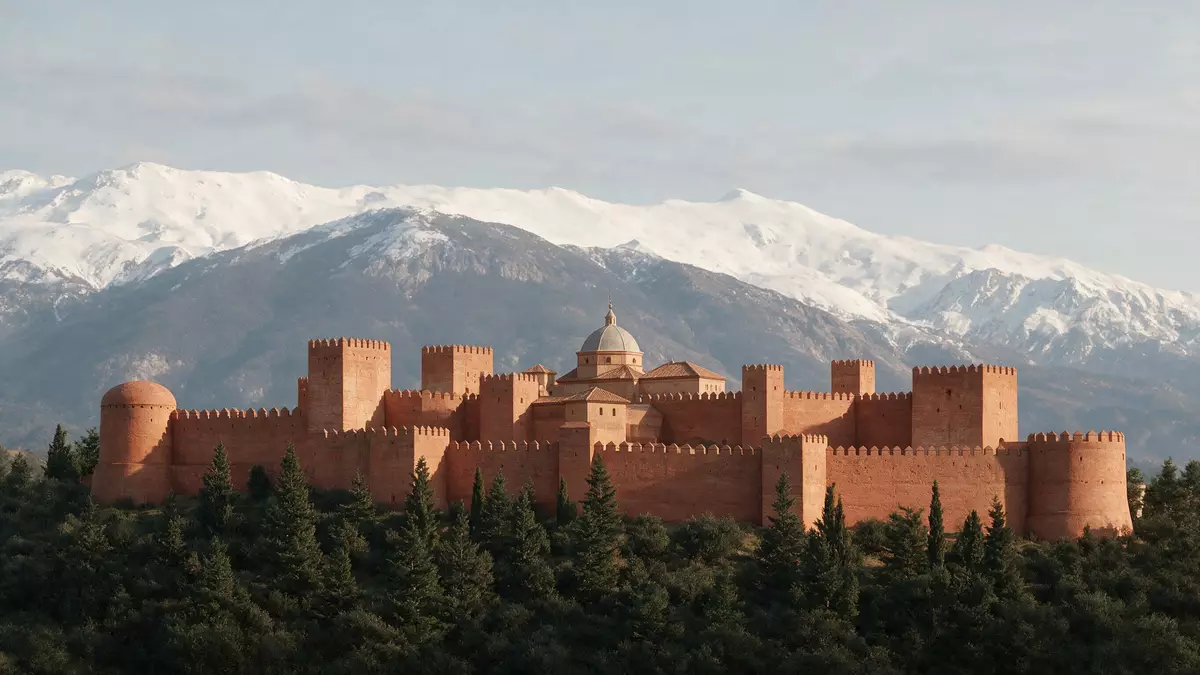
Alhambra in Granada is a hilltop palace complex shaped by the Nasrid dynasty, with the Generalife gardens and the Alcazaba fortress forming part of the same historic ensemble. Its most memorable feature is the way carved interiors, courtyards and planted terraces sit side by side across a long, layered site.
Nasrid halls and courtly rooms
The Nasrid Palaces form the best-known part of Alhambra, with rooms arranged around courtyards and water basins. Stucco surfaces, carved inscriptions and tiled walls give the interiors their dense decorative character.
The Palace of the Lions is one of the clearest examples of that courtly world, with slender columns, arcades and a central fountain. Nearby rooms carry the same mix of carved surfaces and careful proportion that defines much of the complex.
Fortress walls and garden terraces
The Alcazaba is the military side of Alhambra, with towers and thick walls overlooking Granada and the surrounding hills. It gives the site a harder outline than the palace rooms, and the contrast is visible at once.
The Generalife belongs to the same historic landscape, with gardens, channels and planted courtyards set on terraces. The association with the Nasrid court places it among the most important surviving parts of the whole ensemble.
From Nasrid court to heritage site
Alhambra took shape under Nasrid rule in the thirteenth and fourteenth centuries, before later Christian additions altered parts of the complex. Charles V’s palace introduces a Renaissance structure into the medieval setting, with a strongly different language of stone and form.
That mix makes the site readable in layers. Visitors move between Islamic palace architecture, fortress defences, garden spaces and later imperial building within one protected hilltop domain.
Visiting Alhambra: what travellers from Western Europe should know
- Alhambra is in Granada, reached by road and local transport from the city centre.
- Admission arrangements and opening hours are set by the site's operator and change with the season; the official website is the only binding source.
- Late afternoon light can suit the stonework and gardens well, while the site rewards a more unhurried visit.
- Expect slopes, steps and long walks between parts of the complex, with uneven surfaces in several areas.
- Spanish is the main language on site, and card payment is widely accepted in city services around Granada.
- Entry requirements depend on your nationality. UK travellers should check the FCDO travel advice at gov.uk/foreign-travel-advice; Irish travellers the Department of Foreign Affairs at ireland.ie; EU and EEA citizens their own national foreign ministry.
Searching for Alhambra on social platforms
These links open searches for Alhambra on each platform.
Frequently asked questions about Alhambra
Where is Alhambra?
Alhambra stands on a hill above Granada in southern Spain. The complex overlooks the city and sits within a larger historic landscape.
What should visitors expect?
Expect palace rooms, fortress walls, courtyards and gardens linked across a substantial site. Walking is part of the visit, with slopes and uneven ground in places.
What makes Alhambra distinctive?
Its combination of Nasrid palace decoration, fortress architecture, gardens and later Renaissance building gives it a layered character. The contrast between carved interiors and massive outer walls is immediate.


