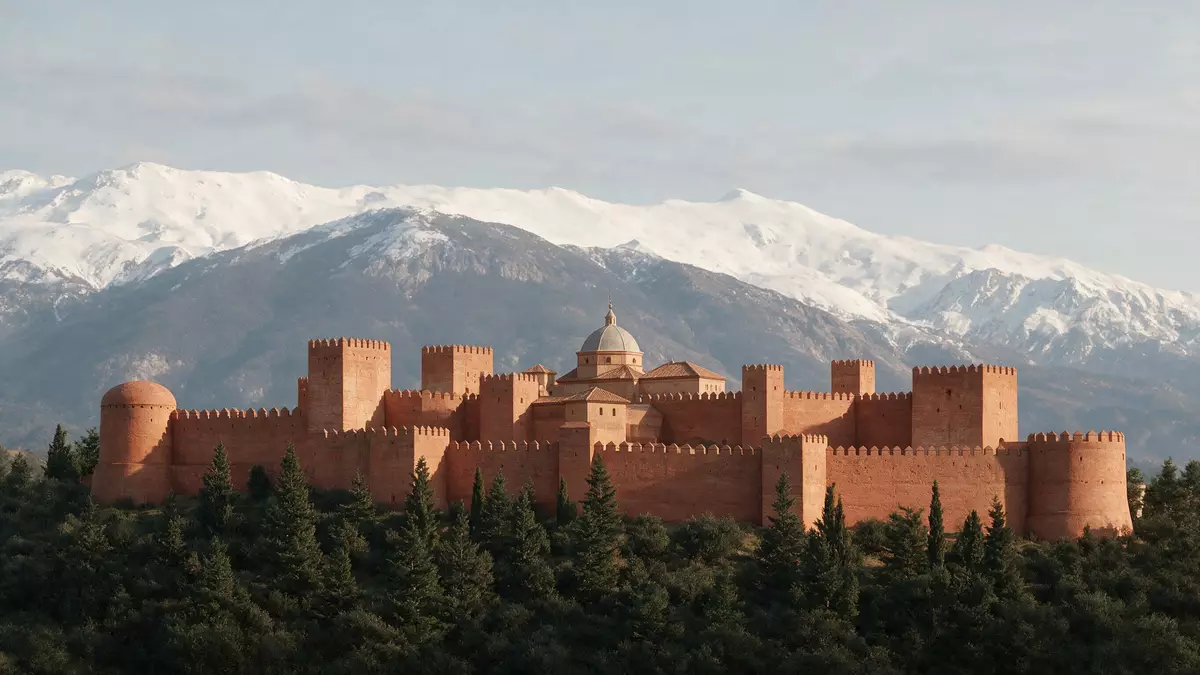
Alhambra’s layered palaces above Granada
Published on 08/10/2026 at 15:07 | Editorial responsibility: Rafael Müller, Editor-in-Chief AD HOC NEWS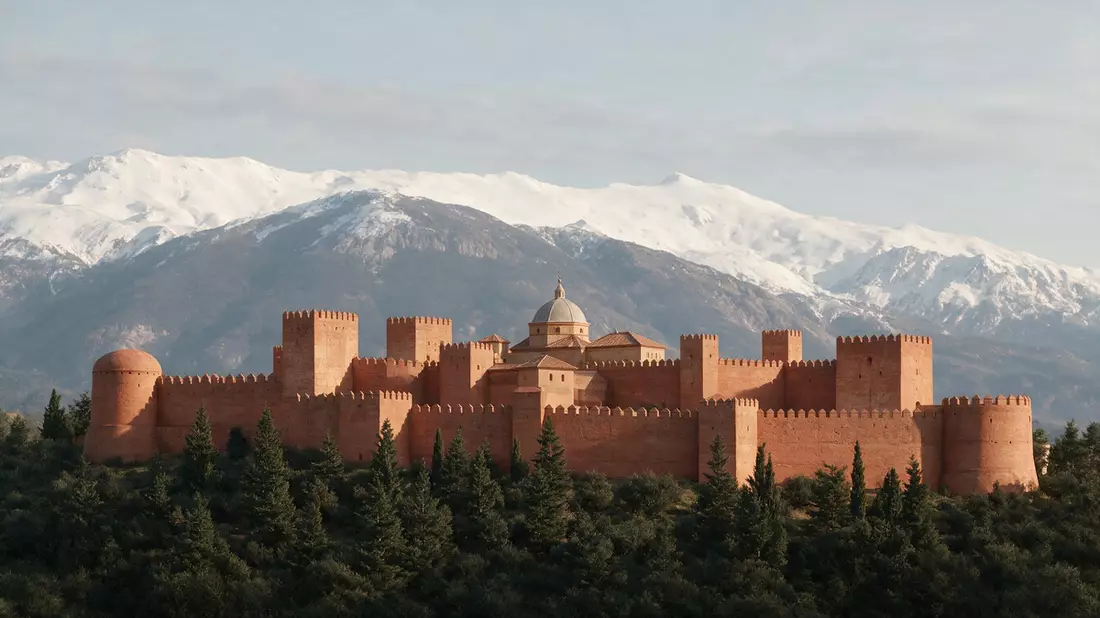
Alhambra rises above Granada as a vast complex of palaces, courtyards, walls and gardens from Nasrid rule in Spain. Its surviving fabric brings together Islamic ornament, fortified mass and planted spaces in one hillside setting.
Nasrid palaces on a hill above Granada
The Alhambra was developed under the Nasrid dynasty, the last Muslim dynasty to rule in Iberia, and much of its visible character belongs to the fourteenth century. The site combines defensive enclosure with ceremonial rooms, and the name now covers several linked parts rather than a single building.
The Palace of the Lions is among the best-known spaces, with slender columns, stucco carving and a court centred on a fountain. Nearby halls carry tiled dados, carved plasterwork and timber ceilings, while the wider complex includes towers, gates and terraces that step across the ridge.
Water, gardens and carved surfaces
Water runs through the Alhambra in channels, pools and fountains, especially in the Generalife gardens and within the palace courts. These elements sit alongside clipped planting, arcades and long views across Granada and the Vega.
Surface detail matters as much as structure here. Arabic inscriptions, geometric ornament, muqarnas vaulting and patterned tilework appear across rooms and passageways, giving the complex a dense visual rhythm without relying on large spans or heavy stonework.
From fortress to monument
The Alhambra also shows the afterlife of a royal residence after the end of Nasrid power in 1492. Christian rulers adapted parts of the complex, and the Palace of Charles V adds a Renaissance presence beside the earlier Islamic fabric.
That mixture makes the site legible in layers. The walls, towers and palace rooms preserve the outline of a courtly world, while the later additions mark a different political order on the same hilltop.
Visiting Alhambra: what travellers from Western Europe should know
- It stands on a hill east of Granada, reached from the city by road and on foot through the complex.
- Admission arrangements and opening hours are set by the site's operator and change with the season; the official website is the only binding source.
- Spring and autumn suit the gardens and outer walks best, while strong summer sun makes shade, water and an early start useful.
- Expect slopes, steps, cobbles and long passages between major parts of the site.
- Cashless payment is widely accepted in Spain, and Spanish is the main language used on site.
- Entry requirements depend on your nationality. UK travellers should check the FCDO travel advice at gov.uk/foreign-travel-advice; Irish travellers the Department of Foreign Affairs at ireland.ie; EU and EEA citizens their own national foreign ministry.
Searching for Alhambra on social platforms
These links open searches for Alhambra on each platform.Frequently asked questions about Alhambra
Where is Alhambra?
It stands above Granada in southern Spain, on a hill that overlooks the city and the valley beyond.
What should visitors expect?
A visit involves palaces, courts, gardens, towers and long internal routes between them. Surfaces vary from tiled rooms and carved plaster to outdoor paths and stone steps.
What makes Alhambra distinctive?
Its combination of Nasrid palace architecture, later Christian additions and planted water gardens creates a layered historic complex. The carved decoration and sequence of courts remain central to its character.