
Alcatraz Island and the layered history of San Francisco Bay
Published on 09/14/2026 at 14:30 | Editorial responsibility: Rafael Müller, Editor-in-Chief AD HOC NEWS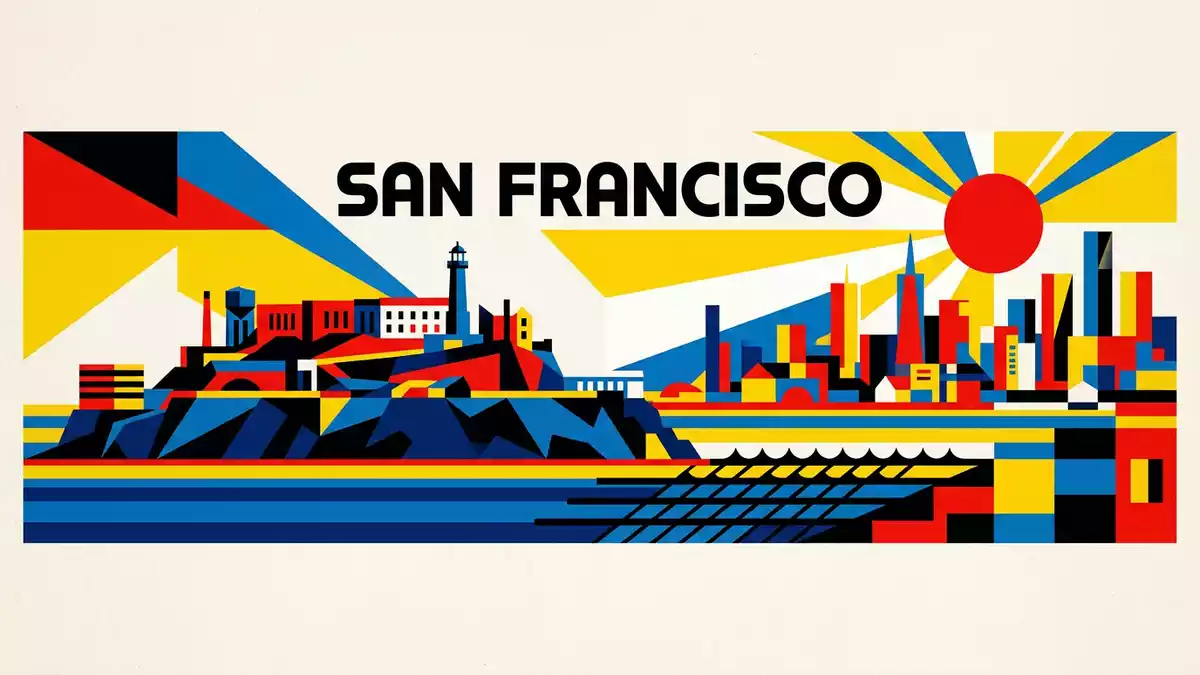
Alcatraz Island rises in San Francisco Bay as a rocky outcrop with a long public history behind it. Its name is linked to Juan Manuel de Ayala and the Spanish designation La Isla de los Alcatraces, recorded in 1775.
Alcatraz Island in stone, water and old defences
The island lies off San Francisco and is approached by ferry from Pier 33. Its first lighthouse on the Pacific Coast began service in 1854, and the island later became a military post and prison site. rocky island in San Francisco Bay and first lighthouse on the West Coast are the two details that frame its earliest recorded roles.
The National Historic Landmark designation reflects that long sequence of uses. The island’s visible fabric includes masonry, institutional buildings and open ground that still read as a defended site rather than a single-purpose monument. National Historic Landmark and federal prison in 1934 place that evolution in clear historical sequence.
The prison years and the island’s hard edges
From 1934 to 1963, Alcatraz served as a federal penitentiary for some of the country’s most notorious prisoners. The period left behind a compact prison landscape, with cellhouse structures, service buildings and the commanding shell of the institution itself. 1934 to 1963 and military prison period are the key dates and phases that define the place.
Alcatraz also carries a second layer of significance through the Native American occupation of 1969 to 1971. That episode belongs to the island’s historical identity just as firmly as the prison does, and it adds a political dimension to the site’s surviving structures. American Indian Red Power movement and American Indian occupation identify that later historical layer without turning it into a digression.
From prison island to public landmark
Alcatraz became part of Golden Gate National Recreation Area in 1972 and opened to the public in 1973. That change of function is visible in the way the island now combines preserved buildings, interpretive spaces and the raw setting of the bay. Golden Gate National Recreation Area and bird sanctuary show how the island’s identity stretches beyond incarceration.
The appeal of the island lies in that layered surface. A visitor sees the bay, the prison fabric, the lighthouse heritage and the traces of occupation in one compact landscape. The result is less a single monument than a site where several American histories remain legible at once.
Visiting Alcatraz Island: what travellers from Western Europe should know
- Access is by ferry from Pier 33 in San Francisco. Private craft do not dock at the island.
- The terrain includes slopes, steps and uneven ground around the prison structures. The island rises directly from the bay rather than from level waterfront land.
- The island lies in San Francisco Bay, with clear views back to the city and the surrounding water.
- The official language is English and the currency is the US dollar.
- Entry requirements depend on your nationality; UK travellers can check the FCDO travel advice at gov.uk/foreign-travel-advice, Irish travellers the Department of Foreign Affairs at ireland.ie.
Searching for Alcatraz Island on social platforms
These links open searches for Alcatraz Island on each platform.
Frequently asked questions about Alcatraz Island
Where is Alcatraz Island?
It sits in San Francisco Bay off San Francisco, in California. The island is a rocky outcrop rather than a broad landmass.
What does a visit to Alcatraz Island involve?
The island combines ferry access, prison remains, lighthouse history and open views across the bay. Its paths and steps reflect the steep terrain of the island itself.
What makes Alcatraz Island distinctive?
Its strength lies in the overlap of military, prison and civil rights history on one island. The surviving buildings make those layers visible in a compact setting.


