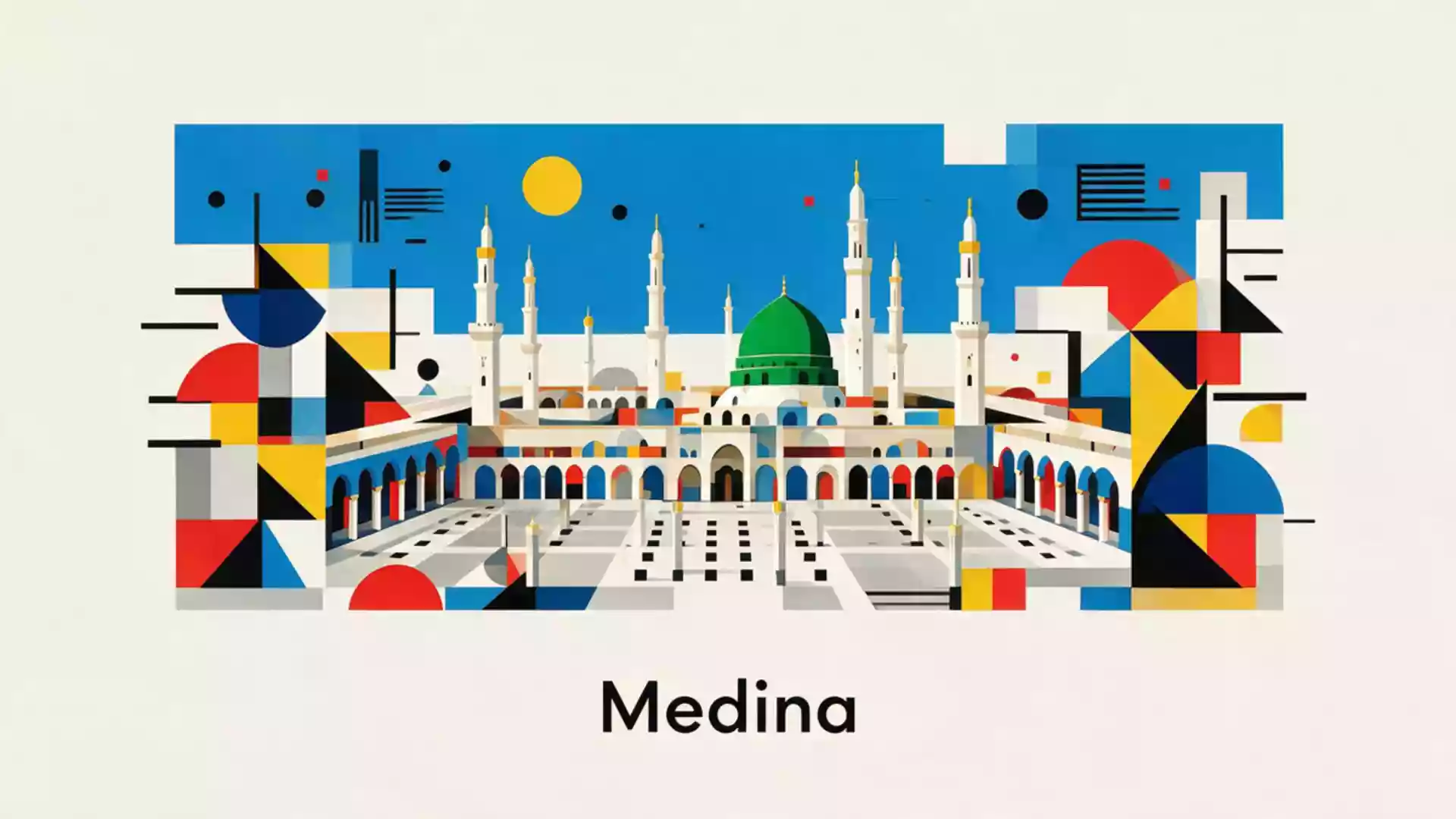
Al-Masjid an-Nabawi and the layers of Medina
Published on 08/26/2026 at 18:22 | Editorial responsibility: Rafael Müller, Editor-in-Chief AD HOC NEWS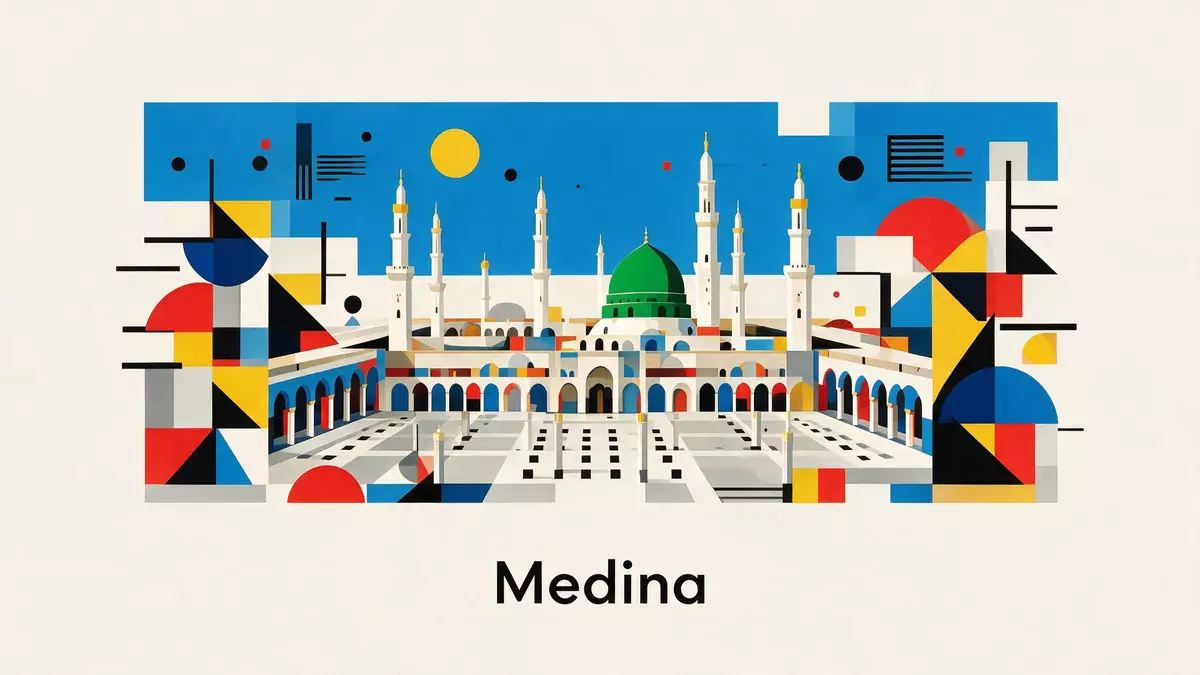
Al-Masjid an-Nabawi in Medina is a mosque of layered history and clear geometry. Founded by Prophet Muhammad in 622 CE, it has grown from a modest sanctuary into a vast complex with courtyards, domes and minarets.
From the Prophet’s mosque to a monumental complex
The mosque began as a simple structure in the first year after the Hijra, when Medina became the centre of the early Muslim community. Its name links it directly to Prophet Muhammad, whose burial chamber lies within the complex.
That early origin remains legible in the mosque’s identity, even after centuries of change. Later dynasties added their own layers, and the Ottoman period left the Green Dome above the Prophet’s tomb, one of the mosque’s most recognisable features.Prophet's Mosque
Courtyards, domes and minarets
The present mosque combines broad prayer spaces with repeated architectural rhythms. Rows of columns, domes and tall minarets give the complex a measured, formal character, while the Green Dome creates a distinct point of focus within the larger whole.
The building’s long development also includes the move from an early courtyard mosque to a much larger congregational sanctuary. The result is a place where early Islamic memory and later imperial patronage remain visible side by side.early Islamic community
Medina, devotion and architectural continuity
Medina gives the mosque its setting, but the building itself carries much of the city’s symbolic weight. The complex is associated with worship, burial and commemoration, and its architecture reflects repeated rebuilding across the centuries.
Names matter here: Muhammad, the Ottoman sultans and the modern Saudi state all belong to the mosque’s story. So do the dates 622 CE and 1837, which mark its foundation and the repainting of the Green Dome in its present colour.Green Dome
Visiting Al-Masjid an-Nabawi: what travellers from Western Europe should know
- The mosque stands in central Medina, in Saudi Arabia. Public transport, taxis and the city’s main road network serve the area.
- The complex is extensive and mostly level, with broad paved surfaces and large open courtyards.
- The mosque is a place of prayer and commemoration, so dress and conduct should match a major religious site.
- English is widely understood in tourist-facing settings, and the local currency is the Saudi riyal.
- Entry requirements depend on your nationality; UK travellers can check the FCDO travel advice at gov.uk/foreign-travel-advice, Irish travellers the Department of Foreign Affairs at ireland.ie.
Searching for Al-Masjid an-Nabawi on social platforms
These links open searches for Al-Masjid an-Nabawi on each platform.
Frequently asked questions about Al-Masjid an-Nabawi
Where is Al-Masjid an-Nabawi?
It stands in Medina, Saudi Arabia, and forms one of the city’s defining landmarks. The mosque lies in the urban centre rather than on a separate religious precinct.
What should visitors expect?
Visitors encounter a large mosque with extensive paved spaces, repeated arcades and prominent domes. It is a functioning place of worship, not a museum.
What makes it distinctive?
Its importance comes from both origin and form. The mosque is tied to Prophet Muhammad and also carries later Ottoman and Saudi layers in its architecture.