
Akropolis in Athen: the high city of classical Greece
Published on 09/08/2026 at 17:29 | Editorial responsibility: Rafael Müller, Editor-in-Chief AD HOC NEWS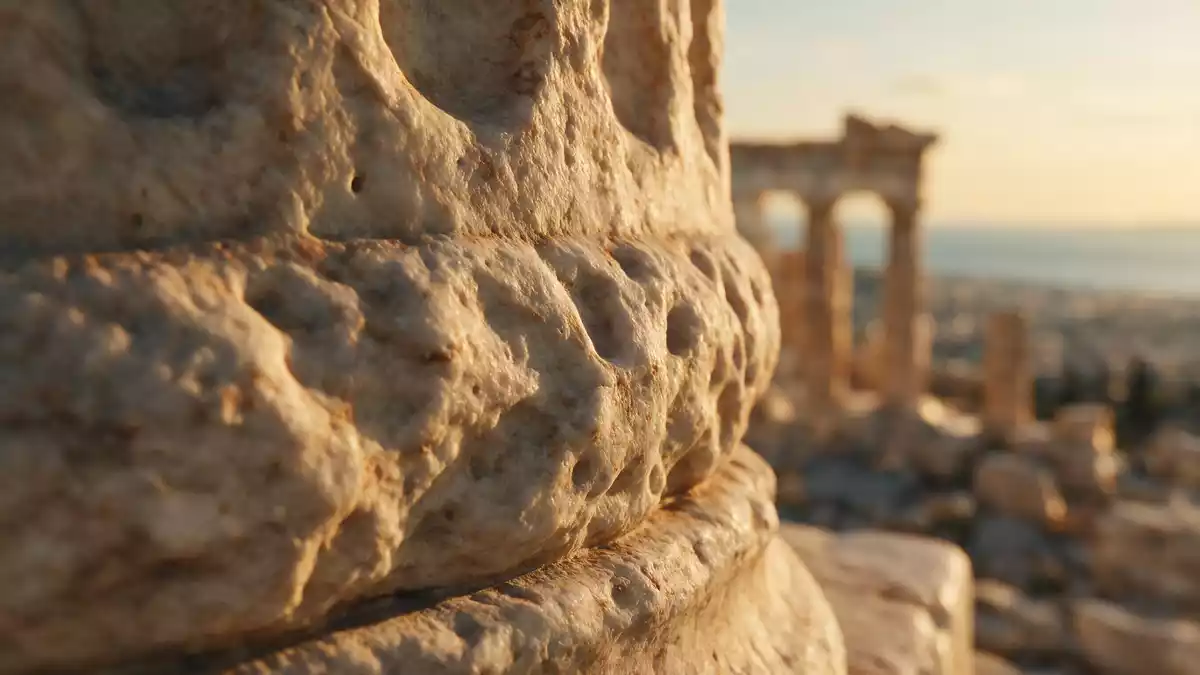
Akropolis in Athen rises as a rocky hill above the modern city, crowned by marble temples from the classical age of Greece. On its summit plateau, the Parthenon and neighbouring sanctuaries form a compact ensemble that still defines how ancient Greek architecture is imagined.
The rocky citadel above Athen
The Akropolis is an ancient citadel on a limestone and marble outcrop standing above the centre of Athen. Archaeological evidence indicates that this hill was already inhabited in the Bronze Age, with activity dating back to the 4th millennium BC on the plateau.Bronze Age occupation Over many centuries it was fortified and became the natural stronghold of the city, combining defensive walls with religious buildings dedicated to Athena.
During the fifth century BC, under the leadership of Pericles, Akropolis took on the architectural form that is visible in its ruins today.Pericles in the fifth century BC In this period an ambitious building programme in white Pentelic marble replaced earlier structures with a coordinated group of temples and gateways. The hill later became a formal UNESCO World Heritage Site in 1987, recognising its role as a symbol of classical civilisation.UNESCO inscription in 1987
Parthenon and the classical temples
At the heart of Akropolis stands the Parthenon, a large Doric temple dedicated to Athena Parthenos, the patron goddess of Athen.Parthenon dedicated to Athena Constructed between 447 and 432 BC, it combines a colonnaded exterior with sculptural decoration that once included a colossal gold and ivory statue of the goddess inside the cella. Even in its damaged state, the alignment of its columns, the slight refinements of their profiles and the surviving metopes and pediments make the building a key reference for Doric architecture.
Other classical temples share the summit plateau with the Parthenon. The Ionic Erechtheion occupies the north side, with its famous Porch of the Caryatids carrying the entablature on sculpted female figures, the originals of which are preserved in the Akropolis Museum.Erechtheion and Caryatids Near the main entrance, the Temple of Athena Nike stands on a bastion beside the approach, a compact Ionic temple built around 420 BC that focuses on Athena as bringer of victory.Temple of Athena Nike around 420 BC
Approaching through the Propylaia
Visitors reach the Akropolis plateau through the Propylaia, the monumental gateway at the western end of the hill. Built between 437 and 432 BC and attributed to the architect Mnesikles, this structure combines a central Doric colonnade with side wings and integrates stairs and ramps into its plan.Propylaia by Mnesikles The alignment and marble material of the gateway echo the Parthenon, turning the ascent from the lower slopes into a staged architectural experience.
From the Propylaia, the summit plateau opens as a level space holding the four major monuments of the classical building phase: the Parthenon, the Erechtheion, the Propylaia itself and the Temple of Athena Nike.Four major monuments on the plateau Their differing scales and orders—Doric for the Parthenon, Ionic for the Erechtheion and Athena Nike—demonstrate the range of Greek temple design within a single confined site. The rocky ground beneath them, cut to create terraces and foundations, remains visible in places and reminds visitors that this is a natural hill adapted for stone construction rather than an artificial platform.
Visiting Akropolis: what travellers from Western Europe should know
- Akropolis stands on a hill above central Athen in Greece, south of the modern neighbourhoods that spread around its base. It is reached on foot from the surrounding streets and connects visually with nearby sites such as the Odeon of Herodes Atticus on its southwest slope.
- The ascent from the lower paths to the summit plateau involves a sustained climb over stone steps and sloping ground. Surfaces on the approach and within the gateway area are irregular in places, with worn marble and exposed rock underfoot.
- On the summit plateau the ground is relatively level, but visitors move among ruins, low walls and scattered blocks of marble. Paths weave between the Parthenon, the Erechtheion and the Temple of Athena Nike, with changes in height where ancient foundations rise above the surrounding surface.
- Akropolis lies within Greece, where the official language is Greek and the currency is the euro.
Searching for Akropolis on social platforms
These links open searches for Akropolis on each platform.Frequently asked questions about Akropolis
Where is Akropolis located?
Akropolis stands on a rocky hill above central Athen in Greece, forming a prominent landmark that rises over the surrounding urban neighbourhoods.
What should visitors expect on a visit?
Visitors encounter a sustained climb through the Propylaia gateway to a summit plateau with major classical ruins, including the Parthenon and the Erechtheion, set among exposed rock and marble.
What makes Akropolis distinctive?
Akropolis combines a natural limestone hill with a coordinated group of fifth-century BC marble temples, creating a compact setting where several key forms of ancient Greek architecture stand together.


