
Akagera National Park’s mosaic of lakes and savannah in eastern Rwanda
Published on 08/28/2026 at 19:11 | Editorial responsibility: Rafael Müller, Editor-in-Chief AD HOC NEWS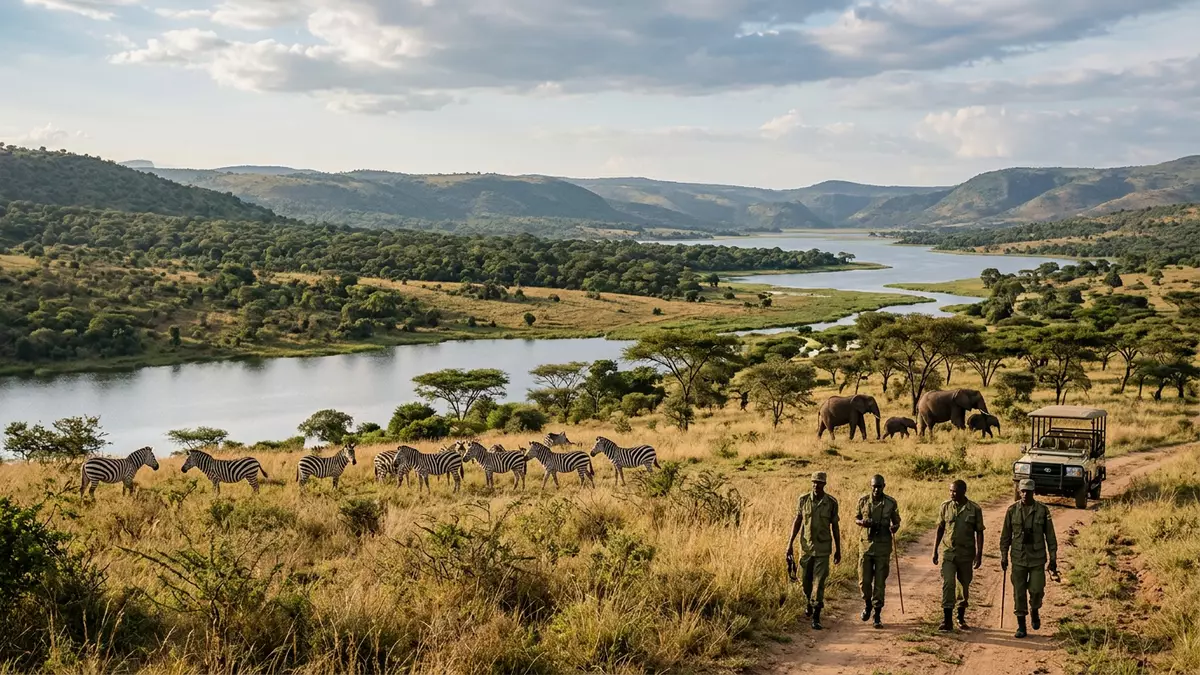
Akagera National Park in eastern Rwanda brings together lakes, wetlands, woodland and open savannah in a single, coherent landscape along the Akagera River. Established as a national park in 1934, it stretches across the country’s border with Tanzania and gives Rwanda a protected savannah reserve alongside its better-known mountain and forest parks.
A river-lined park of lakes and wetlands
Akagera National Park lies in Rwanda’s Eastern Province, along the international boundary with Tanzania, where the meandering Akagera River feeds a chain of swamp-fringed lakes and wetland basins.Akagera National Park in eastern Rwanda The protected area covers about 1,122 square kilometres (433 square miles), making it Rwanda’s largest national park by land area and one of Central Africa’s substantial wetland reserves.approximately 433 square miles
The Akagera River forms much of the park’s eastern edge, feeding a labyrinth of lakes and papyrus swamps that defines the park’s character as a water-rich savannah landscape.river-fed lakes and papyrus wetlands Away from the floodplains, rolling sandstone hills and drier grasslands rise to higher ground, giving visitors broad views over the water bodies and the surrounding plains.
From 1934 reserve to big-five savannah
Akagera National Park was created in 1934 as a national park to safeguard its animals and vegetation, reflecting an early recognition of the ecological value of this savannah–wetland system.established in 1934 as a national park Over the decades its boundaries and management have changed, but it remains Central Africa’s largest protected wetland and Rwanda’s last major refuge for species adapted to savannah environments.largest protected wetland
The park today is known for supporting the so-called big five: lion, leopard, elephant, buffalo and rhino, alongside Maasai giraffes, plains zebras and a variety of antelope species such as impala, eland, bushbuck and oribi.big five and other mammals More than 480 bird species have been recorded, ranging from water-associated species around the wetlands to raptors and savannah birds in the drier parts of the park.
Terrain, habitats and visitor experience
The terrain of Akagera National Park ranges from low-lying floodplains near the lakes and swamps to higher ground at around 1,800 m (5,906 ft), where open grassland and woodland are more common.altitude range of the park Vegetation includes papyrus wetlands, acacia stands and mixed savannah grasslands, creating a heterogeneous mosaic that supports large mammals and a wide range of smaller species.heterogeneous savanna ecosystem
Open savannah areas provide long views over grazing plains, while the lakesides bring travellers close to swamp-fringed shores where hippos and crocodiles can be seen and birdlife is particularly dense. Game drives follow a network of tracks between the southern and northern parts of the park, passing through contrasting habitats that highlight how closely water, woodland and grassland sit together in this part of Rwanda.
Visiting Akagera National Park: what travellers from Western Europe should know
- Akagera National Park lies in Rwanda’s Eastern Province, along the border with Tanzania, and is reached by road from Kigali through Rwamagana and Kayonza towards the southern gate.
- The park is explored by vehicle on unpaved tracks, and visitors should be prepared for uneven surfaces and occasional steep sections as routes cross hills and dip towards wetland areas.
- The official language is Kinyarwanda alongside French and English, and the national currency is the Rwandan franc.
- Entry requirements depend on your nationality; UK travellers can check the FCDO travel advice at gov.uk/foreign-travel-advice, Irish travellers the Department of Foreign Affairs at ireland.ie.
Searching for Akagera National Park on social platforms
These links open searches for Akagera National Park on each platform.
Frequently asked questions about Akagera National Park
Where is Akagera National Park located?
Akagera National Park is in Rwanda’s Eastern Province along the border with Tanzania, in a region reached on the main road via Rwamagana and Kayonza.
What can visitors expect during a visit?
Visitors encounter a mix of lakes, papyrus wetlands, woodland and open savannah, with game drives offering views of large mammals, varied birdlife and the park’s distinctive river-fed landscape.
What makes Akagera National Park distinctive among Rwanda’s parks?
Akagera is Rwanda’s only major savannah reserve, combining extensive wetlands and lakes with grassland and woodland habitats, so it complements the country’s forest and volcanic national parks.


