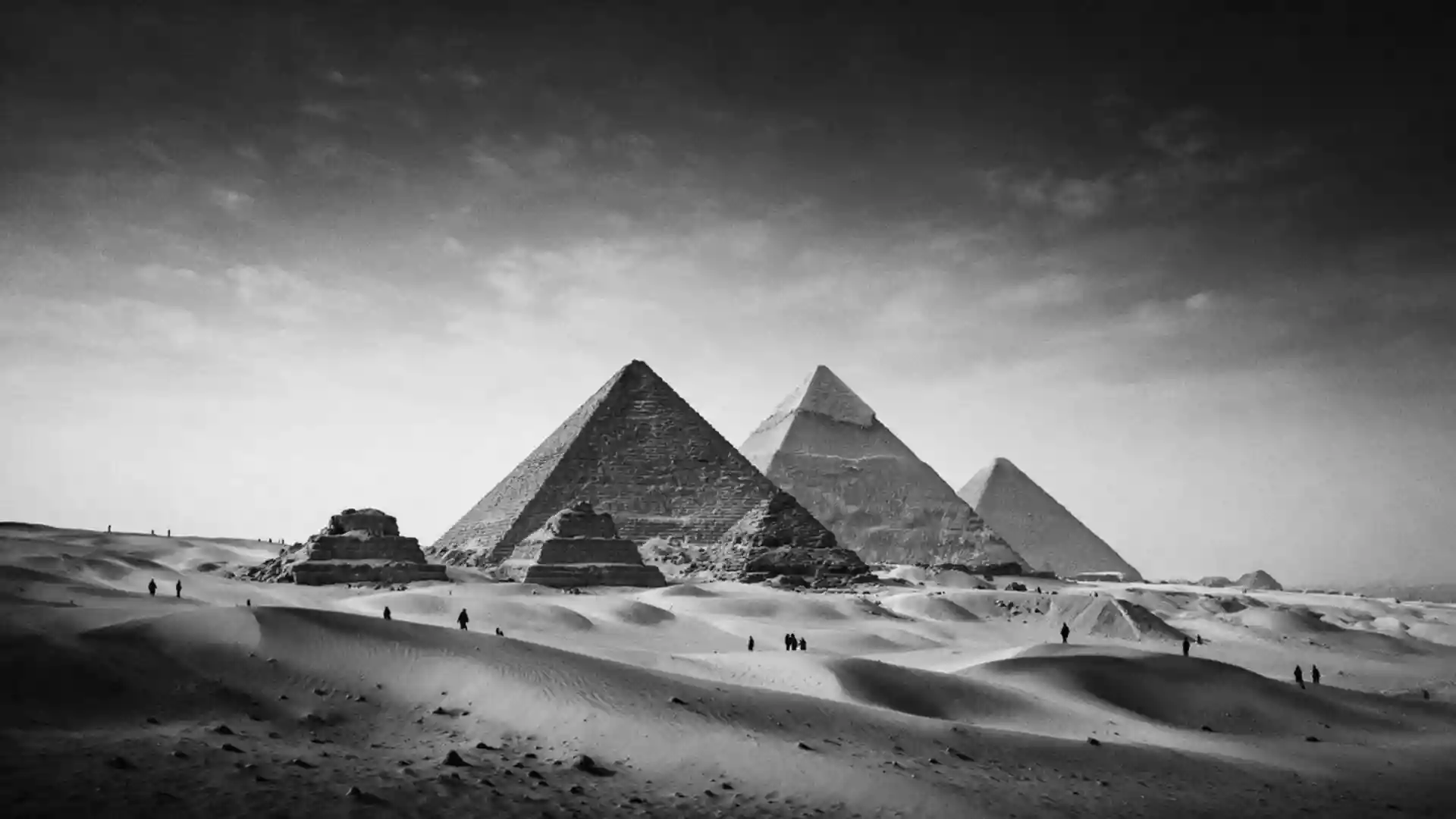
Ahramat al-Giza, Fourth Dynasty pyramids on the desert edge of Gizeh
Published on 09/16/2026 at 07:55 | Editorial responsibility: Rafael Müller, Editor-in-Chief AD HOC NEWS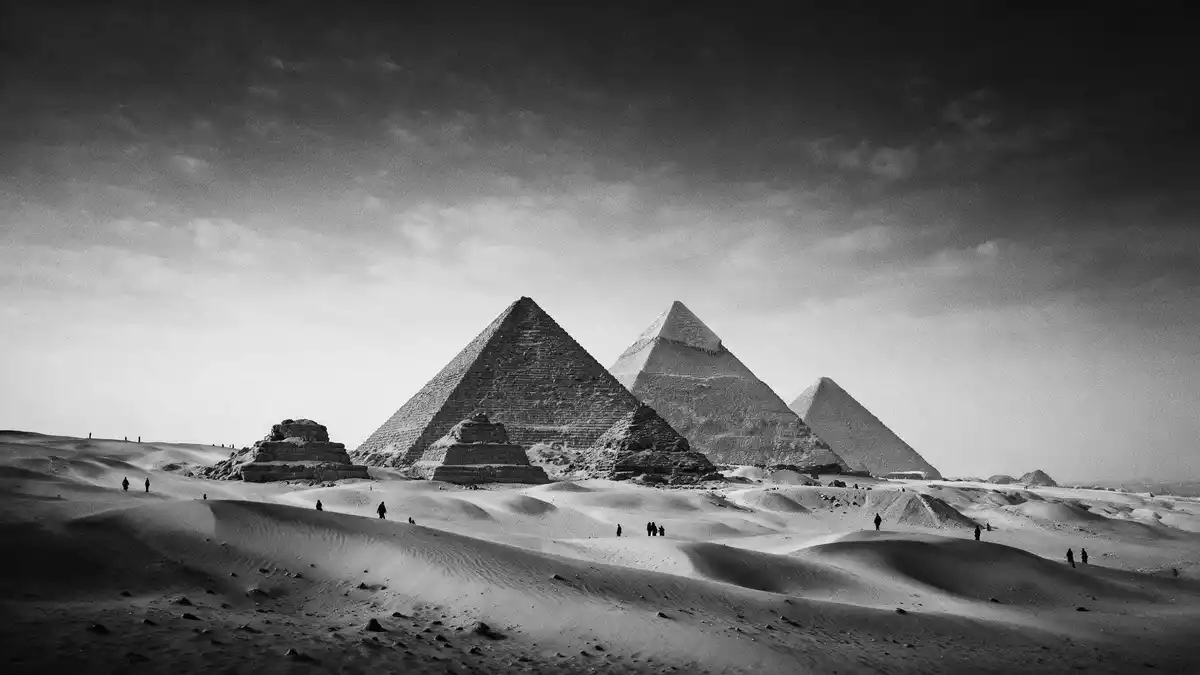
Ahramat al-Giza, known in English as the Pyramids of Giza, rises from the limestone plateau west of the Nile near Gizeh as a dense landscape of pyramids and tombs from Egypt’s Old Kingdom. Here the great pyramids attributed to Khufu, Khafre and Menkaure mark the horizon above the desert, forming a funerary complex that has anchored images of pharaonic Egypt since the fourth dynasty in the twenty-sixth century BC.
The Giza Plateau and its Old Kingdom setting
Ahramat al-Giza occupies the Giza Plateau on the western side of the Nile valley, a limestone shelf that lifts the necropolis above the cultivated riverbank and the urban fabric of the Greater Cairo region.The Giza Plateau in Giza, Egypt carries the core of Egypt’s Fourth Dynasty pyramid complex, including the three major royal pyramids, the Great Sphinx, cemeteries and traces of a workers’ settlement.The Giza pyramid complex on the plateau In plan, the pyramids stand inland from the river on the desert edge, with the plateau dropping towards the Nile and the modern city beyond.
The necropolis belongs to the Old Kingdom period of Egyptian history and is linked particularly to the Fourth Dynasty, when large-scale stone pyramids became the dominant form of royal tomb.The Giza complex emerging over three generations The main pyramid constructions are dated to a building phase around 2,620 to 2,500 BC, giving the site an age of around 4,500 years.Fourth Dynasty pyramids dating to 2550–2490 BC Ahramat al-Giza is recognised as part of a UNESCO World Heritage Site, recorded since 1979, reflecting its role as the surviving ancient wonder among the classical Seven Wonders of the World.UNESCO World Heritage inscription in 1979
The three royal pyramids of Khufu, Khafre and Menkaure
The heart of Ahramat al-Giza is a group of three major pyramids attributed to the pharaohs Khufu, Khafre and Menkaure, each forming the centre of a wider funerary ensemble with temples and subsidiary tombs.The pyramids of Khufu, Khafre and Menkaure The northernmost and largest pyramid is linked to Khufu, known in later Greek tradition as Cheops, and stands as the dominant mass in the field, its square base laid out with sides measured in hundreds of metres.Khufu’s pyramid as the largest monument at Giza South-west of it lies the pyramid of Khafre, slightly smaller in height yet raised on higher ground, and further to the south stands the more compact pyramid of Menkaure, completing the trio along the plateau edge.Relative sizes and arrangement of the three pyramids
Around the main pyramids, smaller pyramids associated with queens and family members, causeway structures, valley temples closer to the former riverbank and extensive fields of mastaba tombs create a continuous landscape of stone monuments.Complex of pyramids, cemeteries and the Great Sphinx The Great Sphinx, carved from bedrock on the eastern side of the plateau near Khafre’s pyramid, adds a colossal human-headed lion figure to the ensemble, aligned with the monuments and forming a prominent focus beside the approach from the Nile.The pyramids with the Great Sphinx near Cairo Taken together, the structures illustrate the organisation of royal burial, temple ritual and associated burial grounds within a single plateau site.
Stone construction and desert setting
The pyramids of Ahramat al-Giza rise from a base of local limestone bedrock, with core masonry built from large limestone blocks and, in the case of the Great Pyramid, evidence of high-quality casing stone originally covering the outer faces.Limestone plateau and large stone pyramids The stepped internal structure and smooth outer geometry give the pyramids a firm, angular presence against the sky, while the plateau surface around them carries tracks, stone remains and low walls that mark the outlines of temples and tombs attached to the main monuments. The grouping of the three main pyramids along the edge where the desert meets the greener Nile corridor sets them in a direct spatial relationship with both the arid hinterland and the cultivated valley.
The wider necropolis extends beyond the central group to include ranges of mastaba tombs, shafts and burial structures laid out in rows, following the organisation of elite burials in the Fourth Dynasty and later periods of Old Kingdom use.Cemeteries and workers’ settlement traces at Giza From many points on the plateau, the view takes in the mass of the pyramids, the profile of the Sphinx and, beyond the necropolis, the spread of Greater Cairo and the line of the Nile, underlining the positioning of Ahramat al-Giza between river civilisation and desert.
Visiting Ahramat al-Giza: what travellers from Western Europe should know
- Ahramat al-Giza stands on the Giza Plateau on the west bank of the Nile near the city of Gizeh, forming part of the Greater Cairo urban region in Egypt.The necropolis near Cairo and Gizeh
- The site lies on a desert plateau above the Nile valley, with approaches across firm ground and sections of the visit involving walking over uneven stone surfaces and sandy paths between monuments.Location on the Western Desert plateau
- Ahramat al-Giza is reached from central Cairo by road, with routes crossing the Nile towards Gizeh and the plateau; Cairo International Airport is the principal international gateway for visitors approaching the wider region.Road access from Cairo to the Giza Plateau
- The official language is Arabic and the currency is the Egyptian pound.
- Entry requirements depend on your nationality; UK travellers can check the FCDO travel advice at gov.uk/foreign-travel-advice, Irish travellers the Department of Foreign Affairs at ireland.ie.
Searching for Ahramat al-Giza on social platforms
These links open searches for Ahramat al-Giza on each platform.
Frequently asked questions about Ahramat al-Giza
Where is Ahramat al-Giza and what does it include?
Ahramat al-Giza lies on the Giza Plateau west of the Nile near Gizeh in Egypt and includes the three major pyramids of Khufu, Khafre and Menkaure, the Great Sphinx and extensive cemeteries.
What should travellers expect when visiting the site?
Travellers encounter large stone pyramids set in a desert plateau landscape, with walks between monuments across sandy and uneven ground and views towards the Nile valley and Greater Cairo.
What makes Ahramat al-Giza distinctive among ancient sites?
The complex combines the scale of the Fourth Dynasty pyramids, the presence of the Great Sphinx and the survival of a broad necropolis, all within a UNESCO-listed site regarded as the sole remaining ancient world wonder.