

Addo Elephant National Park confirms FMD on 13 October
Published on 10/18/2026 at 06:03 | Editorial responsibility: Rafael Müller, Editor-in-Chief AD HOC NEWS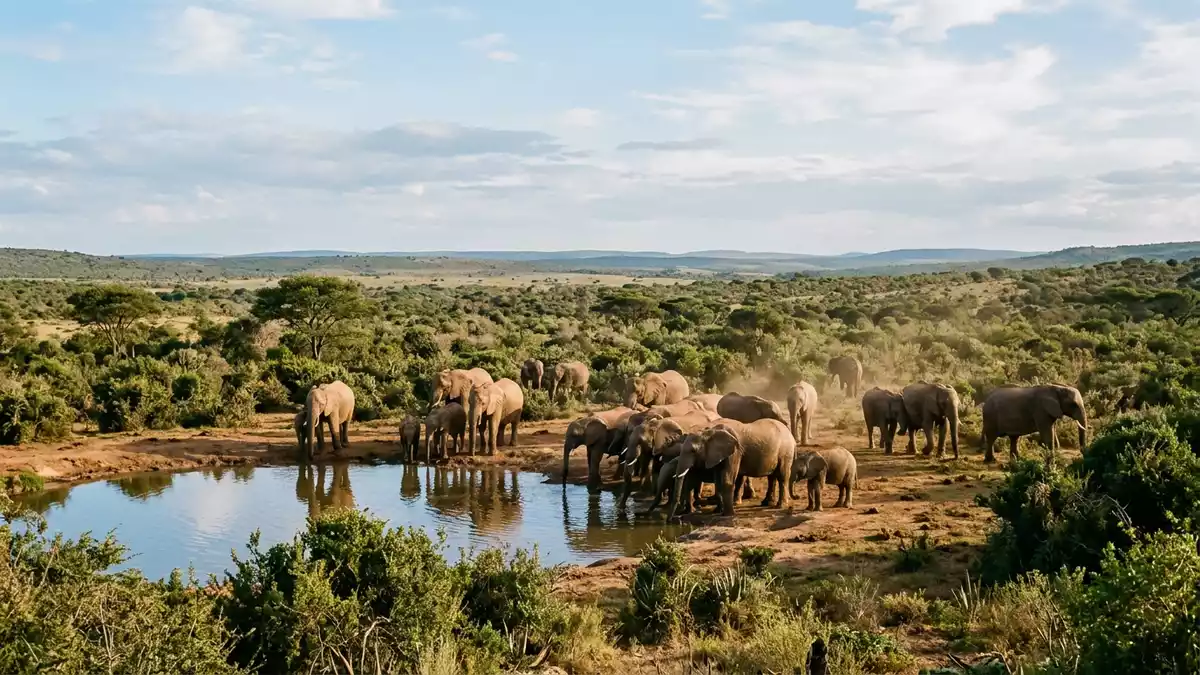
Addo Elephant National Park has strengthened its biosecurity measures after South African National Parks confirmed foot-and-mouth disease in kudu on 13 October 2026. The park remains open to visitors in Addo, South Africa, but access and movement instructions now form part of a changing visit.
Foot-and-mouth disease changes visitor rules at Addo
The confirmation followed a second round of diagnostic testing on samples collected from affected kudu. Wildlife health surveillance had detected increased lameness among the animals, and the initial tests had been negative before follow-up investigation confirmed the disease.
SANParks disease update states that no other wildlife species in the park were showing clinical signs consistent with foot-and-mouth disease at the time of the announcement. The source of the infection, the direction of transmission and any link with other outbreaks in the Eastern Cape had not been established.
Vehicles are being disinfected before they leave designated game-viewing areas, while further measures limit the movement of potentially infectious material beyond affected or controlled areas. No cloven-hoofed animals may enter or leave the park unless the relevant veterinary authority has authorised the movement after a risk assessment.
The 1931 park now faces a wildlife-health test
The park was proclaimed in 1931 to protect the remaining 11 Addo elephants. Its original purpose was species protection, but conservation priorities later broadened to cover the area’s wider biological diversity.
The official park history records that the original protected area covered just over 2,000 hectares. In 1954, an elephant-proof fence made with tram rails and lift cables enclosed 2,270 hectares, and the structure is still associated with the park’s conservation history.
That history gives the October 2026 change a specific context: the park’s original protection of a small elephant population has developed into a broader wildlife-management system. The current response therefore concerns not only the kudu in which the virus was detected, but also animal movements, vehicles, neighbouring landowners and livestock producers.
Monitoring continues while tourism operations remain open
South African National Parks is working with the Eastern Cape Department of Agriculture and other stakeholders to assess the extent of the occurrence and monitor affected kudu, other susceptible wildlife and possible transmission routes. Further controls may be introduced if veterinary authorities advise them or if animal-disease legislation requires them.
Foot-and-mouth disease affects susceptible cloven-hoofed animals and is not considered a human health risk in the official update. The operational message for visitors is nevertheless clear: the park is open, but ordinary game-viewing plans must be carried out within the disease-management measures in force during the visit.
Visiting Addo Elephant National Park: what travellers from Western Europe should know
- The relevant change took effect with the confirmation announced on 13 October 2026, and the disease-management measures apply during visits in the current October-November period.
- Tourism operations remain open, but visitors must follow all park access, movement and biosecurity instructions. Vehicles are disinfected before leaving designated game-viewing areas.
- Addo Elephant National Park is in South Africa’s Eastern Cape. Animal movements into or out of the park are subject to veterinary authorisation and a risk assessment.
- The park combines wildlife conservation with a long management history: it was proclaimed in 1931 to protect the remaining 11 Addo elephants.
- Entry requirements depend on your nationality; UK travellers can check the FCDO travel advice at gov.uk/foreign-travel-advice, Irish travellers the Department of Foreign Affairs at ireland.ie.
Searching for Addo Elephant National Park on social platforms
These links open searches for Addo Elephant National Park on each platform.
Frequently asked questions about Addo Elephant National Park
What changed at Addo Elephant National Park on 13 October 2026?
Foot-and-mouth disease was confirmed in kudu on 13 October 2026. Biosecurity and animal-movement controls were strengthened.
Is Addo Elephant National Park open to visitors?
Yes. Tourism operations remain open, subject to veterinary requirements and the park’s disease-management measures.
Where is Addo Elephant National Park?
The park is in South Africa’s Eastern Cape. It was proclaimed in 1931 to protect the remaining 11 Addo elephants.


