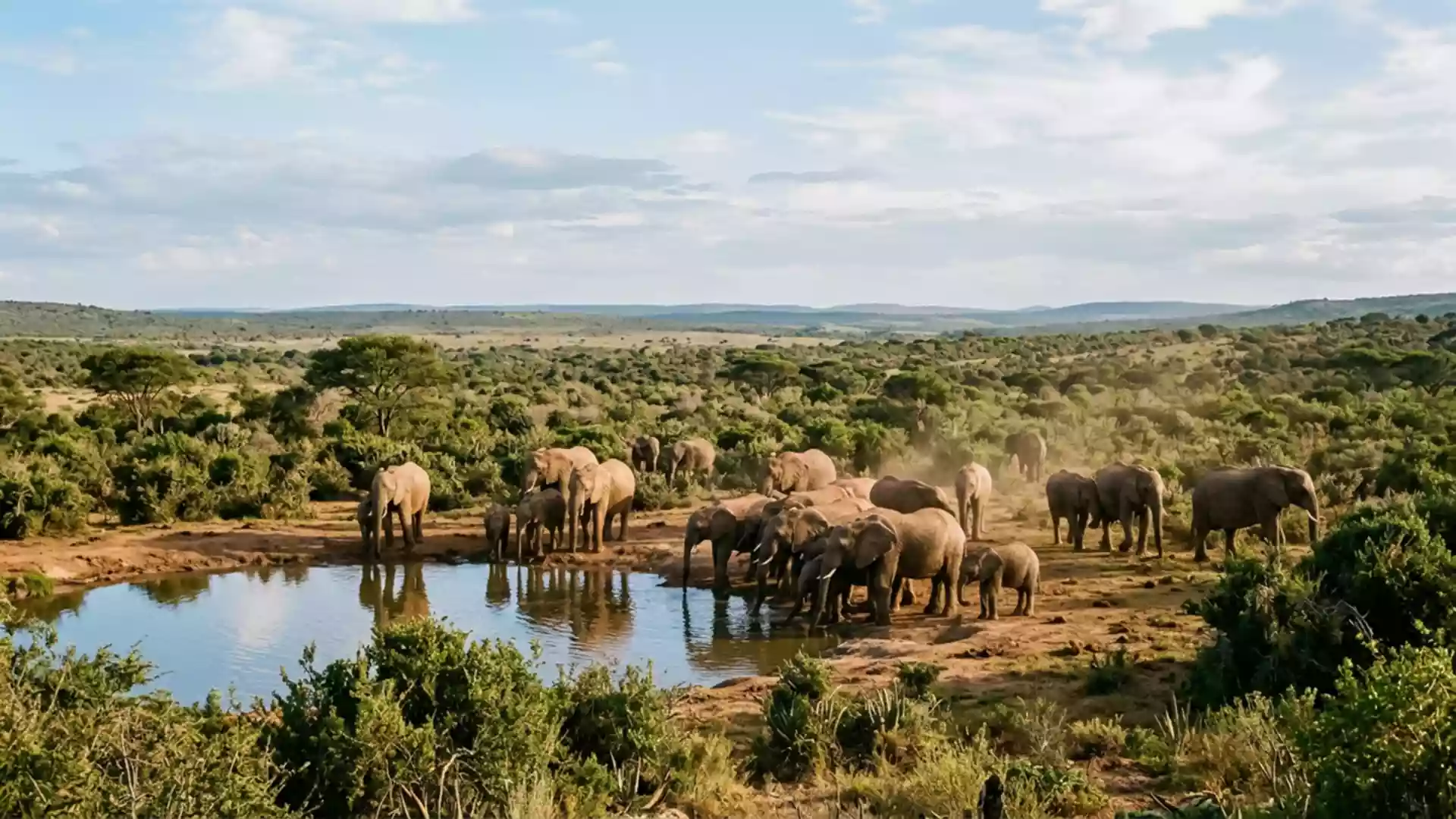
Addo Elephant National Park and the shape of thicket country
Published on 09/11/2026 at 12:24 | Editorial responsibility: Rafael Müller, Editor-in-Chief AD HOC NEWS
Addo Elephant National Park spreads across eastern South Africa in the Addo area, near Gqeberha and the Sundays River Valley. Its name is tied to 1931, when the park was proclaimed to protect the remaining elephants in the region.1931 proclamation
Thicket, valley and sea-facing parkland
The park is known for a landscape that shifts between dense thicket, river valley country and more open ground. That mix gives Addo a broad physical character, from low vegetation to hills and coastal elements.Sundays River Valley
The place also carries a strong conservation identity. Its beginnings are closely linked with the survival of a small elephant population, and that history remains part of how the park is understood.11 elephants
Addo’s protected landscape and its layers
Addo Elephant National Park is not a single-type reserve. It combines inland and coastal terrain, with habitats that include thicket and other vegetation zones across a wider conservation area.five terrestrial biomes
The park’s history is anchored in the early twentieth century, when it was created in 1931. That date places it among South Africa’s established national parks, but its physical appeal lies in the visible contrast between vegetation, slope and open space.
Elephants, fences and a conservation landscape
Elephants remain the park’s defining presence, but the place is more than a single-species reserve. The surviving elephant population gave the park its starting point, while later expansion brought in a broader landscape of habitat and wildlife.
One recurring feature is the relationship between enclosure and open ground. The Armstrong fence, associated with the park’s management history, is part of that story, and the name Graham Armstrong belongs to the park’s recorded past.Armstrong fence
Visiting Addo Elephant National Park: what travellers from Western Europe should know
- The park lies in South Africa’s Eastern Cape, near Addo and Gqeberha. Road access is the usual approach, and the wider park is reached through the district’s network of main roads.
- The terrain includes thicket, valley ground and more open sections. Tracks, slopes and stretches of rough vegetation are part of the landscape rather than an interruption to it.
- The official language is English and the currency is the South African rand.
- Entry requirements depend on your nationality; UK travellers can check the FCDO travel advice at gov.uk/foreign-travel-advice, Irish travellers the Department of Foreign Affairs at ireland.ie.
Searching for Addo Elephant National Park on social platforms
These links open searches for Addo Elephant National Park on each platform.
Frequently asked questions about Addo Elephant National Park
Where is Addo Elephant National Park?
It is in South Africa’s Eastern Cape, near Addo and Gqeberha. The park stretches across an area shaped by river valley country, thicket and wider conservation land.
What does a visit involve?
Expect a large protected landscape with roads, tracks and varied vegetation rather than a single compact attraction. The park’s scale and mixed terrain are central to how it is experienced.
What makes Addo distinctive?
Its identity comes from the elephant story that began in 1931 and from the park’s range of landscapes. Thicket, valley ground and expanded conservation areas all belong to the same place.