
Acueducto de Segovia and the Roman stone spine of Segovia
Published on 09/19/2026 at 07:55 | Editorial responsibility: Rafael Müller, Editor-in-Chief AD HOC NEWS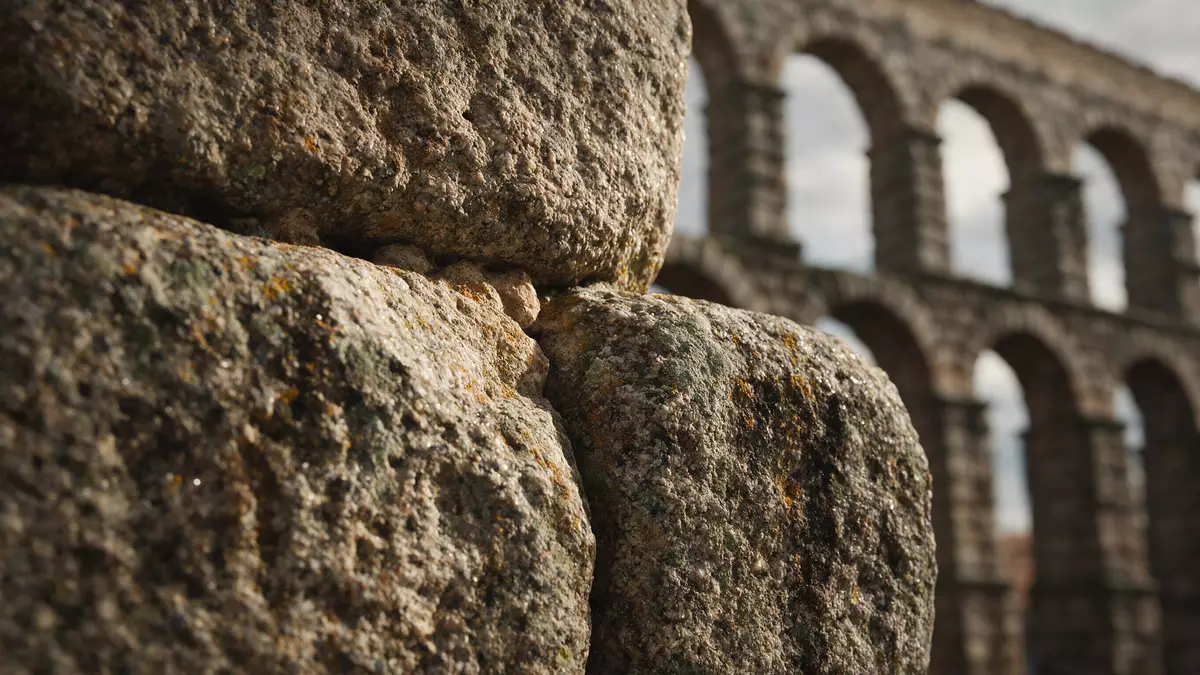
Acueducto de Segovia is a Roman aqueduct that cuts across the city of Segovia in Spain like a raised stone spine, tying the old town to the surrounding landscape and to the era when Roman engineers brought running water into Iberian settlements. Built during the late first or early second century CE under the Roman Empire, it carried water from the nearby mountains into Segovia and still stands as one of the most complete pieces of Roman civil engineering in Europe.
A Roman structure that defines Segovia’s centre
The aqueduct runs across a shallow valley at the edge of Segovia’s historic centre, its elevated section forming a long arcade of arches in laid stone that frames streets, traffic and people beneath. At its most prominent point the structure rises to about 28.5 m (93.5 ft) above the ground, its two tiers of arches resting on pillars that stand directly on the urban fabric.At the lowest point of the valley the aqueduct reaches this full height, giving a clear sense of the scale the builders achieved.
The masonry arcade that visitors see in Segovia is part of a longer hydraulic system which carries water over more than 16 km (9.9 mi) from the mountains into the city.The aqueduct supplied water from the Frío River to the city and remained in service well into the twentieth century, connecting Segovia’s houses, fountains and baths to a mountain catchment. In the city centre the structure now reads as part of everyday public space, with the arches opening onto pavements and plazas where the Roman stonework stands beside later buildings.
Engineering in unmortared granite
Acueducto de Segovia is built largely in granite ashlar, with its blocks laid without visible mortar and held together by their precise cutting and the geometry of the arches.Around 20,400 granite blocks form the arcade, the pillars and arches stepping down the valley while keeping the water channel above at a shallow gradient. The dry-laid construction makes the structure’s tectonics easy to read, with each block contributing to the balance of forces that holds the aqueduct upright.
From a formal point of view, the visible section in Segovia is composed of straight runs of arcades carried on rows of pillars that are superimposed in two tiers, with the upper row standing directly above the lower. The UNESCO description records that the aqueduct’s masonry section in the city is about 813 m (2,667 ft) long, set out in several straight segments joined at slight changes of alignment.It consists of four straight segments and two superimposed arcades borne by 128 pillars, creating the rhythmic sequence of arches that visitors recognise from photographs and engravings.
Dating, empire and protection
The exact year of construction of Acueducto de Segovia is not recorded in a surviving inscription, but archaeological and epigraphic studies place it between the later first century and the early second century CE, during the government of emperors such as Domitian, Trajan and Hadrian.Recent studies point to a date after 112 CE, with some sources associating the work particularly with Trajan’s reign as part of a wider programme of Roman civil engineering across Hispania. In any case, it belongs clearly to the High Empire period, when stone-built aqueducts became markers of urban status as well as infrastructure.
The aqueduct’s endurance and prominence led to early protective measures in Spain. It was declared a National Monument in the nineteenth century and later became part of the UNESCO World Heritage listing “Old Town of Segovia and its Aqueduct” in 1985.The inscription recognises both the historic centre and the aqueduct, tying the Roman structure formally to the medieval and early modern fabric around it. Over the centuries broken or damaged arches were rebuilt, including a documented campaign in the fifteenth century under the Catholic Monarchs, and twentieth-century works addressed structural and conservation concerns while keeping the original form.
Visiting Acueducto de Segovia: what travellers from Western Europe should know
- Acueducto de Segovia stands at the edge of Segovia’s historic core in central Spain, with the most prominent arches crossing a valley near Plaza del Azoguejo, reachable on foot from the city’s main streets.
- The elevated section of the aqueduct rises high above street level, with approaches involving urban pavements, some sloping ground and stairways that lead to viewpoints alongside the upper part of the structure.
- Segovia lies in the interior of Spain north-west of Madrid, with rail and road links connecting the city to the wider Castile and León region and to major transport hubs.
- The official language is Spanish and the currency is the euro.
Searching for Acueducto de Segovia on social platforms
These links open searches for Acueducto de Segovia on each platform.
Frequently asked questions about Acueducto de Segovia
Where is Acueducto de Segovia located?
Acueducto de Segovia stands in the city of Segovia in central Spain, crossing a valley at the edge of the historic centre near key urban squares.
What can visitors expect when seeing the aqueduct?
Visitors encounter a long stone arcade of Roman arches rising above streets and pavements, with views of its pillars, arches and the elevated water channel.
What makes Acueducto de Segovia distinctive among Roman works?
It combines an extensive, largely intact Roman masonry structure in unmortared granite with a prominent role in Segovia’s urban landscape and recognised World Heritage protection.


