
Acueducto de Segovia and the granite arches of Roman Segovia
Published on 09/21/2026 at 19:30 | Editorial responsibility: Rafael Müller, Editor-in-Chief AD HOC NEWS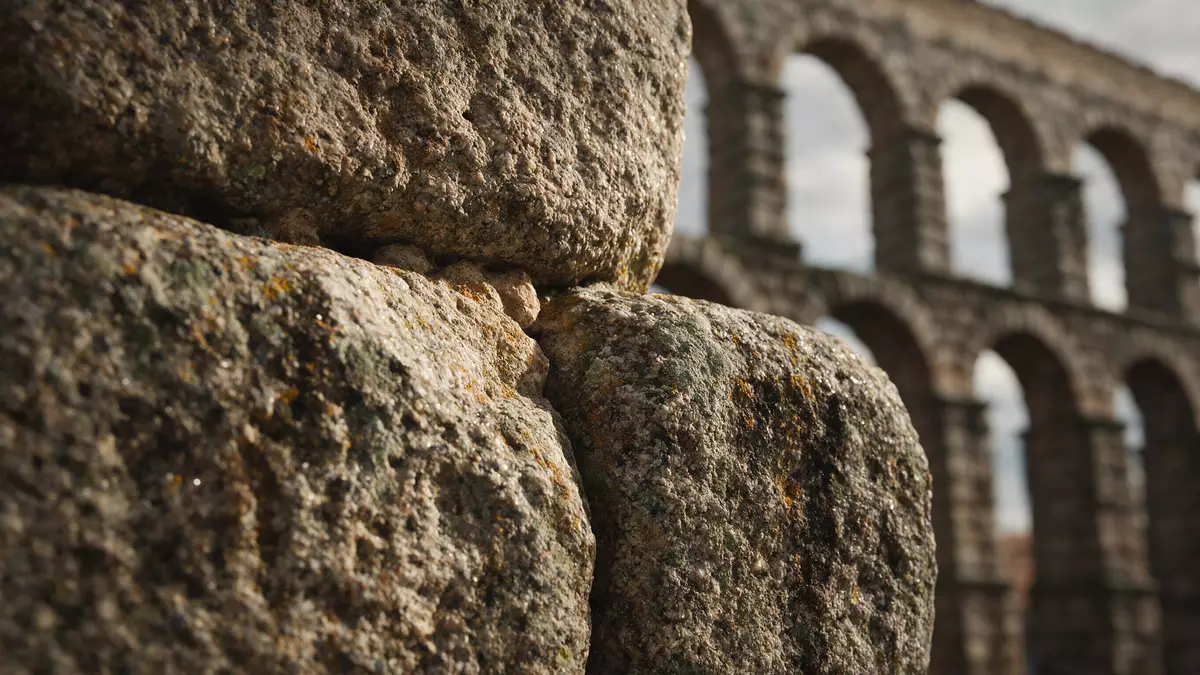
Acueducto de Segovia is the Roman aqueduct that cuts across the heart of Segovia in Spain, carrying a line of granite arches between the old town and the Castilian plain. Built in the first century AD under the Roman Empire, it has become the defining silhouette of Segovia’s historic centre and a rare piece of ancient engineering that still dominates a modern cityscape.
A Roman line of stone through Segovia
Acueducto de Segovia runs from the nearby Sierra de Guadarrama towards the walled city, channelling water from springs in the surrounding mountains into the urban core of Segovia.Carries water 16 km from the Frío River Roman engineers set the structure in place during the first century AD, working under emperors such as Trajan and using techniques that defined imperial infrastructure projects.Built under the reign of Trajan between 1 and 99 AD
The aqueduct’s above-ground stretch climbs into Segovia on a long arcade with a distinctive double tier of arches that steps across the valley of the Clamores and the open space of Plaza del Azoguejo.Aboveground portion 728 m long with double arches The arcade reaches about 28.5 m (93.5 ft) at its highest point, lifting the water channel high above the paving and creating a wall of stone that frames the surrounding streets.Stands 28.5 m at maximum height
Granite blocks and the art of the Roman arch
The defining feature of Acueducto de Segovia is its long sequence of Roman arches, each built from precisely cut granite blocks quarried from the nearby Guadarrama range.Built of dark-coloured Guadarrama granite blocks The blocks sit without mortar, held in place by gravity and by the geometry of the arch, which transfers the load down through the piers into the foundations.Pillars and arches made of solid stone blocks without mortar
Across the urban section of the aqueduct, around 167 arches carry the channel over more than 700 m of public space, forming a regular rhythm of stone openings between the Roman watercourse and the streets of Segovia.Roughly 167 arches over about 728 m The lower tier presents tall, evenly spaced arches, while the upper tier sits lightly above them, supporting the enclosed water conduit that once supplied fountains, baths and houses across the city.Channelled water from springs to Segovia’s fountains and baths
World Heritage in the old town of Segovia
Acueducto de Segovia stands within the historic fabric of Segovia’s old town, which together with the aqueduct is inscribed as a UNESCO World Heritage Site.Old Town of Segovia and its Aqueduct on the World Heritage List since 1985 The stone arches align with medieval streets, baroque façades and the slope that climbs towards the Alcázar, placing Roman infrastructure in direct dialogue with later Spanish architecture.
The valley floor beneath the highest arches forms a public square where the scale of the aqueduct is most apparent, and where its long granite line can be seen against both the compact old town and the larger Castilian plateau beyond. The combination of Roman engineering, medieval walls and the elevated plateau landscape gives Segovia a layered profile that is recognised around the world.
Visiting Acueducto de Segovia: what travellers from Western Europe should know
- Acueducto de Segovia stands in the city of Segovia in central Spain, north-west of Madrid, and the arches rise beside Plaza del Azoguejo on the slope below the old town.
- The terrain around the highest section of the aqueduct drops steeply into a valley, with steps and sloping streets leading from the square up towards the cathedral and Alcázar.
- Segovia is connected by road and rail to Madrid and other Castilian cities, and the aqueduct forms a clear point of orientation between the bus station area and the historic centre.
- The official language is Spanish and the currency is the euro.
Searching for Acueducto de Segovia on social platforms
These links open searches for Acueducto de Segovia on each platform.
Frequently asked questions about Acueducto de Segovia
Where is Acueducto de Segovia?
Acueducto de Segovia stands in Segovia in the Castile and León region of central Spain, connecting the surrounding hills to the historic walled city.
What should visitors expect when seeing the aqueduct?
Visitors encounter a long double-tiered arcade of granite arches rising above a public square, with sloping streets and steps that bring them close to the structure at different levels.
What makes Acueducto de Segovia distinctive among Roman aqueducts?
The aqueduct combines unmortared granite construction, a tall double row of arches and a position inside a living city, and it forms part of a UNESCO-listed historic centre.


