
Acadia National Park’s granite coast and carriage roads
Published on 09/19/2026 at 16:34 | Editorial responsibility: Rafael Müller, Editor-in-Chief AD HOC NEWS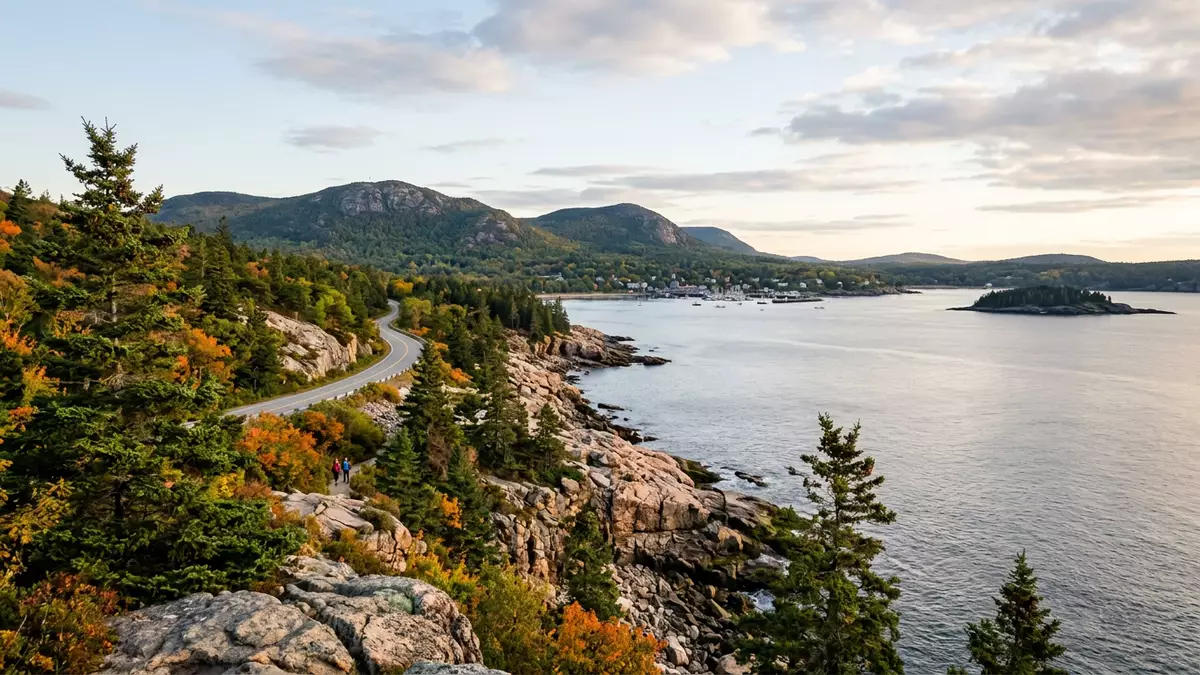
Acadia National Park on the coast of Maine wraps granite headlands, forested hills and island lakes into a compact Atlantic landscape centred on Mount Desert Island near Bar Harbor. The park was established in 1919 as Lafayette National Park, the first national park east of the Mississippi River, before taking the name Acadia National Park in 1929. Lafayette National Park in 1919 marked the culmination of earlier conservation efforts that began with the Sieur de Monts National Monument designation in 1916.
Granite peaks, glacial lakes and Atlantic shoreline
Acadia National Park is arranged around the rugged outline of Mount Desert Island, with additional land on the Schoodic Peninsula, Isle au Haut and smaller coastal islands in Maine. The bedrock beneath much of the park is Cadillac Mountain granite, a pinkish Silurian age rock formed between 424 and 419 million years ago that gives many of Acadia’s headlands and peaks their colour and grain. Cadillac Mountain granite of Silurian age and older formations such as the Bar Harbor Formation sandstone and Ellsworth Schist record a long geological history shaped by continental collisions and volcanic activity.
Across this bedrock the last ice age carved basins and valleys that now hold clear lakes and ponds, while glaciers smoothed and striated the coastal cliffs that meet the Atlantic Ocean. The National Park Service describes Acadia as protecting an archipelago landscape that includes mountain summits, rocky shores and inland wetlands, reflecting a wide range of ecological communities in a relatively small area. Acadia archipelago and Schoodic Peninsula together create a maritime setting where inland trails can rise from sea level to granite peaks within short horizontal distances.
Rockefeller’s carriage roads through forest and hills
Threaded through Acadia National Park is a network of historic carriage roads built between 1913 and 1940 under the direction of philanthropist John D. Rockefeller Jr. On Mount Desert Island about 45 miles of rustic carriage roads lie within the park boundaries, part of a wider system that originally extended to around 57 miles of landscaped, automobile-free routes. Rockefeller’s 57-mile carriage road system was funded, personally designed and supervised with input from Frederick Law Olmsted Jr., creating roads that follow the contours of hillsides and weave through woods, along ponds and across streams.
The carriage roads are broken-stone roads typically about 16 ft (4.9 m) wide, with layered construction that begins with split granite slabs and smaller rock beneath a compacted surface of clay and gravel. Granite coping stones used as guardrails line many sections and are colloquially known as “Rockefeller’s teeth”, while a series of stone-faced, steel-reinforced concrete bridges carries the roads over streams, waterfalls, motor roads and cliffs. forty-five miles of rustic carriage roads and Tudor Revival style gate lodges give Acadia a distinctive ensemble of early twentieth?century park infrastructure that remains in use for walking, cycling, horse riding and carriage driving.
Acadia’s peaks, paths and protected landscape
Within Acadia National Park there are dozens of named hills and mountains, with Cadillac Mountain rising to about 467 m (1,530 ft) and forming the highest summit in the park. The Maine: An Encyclopedia overview notes that from early October to early March Cadillac Mountain is the first place in the United States where sunrise can be seen, highlighting its exposed position above the surrounding landscape. Cadillac Mountain at 1,530 ft sits among a cluster of other granite peaks, including Sargent Mountain and a series of smaller summits that together give the park its profile.
Alongside the carriage roads Acadia National Park offers an extensive network of hiking trails that reach these granite peaks and link forests, lakes and shoreline. The Bar Harbor municipal description notes that the park encompasses more than 48,000 acres on Mount Desert Island, Schoodic Peninsula, Isle au Haut and other islands, with the largest share on Mount Desert Island itself. more than 48,000 acres on Mount Desert Island and nearby areas are managed by the National Park Service to protect ecological integrity, cultural history and scenic character across varied terrain.
Visiting Acadia National Park: what travellers from Western Europe should know
- Acadia National Park lies on the coast of Maine in the United States, centred on Mount Desert Island near the town of Bar Harbor, which serves as a common access point.
- The terrain includes granite hills and headlands, forest paths and lakeside shores, with many trails involving uneven surfaces and sustained gradients rather than level promenades.
- The park area spans Mount Desert Island, the Schoodic Peninsula, Isle au Haut and smaller coastal islands, so visiting different sectors involves travel by road or boat between separate land units.
- The official language is English and the currency is the United States dollar.
- Entry requirements depend on your nationality; UK travellers can check the FCDO travel advice at gov.uk/foreign-travel-advice, Irish travellers the Department of Foreign Affairs at ireland.ie.
Searching for Acadia National Park on social platforms
These links open searches for Acadia National Park on each platform.
Frequently asked questions about Acadia National Park
Where is Acadia National Park located?
Acadia National Park is on the Atlantic coast of Maine in the United States, centred on Mount Desert Island near Bar Harbor and extending to nearby peninsulas and islands.
What should visitors expect on a visit to Acadia National Park?
Visitors encounter granite peaks, forested hills, clear lakes and rocky shoreline, together with an extensive network of hiking trails and historic carriage roads designed for non?motorised travel.
What makes Acadia National Park distinctive among national parks?
Acadia combines a compact maritime setting, long-dated geology, early twentieth?century carriage roads funded by John D. Rockefeller Jr. and varied terrain ranging from sea?level shores to granite summits.


