
Abel Tasman National Park’s golden granite coast from Marahau
Published on 08/31/2026 at 13:54 | Editorial responsibility: Rafael Müller, Editor-in-Chief AD HOC NEWS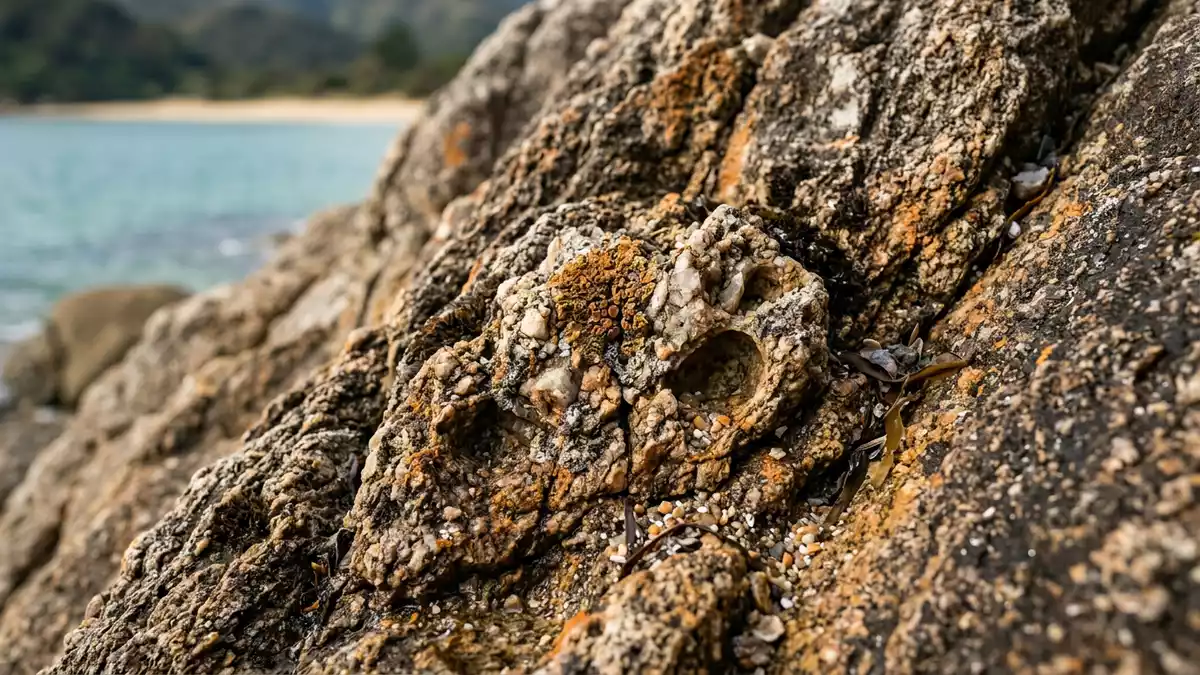
Abel Tasman National Park stretches along the northern coast of New Zealand’s South Island, with Marahau forming the southern gateway to its sheltered bays and golden sand beaches. The park covers 237.1 km² (91.5 sq mi) between Tasman Bay / Te Tai-o-Aorere and Golden Bay / Mohua, making it the smallest of New Zealand’s national parks by land area.the smallest of New Zealand’s national parks
Granite headlands, golden beaches and sheltered bays
The defining feature of Abel Tasman National Park is its narrow fringe of bays and headlands, where coarse golden sand meets granite rock along more than 90 km of irregular coastline.the Abel Tasman National Park coastline is 91.6 km in length Much of this shore is shaped by Separation Point Granite, a large batholith whose physical qualities influence the colour and texture of the beaches and nearby forest cover.Separation Point Granite On a walk from Marahau, the sand underfoot shows the same quartz, feldspar and mica grains found in the local streams, giving the beaches their characteristic warm hue.
Granite cliffs and boulders form the headlands that separate the park’s bays, creating a pattern of sheltered coves backed by forest and opening towards Tasman Bay. Between the headlands lie wide arcs of beach and sandspits such as Totaranui and Bark Bay, where coarse sand accumulates in gently curving forms. Offshore, small granite islands such as Tonga Island and Pinnacle Island rise from the water, and fur seals are found along the more remote sections of this coast.fur seals along the coast Inland from the beaches, the terrain climbs in forested hills, with streams cutting through granite to reach estuaries at the heads of many bays.
Marahau and the Abel Tasman Coast Track
Marahau sits at the southern end of Abel Tasman National Park and is widely recognised as the starting point of the Abel Tasman Coast Track, one of the country’s designated Great Walks.designation New Zealand Great Walk The coastal track runs for about 60 km (37 mi) within the park, extending from Marahau in the south to Wainui in the north, with side paths leading down to beaches and viewpoints.60 kilometres long walking track At the northern end of Marahau, a Department of Conservation car park and track entrance mark the beginning of this route, where walkers cross the estuary and follow a formed path through open country and beech forest.
Along the Abel Tasman Coast Track the pattern of bays, estuaries and headlands becomes a continuous sequence, with sections such as Marahau to Anchorage offering sustained views across Tasman Bay. The track is maintained by the Department of Conservation and is part of a network of Great Walks across New Zealand, with huts and campsites spaced along the route.Abel Tasman Coast Track Great Walk Marahau provides access not only for walkers but also for water taxis, boat cruises and sea kayaks that use the sheltered coastline to reach beaches such as Anchorage, Torrent Bay and Bark Bay.M?rahau stepping-off point
Landscape, wildlife and a small-scale national park
Abel Tasman National Park takes its name from the Dutch explorer Abel Tasman, who sailed in Tasman Bay in the seventeenth century, yet the protected area itself dates from the twentieth century and reflects New Zealand’s wider move to conserve coastal and forest landscapes.Abel Tasman National Park Within its compact boundaries, the park brings together granite hills, forest, estuaries and beaches in a relatively narrow band between sea and inland valleys. For travellers used to larger alpine parks, its scale feels intimate, with the sea rarely far from view and the main access points, including Marahau and Totaranui, linked by coastal and inland tracks.roads lead to Marahau and Totaranui
The park’s bedrock, made up largely of Separation Point Granite, affects vegetation patterns and the appearance of streams, whose beds carry the same pale, coarse material as the beaches.bedrock is made up of Separation Point Granite Forested slopes rise behind many bays, with beech and k?nuka among the trees lining the coastal track, while estuaries open out near the shore where streams meet the sea. Offshore islands and remote headlands provide habitat for New Zealand fur seals, which haul out on granite ledges and boulders along the outer coast. The combination of small coves, warm-coloured sand, accessible walking tracks and wildlife makes Abel Tasman National Park distinctive within New Zealand’s group of national parks, particularly for visitors approaching from Marahau on foot or by boat.
Visiting Abel Tasman National Park: what travellers from Western Europe should know
- Abel Tasman National Park lies at the northern end of New Zealand’s South Island, with road access from Nelson to Marahau and further access points at Totaranui and Wainui.
- The coastal terrain alternates between formed walking tracks, beach sections and forested hillsides, and approaches to viewpoints or huts can involve sustained gradients and extended sections on foot.
- Marahau and Kaiteriteri serve as main coastal settlements near the park, and boat services, water taxis and sea kayak operators use their jetties to reach bays along the shoreline.
- The official language is English and the currency is the New Zealand dollar.
- Entry requirements depend on your nationality; UK travellers can check the FCDO travel advice at gov.uk/foreign-travel-advice, Irish travellers the Department of Foreign Affairs at ireland.ie.
Searching for Abel Tasman National Park on social platforms
These links open searches for Abel Tasman National Park on each platform.
Frequently asked questions about Abel Tasman National Park
Where is Abel Tasman National Park in relation to Marahau?
Abel Tasman National Park lies along the northern coast of New Zealand’s South Island, with Marahau at its southern entrance and forming a principal access point.
What kind of landscape should visitors expect on a first visit?
Visitors encounter a sequence of golden sand beaches, granite headlands, estuaries and forested hills, with formed coastal tracks linking coves and viewpoints throughout the park.
What makes Abel Tasman National Park distinctive among New Zealand’s national parks?
Its compact size, coastal setting, Separation Point Granite geology and the Abel Tasman Coast Track together create a rare combination of walkable shoreline, forest and wildlife in a small area.


